The top companies in the world represent the pinnacle of global business power, technological innovation, and financial influence. From trillion-dollar tech giants to energy and semiconductor leaders, these corporations shape the modern economy through groundbreaking products, digital ecosystems, and massive global market capitalization.
Discover the 10 top companies in the world, ranked by market value, global impact, industry leadership, and long-term growth potential. These influential companies dominate sectors like artificial intelligence, cloud computing, e-commerce, energy, and semiconductors while driving innovation, investment, and economic transformation across international markets.
On This Page
Toggle- Updated 2026 by the World Millions Editorial Team: View Author Information
The Role of Innovation in Business Success
Innovation is a key driver of growth for the world’s largest companies. From cutting-edge technology to revolutionary business models, companies that prioritize research and development gain a competitive edge. For instance, Apple’s continuous advancements in consumer electronics, Microsoft’s dominance in cloud computing, and Tesla’s breakthroughs in electric vehicles showcase how innovation propels business success. Companies that fail to innovate risk becoming obsolete in today’s fast-paced economy.
Financial Strength and Market Influence
Financial stability is another critical factor that sets top companies apart. High revenue, strong profit margins, and massive market capitalizations allow these corporations to invest in expansion, research, and strategic acquisitions. Companies like Amazon and Alphabet generate billions through diverse revenue streams, from e-commerce and cloud computing to digital advertising. Their financial strength not only drives business growth but also influences global markets, economies, and even government policies.
List of the 10 Top Companies in the World
Discover the definitive ranking of the 10 Top Companies in the World — the largest corporations by market cap, industry dominance, and global headquarters.
The global business landscape is dominated by a select group of corporations that lead their industries through innovation, scale, and financial power. The following table of the 10 top companies in the world highlights the most valuable corporations ranked by market capitalization. These industry leaders span diverse sectors such as technology, e-commerce, social media, energy, finance, and semiconductors, showcasing how global demand and strategic leadership shape today’s economy.
From Apple and Microsoft driving technological advancements to Amazon and Alphabet (Google) redefining digital commerce and advertising, each company continues to influence global markets and consumer behavior.
Giants like Saudi Aramco and Berkshire Hathaway demonstrate the importance of energy and investment power, while Tesla pushes boundaries in automotive and clean energy innovation. Additionally, Meta Platforms (Facebook) dominates social media, and TSMC and NVIDIA are key players in the rapidly growing semiconductor and AI sectors.
This table provides a clear and data-driven snapshot of the world’s most valuable companies, their industries, headquarters, and current market capitalization — making it an essential reference for investors, professionals, and anyone tracking the evolution of the global economy.
| Rank | Company Name | Industry | Market Cap (As of March 2026) USD | Headquarters Location |
|---|---|---|---|---|
| 1 | NVIDIA | AI & Semiconductors | $4.42 trillion | Santa Clara, California, USA |
| 2 | Alphabet (Google) | Technology & Ads | $3.75 trillion | Mountain View, California, USA |
| 3 | Apple | Technology | $3.74 trillion | Cupertino, California, USA |
| 4 | Microsoft | Technology | $2.97 trillion | Redmond, Washington, USA |
| 5 | Amazon | E-commerce & Cloud | $2.31 trillion | Seattle, Washington, USA |
| 6 | Saudi Aramco | Conglomerate | $1.74 trillion | Dhahran, Saudi Arabia |
| 7 | Meta Platforms (Facebook) | Social Media & Ads | $1.58 trillion | Menlo Park, California, USA |
| 8 | TSMC | Semiconductors | $1.52 trillion | Hsinchu, Taiwan |
| 9 | Tesla | Automotive & Energy | $1.25 trillion | Austin, Texas, USA |
| 10 | Berkshire Hathaway | Conglomerate | $1.06 trillion | Omaha, Nebraska, USA |
Please note that financial figures are subject to change due to market dynamics and company performance, and can vary slightly between sources based on reporting methods.
Discover the 10 Top Companies in the World
Discover the 10 Top Companies in the World that dominate the global economy with innovation, financial strength, and market leadership. These industry giants—spanning technology, energy, e-commerce, and finance—represent the largest companies by market capitalization, setting benchmarks for growth and sustainability.
From Apple and Microsoft to Tesla and TSMC, each powerhouse drives global trends, fuels employment, and redefines technological progress. This definitive guide highlights the most valuable corporations in the world, showcasing how visionary leadership and strategic innovation continue to shape the future of global business and investment opportunities.
#1
NVIDIA
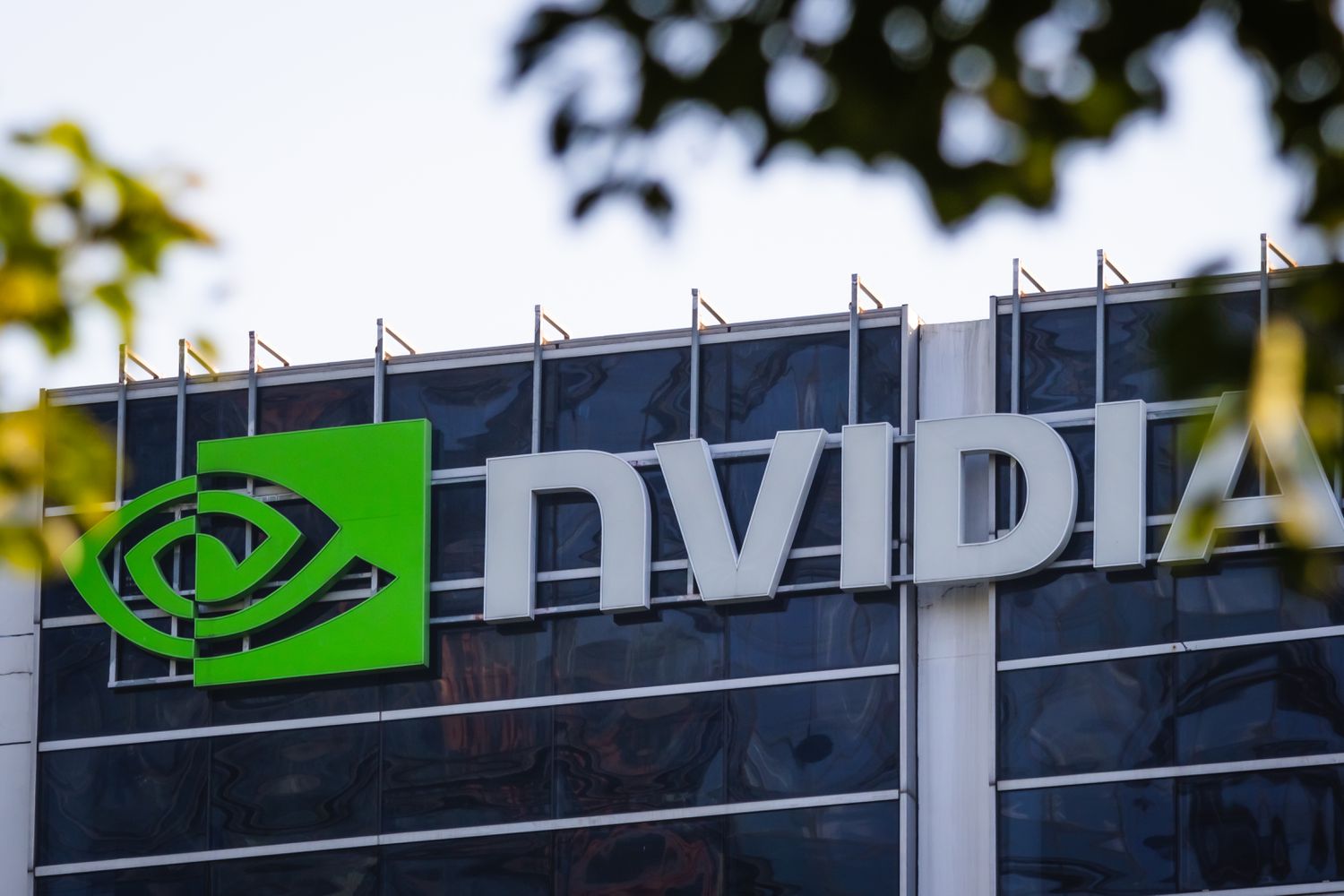
Key Takeaways for NVIDIA
NVIDIA, known for its GPUs, has become a key player in AI, gaming, and data centers.
- Market Capitalization: $4.42 trillion (2026).
- Revenue: $215.9 billion (FY 2026).
- Key Products: GeForce GPUs, AI processors, data center chips.
The company’s innovations in AI and gaming hardware have made it a market leader.
NVIDIA: A Powerhouse in AI, Gaming, and Data Centers
NVIDIA has established itself as a global leader in graphics processing units (GPUs), artificial intelligence (AI), gaming, and data centers. Since its founding in 1993, the company has continuously pushed the boundaries of computing technology, making it one of the most valuable tech companies in the world. NVIDIA’s influence extends far beyond gaming, as its AI-powered processors and high-performance computing chips are now essential in industries like autonomous vehicles, cloud computing, and deep learning.
NVIDIA Stock, NVDA: Dominance in Market Capitalization and Revenue
With a market capitalization of $4.42 trillion, NVIDIA (Stock ticker—NVDA on NASDAQ) is the most valuable company in the world and is among the largest technology companies globally. In FY 2026, the company generated over $215.9 billion in revenue, fueled by high demand for its GeForce GPUs, AI processors, and data center chips. The growing reliance on AI-driven applications, machine learning, and cloud-based services has significantly contributed to NVIDIA’s financial growth, making it an unstoppable force in the tech industry.
H100 & A100 Chips: Revolutionizing AI with Cutting-Edge Processors
NVIDIA’s AI processors have revolutionized the way industries operate. The company’s Tensor Core GPUs and AI accelerators are widely used in machine learning, robotics, and deep learning applications. Tech giants like Google, Microsoft, and Tesla depend on NVIDIA’s AI hardware for tasks such as autonomous driving, data analytics, and AI-powered chatbots. The company’s H100 and A100 AI chips are leading the market, making NVIDIA the backbone of AI computing.
GeForce Experience: Gaming Industry Leadership with GeForce GPUs
NVIDIA’s GeForce GPUs remain the gold standard for gaming performance. With technologies like ray tracing, DLSS (Deep Learning Super Sampling), and high-refresh-rate graphics, NVIDIA has transformed PC gaming, eSports, and VR experiences. The GeForce RTX series, powered by AI-enhanced graphics processing, delivers unparalleled speed, efficiency, and realism, making it the top choice for gamers and content creators worldwide.
Expanding Influence in Data Centers and Cloud Computing
NVIDIA has made significant strides in data centers and cloud computing, becoming a critical player in enterprise AI solutions. Its data center GPUs power cloud services offered by Amazon Web Services (AWS), Microsoft Azure, and Google Cloud. The company’s high-performance computing (HPC) solutions help organizations handle massive datasets, AI modeling, and real-time analytics, solidifying NVIDIA’s role as a dominant force in cloud computing infrastructure.
NVIDIA's Future Growth and Technological Innovations
As AI adoption, gaming advancements, and cloud computing expand, NVIDIA is set to experience explosive growth. The company’s investments in AI-driven innovations, metaverse technologies, and autonomous vehicle chips will further strengthen its global dominance. With a commitment to pushing the limits of GPU and AI technology, NVIDIA is positioned to remain a market leader in the future of computing.
- Sources Include / Discover More: NVIDIA, The World Leader in Artificial Intelligence Computing
- Also Read: Top Countries in the World
#2
Alphabet (Google)
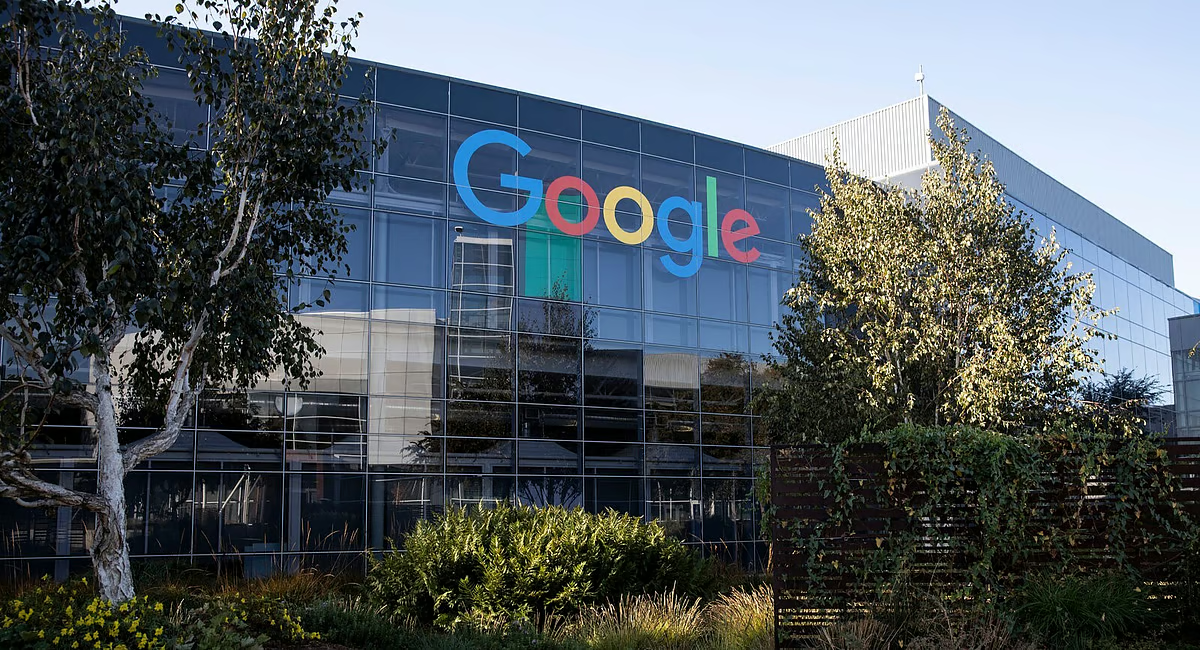
Key Takeaways for Alphabet (Google)
Alphabet, the parent company of Google, is a dominant force in digital advertising, search engines, and AI innovation.
- Market Capitalization: $3.75 trillion (2026).
- Revenue: $402.8 billion (FY 2025).
- Key Products: Google Search, YouTube, Google Cloud, Android.
Alphabet generates the majority of its revenue through Google Ads, making it the leader in the digital advertising industry.
Alphabet: The Powerhouse Behind Google and AI Innovation
Alphabet, the parent company of Google, is a global leader in digital advertising, search engines, and artificial intelligence (AI). Founded in 2015 as part of Google’s corporate restructuring, Alphabet oversees a diverse portfolio of technology-driven businesses, ranging from Google Search and YouTube to cloud computing and AI research. With its dominance in online services and digital innovation, Alphabet continues to shape the future of the internet, data analytics, and machine learning.
Alphabet Stock, GOOG: Massive Market Capitalization and Revenue Growth
With a market capitalization of $3.75 trillion, Alphabet (Stock ticker—GOOG on NASDAQ) is one of the most valuable technology companies worldwide. In FY 2025, the company reported $402.8 billion in revenue, fueled primarily by its Google Ads division, cloud computing services, and YouTube monetization. Alphabet’s ability to leverage data, AI-driven algorithms, and digital advertising dominance ensures its continuous financial growth and market expansion.
Google Search: The World’s Leading Search Engine
At the core of Alphabet’s success is Google Search, which accounts for over 90% of global search engine traffic. With its advanced AI algorithms, personalized search results, and ever-evolving SEO strategies, Google remains the go-to platform for information discovery. The integration of Google AI, voice search, and machine learning has further enhanced user experience, ad targeting, and search relevance, solidifying its market supremacy.
YouTube: The Dominant Force in Online Video
Alphabet owns YouTube, the world’s largest video-sharing platform, which attracts over 2.5 billion monthly active users. YouTube generates billions in revenue through advertising, premium subscriptions, and influencer-driven content, making it a key driver of Alphabet’s digital economy. As video content consumption grows, Alphabet continues to expand YouTube’s monetization models through AI-powered recommendations, live streaming, and short-form video formats.
Google Ads: The Leader in Digital Advertising
A significant portion of Alphabet’s revenue comes from Google Ads, making it the undisputed leader in digital advertising. Businesses worldwide rely on Google’s advertising ecosystem, including Search Ads, Display Ads, and YouTube Ads, to reach their target audiences. With AI-driven ad placements, personalized marketing strategies, and vast user data insights, Google Ads dominates the global digital marketing industry, generating billions in annual ad revenue.
Google Cloud and AI Advancements
Beyond advertising, Alphabet has expanded its presence in cloud computing and artificial intelligence. Google Cloud competes with Amazon Web Services (AWS) and Microsoft Azure, offering AI-driven cloud solutions, data analytics (Google analytics), and enterprise services. Additionally, Alphabet’s DeepMind and Google AI divisions are pioneering advancements in machine learning, natural language processing, and autonomous systems, positioning Alphabet as a leader in AI research and innovation.
Alphabet's Future Growth and Market Influence
As the world shifts toward AI-driven solutions, cloud computing, and digital transformation, Alphabet is poised for continued expansion. With its dominance in search, advertising, video content, and cloud services, the company remains a technological powerhouse, driving innovation, economic growth, and digital connectivity worldwide.
- Sources Include / Discover More: Alphabet, Learn More About Google
- Also Read: Top Currency Converters in the World
#3
Apple
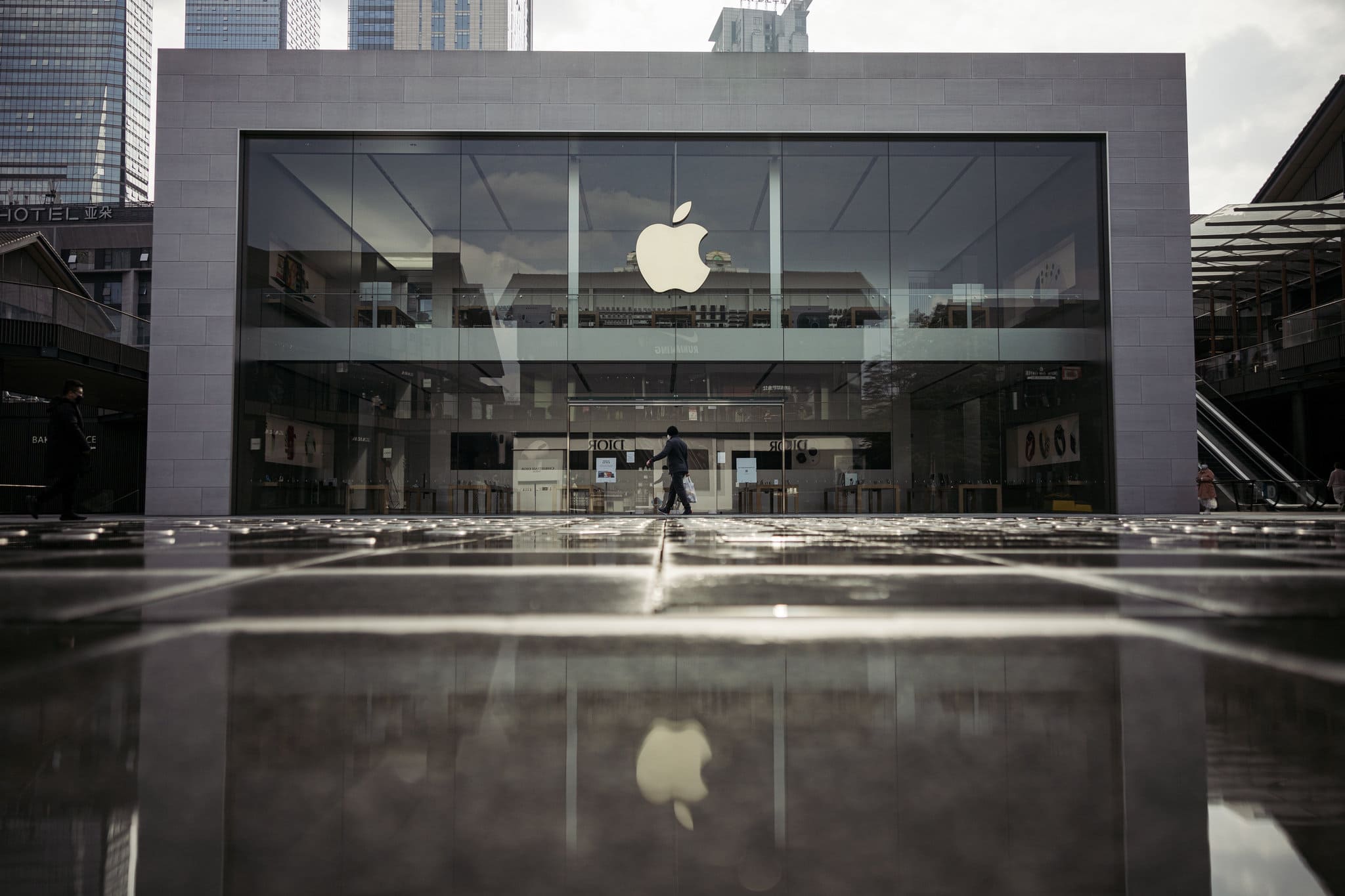
Key Takeaways for Apple
Apple is one of the most valuable and influential companies in the world. Founded in 1976 by Steve Jobs, Steve Wozniak, and Ronald Wayne, Apple revolutionized the tech industry with its innovative products, including the iPhone, MacBooks, and iPads.
- Market Capitalization: $3.74 trillion (2026).
- Revenue: $416 billion (FY 2025).
- Key Products: iPhone, Mac, iPad, Apple Watch, Apple Services.
Apple’s focus on user experience, sleek design, and ecosystem integration has helped it maintain a loyal customer base and remain a market leader.
Apple: The Tech Giant Redefining Innovation
Apple Inc. is one of the most valuable and influential companies in the world, setting the gold standard for innovation, design, and technology. Founded in 1976 by Steve Jobs, Steve Wozniak, and Ronald Wayne, Apple transformed the consumer electronics industry with its groundbreaking products. From MacBooks to iPhones, Apple has consistently revolutionized the way people interact with technology, creating a seamless ecosystem that keeps users engaged and loyal.
Apple Stock, AAPL: Unmatched Market Dominance
With a market capitalization exceeding $3.74 trillion, Apple (Stock ticker—AAPL on NASDAQ) is the third most valuable company in the world. Its revenue surpassed $416 billion in FY 2025, driven by strong demand for the iPhone, Mac, iPad, Apple Watch, and Apple Services. The company’s ability to innovate and adapt has allowed it to maintain its leadership position in the technology industry, competing with giants like Microsoft, Google, and Samsung.
iPhone, MacBook, iPad & Apple Watch: The Power of the Apple Ecosystem
One of Apple’s biggest strengths is its integrated ecosystem, which ensures seamless connectivity between devices. Whether using an iPhone, MacBook, iPad, or Apple Watch, users experience effortless synchronization, making Apple products indispensable for millions worldwide. The Apple Services division, including iCloud, Apple Music, the App Store, and Apple Pay, has become a major revenue driver, contributing significantly to the company’s financial success.
Apple's Commitment to Innovation and User Experience
Apple is renowned for its sleek design, premium quality, and user-friendly interfaces. The company invests heavily in research and development (R&D), ensuring that each new product features cutting-edge technology. From advanced AI-powered processors to next-generation display technology, Apple continuously pushes the boundaries of innovation. Its commitment to privacy and security also sets it apart, giving users confidence in their devices.
Future Growth and Market Influence
Apple is expected to maintain its market dominance with upcoming advancements in artificial intelligence, augmented reality (AR), and wearable technology. The rumored Apple Vision Pro and advancements in AI-driven software signal that the company is not slowing down. As 5G technology expands, Apple’s devices will continue to shape the future of communication and digital experiences. Apple’s ability to combine innovation, premium design, and a strong ecosystem has solidified its status as a global leader in technology, making it a powerhouse in the stock market and an unstoppable force in the digital age.
- Sources Include / Discover More: The Innovative World of Apple
- Also Read: Top Banks in the World
#4
Microsoft
Key Takeaways for Microsoft
Microsoft, founded by Bill Gates and Paul Allen in 1975, is a global technology giant known for its software and cloud computing services.
- Market Capitalization: $2.97 trillion (2026).
- Revenue: $281.7 billion (FY 2025).
- Key Products: Windows OS, Microsoft Office, Azure, Xbox.
Microsoft has transitioned from a software-focused company to a leader in cloud computing, with its Azure platform becoming a major competitor to Amazon’s AWS.
Microsoft: A Global Leader in Software and Cloud Computing
Microsoft, founded in 1975 by Bill Gates and Paul Allen, has grown into one of the largest and most influential technology companies in the world. Initially known for its Windows operating system, Outlook, and Microsoft Office suite, the company has expanded its reach into cloud computing, artificial intelligence, gaming, and enterprise solutions. With a strong focus on innovation and digital transformation, Microsoft continues to dominate the tech industry with its cutting-edge products and services.
Microsoft Stock, MSFT: Massive Market Capitalization and Revenue Growth
With a market capitalization of $2.97 trillion, Microsoft (Stock ticker—MSFT on NASDAQ) is one of the most valuable companies globally. In FY 2025, it reported an impressive $281.7 billion in revenue, fueled by growth in its cloud computing division, enterprise software, and gaming segment. This strong financial performance has solidified Microsoft’s position as a technology powerhouse and a key player in multiple industries.
Microsoft 365 & Windows: The Foundation of Success
Microsoft’s success began with Windows OS, which became the most widely used operating system in the world. The company’s flagship Microsoft Office suite (Office 365 is now Microsoft 365), including Word, Excel, and PowerPoint, remains an essential productivity tool for businesses, students, and professionals. These products have established Microsoft as a dominant force in enterprise software, making its ecosystem indispensable for millions of users worldwide.
Microsoft Azure: A Cloud Computing Powerhouse
Microsoft has successfully transitioned from a software-centric company to a leader in cloud computing. Azure, Microsoft’s cloud platform, has emerged as a major competitor to Amazon Web Services (AWS), offering AI-driven solutions, data analytics (Power BI), and scalable enterprise applications. With businesses shifting to cloud-based infrastructure, Azure continues to experience exponential growth, contributing significantly to Microsoft’s revenue and market dominance.
Expanding Influence in Gaming with Xbox
Microsoft is also a key player in the gaming industry, thanks to its Xbox gaming consoles, Game Pass subscription service, and cloud gaming innovations. The company’s acquisitions, such as Bethesda and Activision Blizzard, have strengthened its gaming portfolio, positioning Xbox as a strong competitor to Sony’s PlayStation. With cloud gaming and AI-driven enhancements, Microsoft is shaping the future of interactive entertainment.
Microsoft's Future Innovations and Market Leadership
As AI, cloud computing, and cybersecurity continue to evolve, Microsoft is investing heavily in artificial intelligence, metaverse technologies, and next-generation software solutions. With a commitment to enterprise innovation and digital transformation, Microsoft is poised to remain a global leader in technology for decades to come.
- Sources Include / Discover More: The Microsoft Corporation
- Also Read: Top Luxury Brands in the World
#5
Amazon
Key Takeaways for Amazon
Amazon, founded by Jeff Bezos in 1994, started as an online bookstore but has since evolved into the world’s largest e-commerce platform.
- Market Capitalization: $2.31 trillion (2026).
- Revenue: $716.9 billion (FY 2025).
- Key Divisions: Amazon Marketplace, AWS, Prime Video.
Amazon Web Services (AWS) is a key driver of Amazon’s financial success, dominating the cloud computing industry.
Amazon: The E-Commerce and Cloud Computing Giant
Amazon, founded by Jeff Bezos in 1994, started as a small online bookstore and has grown into the world’s largest e-commerce platform. The company has revolutionized online shopping, cloud computing, digital streaming, and artificial intelligence, making it one of the most influential tech giants globally. With its customer-centric approach, Amazon has expanded into multiple industries, becoming a dominant force in e-commerce, cloud services, and entertainment.
Amazon Stock, AMZN: Unmatched Market Capitalization and Revenue Growth
Amazon has achieved a market capitalization of $2.31 trillion, placing it among the most valuable companies in the world. In FY 2025, Amazon (Stock ticker—AMZN on NASDAQ) reported a staggering $716.9 billion in revenue, driven by its e-commerce operations, subscription services, and cloud computing division. The company’s ability to scale its business and adapt to market trends has solidified its position as an industry leader.
Amazon Marketplace: Amazon Seller Central, The Backbone of Global E-Commerce
Amazon’s e-commerce platform, known as Amazon Marketplace, has transformed the way people shop, via Amazon shopping. The company’s extensive logistics network, Prime membership benefits, and AI-driven recommendations provide an unparalleled shopping experience. With millions of third-party sellers, Amazon dominates global retail, offering fast shipping, competitive pricing, and a vast selection of products.
Amazon Web Services: The Cloud Computing Leader
One of Amazon’s most profitable divisions is Amazon Web Services (AWS), which dominates the cloud computing industry. AWS provides scalable cloud solutions for businesses, powering everything from startups to Fortune 500 companies. With services in artificial intelligence, machine learning, and data storage, AWS is a key driver of Amazon’s financial success. It competes directly with Microsoft Azure and Google Cloud, maintaining a leading position in cloud infrastructure.
Prime Video and Digital Entertainment Expansion
Amazon has also made significant strides in digital streaming through Prime Video, competing with Netflix and Disney+. By investing in original content, sports streaming, and global expansion, Prime Video enhances Amazon’s subscription-based revenue model. Additionally, Amazon’s ownership of Twitch, a leading live-streaming platform for gamers, strengthens its digital media presence.
Amazon's Future Growth and Market Influence
As AI, automation, and cloud computing continue to evolve, Amazon is well-positioned for future growth. The company is investing in drone delivery, voice-controlled shopping with Alexa, and sustainability initiatives to maintain its competitive edge. With unmatched innovation and global reach, Amazon remains a dominant player in e-commerce, cloud computing, and digital services, shaping the future of technology and consumer experience.
- Sources Include / Discover More: The Amazon Company
- Also Read: Top Calculators in the World
#6
Saudi Aramco
Key Takeaways for Saudi Aramco
Saudi Aramco is the world’s largest oil producer and a key player in the global energy sector.
- Market Capitalization: $1.74 trillion (2026).
- Revenue: $445.65 billion (FY 2025).
- Key Business: Oil exploration, refining, and petrochemicals.
Saudi Aramco plays a crucial role in global oil supply and energy security, making it a dominant force in the energy industry.
Saudi Aramco: The World’s Leading Oil Producer
Saudi Aramco is the largest oil producer in the world and a dominant force in the global energy sector. Headquartered in Dhahran, Saudi Arabia, the company is responsible for a significant share of the world’s crude oil production and exports. Saudi Aramco plays a critical role in global energy security, ensuring a steady supply of petroleum products to meet the demands of industries, transportation, and economies worldwide.
Aramco Company Stock, 2222: Market Capitalization and Financial Strength
With a market capitalization of $1.74 trillion, Saudi Aramco (Stock ticker—2222 on TADAWUL Exchange) is one of the most valuable companies globally. In FY 2025, the company generated an impressive $445.65 billion in revenue, reinforcing its financial dominance in the oil and gas industry. The company’s strong profit margins and stable financial position enable it to invest in technological advancements, infrastructure expansion, and sustainability initiatives, securing its long-term growth.
Oil Exploration and Global Supply Leadership
Saudi Aramco’s primary business revolves around oil exploration, production, refining, and petrochemical processing. The company manages some of the largest proven oil reserves in the world, ensuring a stable and cost-effective supply of crude oil. As a leading energy exporter, Saudi Aramco supplies oil to major economies, including the United States, China, India, and Europe, making it a crucial player in global energy markets.
Aramco's Refining and Petrochemical Expansion
Beyond crude oil production, Saudi Aramco has invested heavily in refining and petrochemicals. Through its global network of refineries and joint ventures, the company produces high-value petroleum products, including gasoline, diesel, jet fuel, and chemicals used in manufacturing and industrial applications. The company’s focus on downstream operations strengthens its market position and enhances its revenue diversification strategy.
Energy Security and Market Stability
Saudi Aramco is a key contributor to global energy security, ensuring stable oil supplies even during geopolitical tensions and economic fluctuations. The company works closely with OPEC (Organization of the Petroleum Exporting Countries) to regulate oil production and maintain market balance, preventing extreme price volatility. Its strategic role in the oil market influences global energy policies and economic stability.
Sustainability and the Future of Energy
Despite its dominance in traditional fossil fuels, Saudi Aramco is investing in sustainability initiatives to adapt to the global energy transition. The company is exploring carbon capture technologies, renewable energy projects, and hydrogen production to reduce its environmental impact. As the world shifts toward cleaner energy sources, Saudi Aramco aims to remain a key player in the evolving energy landscape.
Aramco, in Summary
Aramco’s unmatched scale, financial strength, and market influence make it the backbone of the global energy industry. With world-leading oil production, refining capabilities, and energy security contributions, the company continues to shape the future of the oil and gas sector while preparing for a more sustainable energy future.
- Sources Include / Discover More: Saudi Aramco, The Saudi Arabian Oil Company
- Also Read: Top Online Learning Platforms
#7
Meta (Facebook)

Key Takeaways for Meta (Facebook)
Meta, formerly Facebook, is a leader in social media, connecting billions of users worldwide.
- Market Capitalization: $1.58 trillion (2026).
- Revenue: $200.97 billion (FY 2025).
- Key Products: Facebook, Instagram, WhatsApp, Oculus.
Meta is investing heavily in the metaverse, aiming to redefine digital interaction and transform the future of online connectivity.
Meta: The Social Media Giant Transforming Digital Interaction
Meta, formerly known as Facebook (FB), is a global leader in social media and digital communication, with a massive user base spanning billions of people worldwide. Founded by Mark Zuckerberg in 2004, the company has evolved from a simple social networking platform into a technological powerhouse, shaping how people connect, share, and engage online. With its dominance across social media, digital advertising, and virtual reality, Meta continues to influence global communication trends and the future of digital interaction.
Meta Stock, META: Massive Market Capitalization and Revenue Growth
With a market capitalization of $1.58 trillion, Meta (Stock ticker— META on NASDAQ) is one of the most valuable technology companies in the world. In FY 2025, the company generated $200.97 billion in revenue, driven primarily by digital advertising, social media engagement, and emerging virtual reality technologies. Meta’s advertising ecosystem, powered by Facebook Ads and Instagram Ads, enables businesses to target audiences with AI-driven precision, making it a leader in digital marketing monetization.
Dominance Across Social Media Platforms
Meta owns and operates some of the most popular social media platforms globally, including:
- Facebook (FB)– The largest social networking site, with over 3 billion monthly active users.
- Instagram – A leading platform for photo and video sharing, favored by brands, influencers, and businesses.
- WhatsApp – A dominant messaging app used by over 2 billion people for secure, instant communication.
- Oculus – A leader in virtual reality (VR) technology, driving innovation in gaming and immersive experiences.
Through these platforms, Meta has created an interconnected digital ecosystem, allowing users to engage seamlessly across multiple devices and services.
Meta’s Bold Vision for the Metaverse
A key aspect of Meta’s future strategy is its heavy investment in the metaverse, a virtual world designed to redefine online interaction and digital experiences. Meta is developing immersive technologies, such as virtual reality (VR) and augmented reality (AR), to create a next-generation digital universe where users can work, socialize, and entertain themselves in virtual environments.
With innovations like Meta Horizon Worlds and Oculus VR headsets, the company is leading the charge toward a new era of internet connectivity, focusing on virtual meetings, AI-driven avatars, and digital economies.
Meta’s Future Growth and Market Influence
As social media continues to evolve, Meta remains at the forefront of technological advancements, pushing boundaries in AI, VR, and digital engagement. With its expanding influence in social networking, digital advertising, and the metaverse, Meta is poised to shape the future of online connectivity, making it a dominant force in the global tech industry.
- Sources Include / Discover More: Meta, The Social Technology Company
- Also Read: Top Health Supplements in the World
#8
TSMC
Key Takeaways for TSMC
TSMC (Taiwan Semiconductor Manufacturing Company) is the world’s leading semiconductor manufacturer, playing a crucial role in the global tech industry.
- Market Capitalization: $1.52 trillion (2026).
- Revenue: $122.42 billion (FY 2025).
- Key Products: Advanced semiconductor chips, 3nm and 5nm processors.
TSMC dominates the semiconductor industry, producing high-performance chips for tech giants like Apple, NVIDIA, and AMD, making it a key player in the global electronics supply chain.
TSMC: The Backbone of the Global Semiconductor Industry
Taiwan Semiconductor Manufacturing Company (TSMC) is the world’s largest and most advanced semiconductor foundry, playing a crucial role in the global technology industry. As a pioneer in semiconductor innovation, TSMC is responsible for producing the most advanced chips used in smartphones, high-performance computing, artificial intelligence, and automotive technologies.
TSMC Stock, 2330: Market Capitalization and Financial Strength
With a market capitalization of $1.52 trillion, TSMC (Stock ticker—2330 on TPE Exchange) stands as one of the most valuable semiconductor companies in the world. In FY 2025, the company reported an impressive revenue of $122.42 billion, reflecting its dominance in chip manufacturing and its strategic importance to the global supply chain. As demand for high-performance computing and AI-driven applications continues to rise, TSMC’s financial strength ensures steady innovation and technological advancement.
Key Products and Advanced Chip Technology
TSMC specializes in cutting-edge semiconductor manufacturing, developing some of the most advanced chip technologies in the world, including:
- 3nm and 5nm processors – These next-generation chips deliver higher performance, greater energy efficiency, and improved processing power, making them essential for flagship smartphones, AI applications, and cloud computing.
- Custom chips for top tech companies – TSMC manufactures high-performance chips for Apple, NVIDIA, AMD, and Qualcomm, enabling the development of powerful devices, from iPhones and MacBooks to gaming GPUs and AI processors.
As the global leader in semiconductor production, TSMC’s technological advancements drive innovation across multiple industries, ensuring the development of faster, more efficient, and more powerful electronic devices.
TSMC’s Role in the Global Electronics Supply Chain
TSMC’s dominance in semiconductor manufacturing makes it a critical player in the global electronics supply chain. Nearly every major tech company, smartphone manufacturer, and AI developer depends on TSMC’s cutting-edge chip fabrication. Without TSMC, industries such as smartphones, cloud computing, gaming, and automotive technology would struggle to keep up with technological advancements.
The company’s leading-edge chip production facilities, including its state-of-the-art fabrication plants in Taiwan and planned expansions in the U.S. and Europe, ensure a steady supply of advanced semiconductors, helping mitigate global chip shortages.
Driving the Future of AI, 5G, and Computing
TSMC’s influence extends beyond consumer electronics. The company is powering the next wave of technological innovation, playing a pivotal role in artificial intelligence, 5G networks, autonomous vehicles, and quantum computing. As demand for more powerful AI processors and energy-efficient chips continues to grow, TSMC remains at the forefront of semiconductor advancements, shaping the future of global technology.
With its unrivaled expertise, financial strength, and strategic importance in the tech ecosystem, TSMC is set to remain the world’s leading semiconductor manufacturer, ensuring continued innovation, efficiency, and progress in the digital age.
- Sources Include / Discover More: TSMC, The Taiwan Semiconductor Manufacturing Company
- Also Read: Top Largest Law Firms in the World
#9
Tesla
Key Takeaways for Tesla
Tesla, led by Elon Musk, has revolutionized the electric vehicle (EV) industry with its innovative approach to sustainable transportation.
- Market Capitalization: $1.25 trillion (2026).
- Revenue: $94.83 billion (FY 2025).
- Key Products: Tesla Model S, Model 3, Model X, Model Y, Cybertruck.
Tesla’s groundbreaking advancements in autonomous driving and battery technology have solidified its position as a leader in the automotive industry, shaping the future of electric mobility and clean energy solutions.
Tesla: Transforming the Future of Electric Mobility
Tesla, under the leadership of Elon Musk, has revolutionized the electric vehicle (EV) industry by introducing cutting-edge technology and sustainable transportation solutions. As a pioneer in clean energy and autonomous driving, Tesla has reshaped the global automotive market, making electric vehicles mainstream and accelerating the world’s shift toward renewable energy solutions.
Tesla Stock, TSLA: Market Capitalization & Financial Strength
With a market capitalization of $1.25 trillion, Tesla stock (Stock ticker—TSLA on NASDAQ) ranks among the most valuable in the global automotive sector. In FY 2025, Tesla generated $94.83 billion in revenue, driven by rising global demand, continued innovation, and rapid expansion into new markets. Its direct-to-consumer sales approach and highly efficient production systems have helped Tesla stock maintain strong profit margins while leading the industry in electric vehicle technology.
Key Products Driving Tesla’s Growth
Tesla’s success is fueled by its lineup of high-performance, energy-efficient electric vehicles, including:
- Tesla Model S – A luxury electric sedan with long-range battery technology and high-speed performance.
- Tesla Model 3 – One of the best-selling EVs globally, known for its affordability, advanced safety features, and cutting-edge technology.
- Tesla Model X – A premium electric SUV with Falcon Wing doors, high-speed acceleration, and autonomous driving capabilities.
- Tesla Model Y – A compact crossover SUV, combining performance, efficiency, and spacious design, making it a popular choice worldwide.
- Cybertruck – A futuristic all-electric pickup truck, designed for durability, power, and off-road capabilities, redefining the truck segment.
These groundbreaking electric vehicles have positioned Tesla as a market leader, driving the adoption of sustainable transportation and challenging traditional internal combustion engine (ICE) automakers.
Innovations in Autonomous Driving and Battery Technology
Tesla’s investment in self-driving technology has given it a competitive edge in the automotive industry. The Full Self-Driving (FSD) system and Autopilot software use advanced AI, machine learning, and real-time data processing to enhance driver assistance and automation, bringing the company closer to achieving fully autonomous vehicles.
Additionally, Tesla’s battery technology innovations are redefining energy storage and efficiency. The company’s in-house battery production, including the 4680 battery cells, offers higher energy density, longer lifespan, and lower costs, improving EV range and performance. Tesla’s gigafactories worldwide ensure mass production scalability, helping meet the rising demand for electric mobility.
Tesla Powerwall & Megapack: Shaping the Future of Sustainable Energy
Beyond electric vehicles, Tesla is committed to clean energy solutions, including solar panels, energy storage systems like Powerwall and Megapack, and a fully integrated energy ecosystem. These innovations aim to reduce global carbon emissions and promote renewable energy adoption on a larger scale.
With its relentless focus on innovation, sustainability, and AI-driven automation, Tesla continues to be a disruptive force in the automotive and energy industries, shaping the future of transportation and setting the standard for next-generation mobility.
- Sources Include / Discover More: Tesla, Electric Cars, Solar & Clean Energy
- Also Read: Top Software Companies in the World
#10
Berkshire Hathaway

Key Takeaways for Berkshire Hathaway
Berkshire Hathaway, led by Warren Buffett, is a multinational conglomerate with diverse investments across multiple industries.
- Market Capitalization: $1.06 trillion (2026).
- Revenue: $371.44 billion (FY 2025).
- Key Holdings: Geico, BNSF Railway, Apple stocks.
The company’s remarkable success is driven by Buffett’s value investing philosophy and strategic acquisitions, making it a powerhouse in the global investment landscape.
Berkshire Hathaway: A Global Investment Powerhouse
Berkshire Hathaway, led by legendary investor Warren Buffett, is a multinational conglomerate with diverse investments across multiple industries, making it one of the most successful and influential companies in the world. Originally a textile manufacturing company, Berkshire Hathaway transformed under Buffett’s leadership into a global investment powerhouse with holdings in insurance, railroads, energy, technology, and consumer goods.
Berkshire Hathaway Stock, BRK.A & BRK.B: Market Capitalization & Financial Strength
With a market capitalization of $1.06 trillion, Berkshire Hathaway is among the largest publicly traded companies in the world. Berkshire Hathaway offers two classes of common stock on NYSE: Class A—stock ticker BRK.A, and Class B—stock ticker BRK.B. Class A has a higher price per share and more voting rights than Class B. The company reported $371.44 billion in revenue in FY 2025, reflecting its strong financial performance and diverse income streams. Unlike most corporations, Berkshire does not pay dividends, instead reinvesting profits into high-value acquisitions and long-term investments, further strengthening its market position.
Key Holdings and Strategic Investments
Berkshire Hathaway’s success is built on a diversified investment strategy, with major holdings in insurance, transportation, technology, and consumer brands. Some of its most valuable assets include:
- Geico – One of the largest auto insurance providers in the United States, contributing to Berkshire’s stable cash flow and long-term profitability.
- BNSF Railway – A leading freight railroad company, essential to North America’s transportation and logistics industry.
- Apple Stocks – Berkshire Hathaway’s largest stock investment, reinforcing its presence in the technology sector and benefiting from Apple’s continuous growth and innovation.
In addition to these, Berkshire Hathaway owns significant stakes in major corporations, including Coca-Cola, American Express, Bank of America, and Dairy Queen, ensuring a well-diversified and resilient portfolio.
Warren Buffett’s Value Investing Philosophy
The core of Berkshire Hathaway’s success lies in Warren Buffett’s value investing philosophy, which focuses on long-term investments in fundamentally strong companies. Buffett and his team prioritize businesses with strong leadership, competitive advantages, and consistent earnings growth, making strategic acquisitions that maximize shareholder value. This disciplined approach has helped Berkshire Hathaway weather economic downturns and consistently deliver strong financial returns.
Berkshire Hathaway's Future Growth and Market Influence
Berkshire Hathaway continues to expand its investment portfolio, seeking new opportunities in emerging markets, renewable energy, and financial services. With Buffett’s proven investment strategy and a strong leadership team, the company remains a dominant force in global finance and business. As it adapts to changing market trends, Berkshire Hathaway is expected to maintain its legacy of financial strength, innovation, and long-term growth.
- Sources Include / Discover More: The Berkshire Hathaway Company
- Also Read: Top Superfoods in the World
Key FAQs on the 10 Top Companies in the World
Why has NVIDIA become a leader in AI and semiconductors?
NVIDIA has become a global leader in artificial intelligence and semiconductors by dominating GPU architecture used in AI training, data centers, gaming, and autonomous systems, as reported by Gartner and McKinsey.
Its CUDA platform and AI accelerators power workloads for cloud leaders like Microsoft Azure, Amazon Web Services, and Google Cloud. Analysts at Morgan Stanley and CB Insights highlight NVIDIA’s explosive AI demand growth and strategic partnerships as key reasons it underpins the modern global AI infrastructure.
Why is Alphabet considered a tech giant?
Alphabet is considered a technology giant due to its dominance in digital advertising, search, online video, and cloud computing, with Google Search and YouTube generating billions annually, according to Alphabet investor reports.
The company invests heavily in artificial intelligence, autonomous driving, and cloud infrastructure through Google Cloud, DeepMind, and Waymo. Research from PwC and MIT Technology Review highlights Alphabet’s influence across AI, data, and next-generation technology ecosystems worldwide.
Why is Apple ranked as the most valuable company in the world?
Apple is ranked as the world’s third most valuable company with a market capitalization exceeding $3.74 trillion, driven by global demand for iPhone, Mac, iPad, and Apple Watch, according to financial rankings by Bloomberg and Forbes.
Its high-margin services ecosystem—including App Store, iCloud, Apple Music, and Apple Pay—delivers recurring revenue at scale. Industry analysts at Statista and IDC cite Apple’s proprietary silicon, ecosystem lock-in, and unmatched brand loyalty as core drivers of its sustained financial dominance.
Why is Microsoft still one of the most powerful tech companies?
Microsoft remains one of the most powerful technology companies through its diversified portfolio spanning Windows, Microsoft 365, Azure, Xbox, and LinkedIn, generating hundreds of billions in annual revenue, according to Microsoft financial filings.
Azure is the world’s second-largest cloud platform, trailing only AWS, as confirmed by Synergy Research Group. Strong enterprise adoption, subscription-based revenue, and aggressive artificial intelligence investments position Microsoft as a cornerstone of global digital and cloud infrastructure.
How did Amazon become the world’s largest e-commerce company?
Amazon became the world’s largest e-commerce company by expanding from online retail into logistics, cloud computing, digital advertising, and streaming, supported by one of the largest fulfillment networks globally, per Statista.
Its Prime ecosystem drives customer retention, while Amazon Web Services generates the majority of operating profits, according to company earnings reports. Analysts at Deloitte note that Amazon’s data-driven logistics, marketplace dominance, and cloud leadership give it unmatched scale in global online commerce.
Why is Saudi Aramco the largest oil company in the world?
Saudi Aramco is the world’s largest oil company due to its unmatched proven reserves, massive daily production capacity, and central role in global energy markets, as documented by OPEC and IEA reports.
With a valuation exceeding $1.74 trillion, Aramco influences global crude pricing and supply stability. Energy analysts at Wood Mackenzie cite its vertically integrated operations, low extraction costs, and government backing as pillars of global energy security.
Why is Meta still a dominant player in social media?
Meta remains dominant in social media by connecting billions of users through Facebook, Instagram, WhatsApp, and Messenger, making it one of the world’s largest digital advertising platforms, according to DataReportal.
Advanced AI-driven ad targeting, cross-platform data integration, and massive engagement strengthen Meta’s monetization engine. Industry analysis from eMarketer and Accenture notes that Meta’s investments in AI and immersive technologies support long-term leadership in global digital communication.
Why is TSMC crucial to the global tech industry?
TSMC is crucial to the global technology industry as the world’s leading semiconductor manufacturer, producing advanced chips for Apple, NVIDIA, AMD, and Qualcomm, according to Semiconductor Industry Association data.
Its cutting-edge 5nm and 3nm fabrication processes power smartphones, AI systems, and high-performance computing. Analysts at ASML and Gartner identify TSMC’s scale, technical leadership, and geopolitical importance as foundational to modern global digital infrastructure.
Why is Tesla considered a leader in electric vehicles?
Tesla is considered a leader in electric vehicles due to its technological innovation, global manufacturing scale, and strong brand recognition, as reported by EV-Volumes and BloombergNEF.
Models like Model 3, Model Y, Model S, and Cybertruck set benchmarks for range and performance. Tesla’s vertical integration, proprietary battery systems, and autonomous driving software have accelerated global EV adoption and reshaped the automotive industry, according to McKinsey mobility research.
Why is Berkshire Hathaway unique compared to other companies?
Berkshire Hathaway is unique as a diversified conglomerate led by Warren Buffett, spanning insurance, railroads, utilities, manufacturing, and major equity investments, according to Berkshire shareholder letters.
Its portfolio includes Apple, Coca-Cola, and American Express, providing strong cash flow and balance-sheet resilience. Financial analysts at Morningstar and Moody’s highlight Berkshire’s long-term value investing strategy, decentralized management, and capital discipline as drivers of consistent performance across economic cycles.
Factors That Influence the 10 Top Companies
The 10 top companies in the world are shaped by several key factors, including innovation, financial strength, market demand, and strategic leadership. Companies that invest heavily in research and development (R&D) stay ahead by introducing cutting-edge technologies and services. Financial stability, with strong revenue and profit margins, enables them to expand operations, acquire competitors, and invest in new markets.
Additionally, global market trends, consumer preferences, and government regulations play a crucial role in their growth and sustainability. Companies that adapt to changing market conditions and leverage emerging technologies remain dominant in their respective industries.
The Future of the 10 Top Companies
The future of the 10 top companies will be driven by technological advancements, digital transformation, and sustainability efforts. As artificial intelligence (AI), blockchain, and the Internet of Things (IoT) continue to evolve, companies that embrace these innovations will maintain a competitive edge. The shift toward renewable energy, electric vehicles, and eco-friendly business models will also shape corporate strategies.
Additionally, expanding into emerging markets, enhancing cybersecurity, and improving customer experiences will be critical for long-term success. The companies that prioritize adaptability, innovation, and sustainability will continue to dominate the global business landscape.
Final Thoughts
The world’s 10 Top Companies have risen to prominence through a powerful combination of technological innovation, financial dominance, and visionary leadership. These global giants—spanning industries like technology, AI, finance, energy, e-commerce, and semiconductors—are not only market leaders but also key drivers of economic growth and societal transformation. Companies such as Apple, Microsoft, NVIDIA, and Amazon are reshaping how we live, work, and connect through groundbreaking advancements in software, hardware, AI, and cloud services.
As global markets continue to evolve rapidly, the ability to adapt, invest in next-gen technologies, and implement sustainable business practices will be critical for long-term success. The 10 Top Companies are increasingly focused on artificial intelligence, green energy, digital infrastructure, and scalable innovation to maintain their edge in a competitive environment.
From Silicon Valley to the Middle East and Asia, these corporations influence investor sentiment, employment, innovation ecosystems, and even government policy. As we move into an increasingly digital and interconnected world, these companies will continue to lead the charge—setting new standards, breaking valuation records, and redefining the global business landscape. Their stories are a testament to what’s possible when ambition, innovation, and strategy converge at scale.
The 10 Top Companies Frequently Asked Questions (FAQs)
NVIDIA is one of the world’s most valuable companies, with a market cap exceeding $4 trillion in 2026. Its dominance in AI chips, GPUs, and data center technology has fueled rapid growth, making it a leader in the global artificial intelligence revolution.
The top 10 companies play a significant role in the global economy by driving innovation, creating jobs, and influencing financial markets. Their investments in technology, infrastructure, and sustainability shape industries and impact business strategies worldwide.
These industry giants dominate sectors such as technology, e-commerce, energy, and finance. Companies like Apple, Microsoft, and NVIDIA lead in tech and AI, while Amazon and Alphabet dominate digital commerce and advertising. Saudi Aramco remains a powerhouse in energy, ensuring global oil supply and energy security.
The key factors behind corporate success include innovation, strong leadership, financial stability, and market adaptability. Companies that invest in R&D, embrace digital transformation, and expand into emerging markets continue to thrive and shape the future of business.
Companies like NVIDIA, Microsoft, Alphabet (Google), and Meta are at the forefront of AI development and infrastructure.
About the Author
This article was researched and prepared by the World Millions Editorial Team, specialists in global rankings, premium market analysis, structured comparisons, and high-value sector research across industries.
All content undergoes verification, editorial review, and periodic updates to ensure accuracy, clarity, and alignment with recognized industry standards, reliable institutional sources, and leading global authorities.
- Last Updated: March 27, 2026 by the World Millions Editorial Team
- Original Published Date: March 27, 2026
- View Our: Editorial Team | Sources | Disclaimer | Editorial Standards