- Home
- »
- World’s Most Expensive
- »
- 10 Most Expensive Antiques in the World
10 Most Expensive Antiques
in the World
The most expensive antiques in the world represent the ultimate fusion of historical heritage, museum-level craftsmanship, and extraordinary collector demand. From imperial Chinese porcelain and Renaissance manuscripts to legendary gemstones and royal furniture, these artifacts have achieved record-breaking auction prices due to rarity, provenance, and cultural significance.
Explore the 10 most expensive antiques in the world, ranked by verified auction valuations, historical importance, and global recognition among collectors, museums, and luxury investors. Discover iconic masterpieces like the Pinner Qing Dynasty Vase, Pink Star Diamond, and Leonardo da Vinci’s Codex Leicester, each representing a remarkable chapter in the history of art, design, and human civilization.
On This Page
Toggle- Updated 2026 by the World Millions Editorial Team: View Author Information
What Drives the Value of Antiques?
The value of antiques is driven by a combination of rarity, historical significance, condition, provenance, and market demand. Rarity plays a crucial role—items that are one-of-a-kind or produced in limited quantities tend to fetch higher prices. Historical significance also adds value; antiques linked to famous personalities, significant events, or ancient civilizations are highly sought after.
Condition is another critical factor, as well-preserved pieces command higher prices compared to damaged or restored items. Provenance, or the documented history of ownership, can significantly boost an antique’s value, especially if it has been owned by royalty or a notable figure.
Finally, market demand influences pricing—trends in collecting, interest from museums, and the preferences of wealthy collectors all play a role in determining how much an antique is worth.
List of the 10 Most Expensive Antiques in the World
From ancient Chinese porcelain to rare diamonds and royal treasures — explore the 10 most expensive antiques in the world ever sold at auction.
Below is a comprehensive, expert-curated table featuring the 10 most expensive antiques in the world, showcasing ultra-rare artifacts, historic furniture, imperial ceramics, and legendary collectibles. Each antique listed here has fetched jaw-dropping prices at world-famous auctions like Sotheby’s and Christie’s, captivating billionaire collectors, museums, and art investors alike.
From the $80 million Pinner Qing Dynasty Vase to Leonardo da Vinci’s Codex Leicester, this list highlights items that combine exceptional historical significance, origin, craftsmanship, and collector appeal. Whether you’re passionate about fine art, rare gems, or royal furnishings, this ranking offers a unique glimpse into the highest-valued antiques ever known.
| Rank | Antique Name | Price | Origin & Key Features | Historical Significance & Collector Appeal |
|---|---|---|---|---|
| 1 | The Pinner Qing Dynasty Vase | $80.2 Million | 18th-century Chinese porcelain vase; features intricate gold detailing and a rare imperial design. | Discovered in a suburban London home; its unexpected find and rarity made it a sensation at auction, attracting elite collectors of Chinese art. |
| 2 | The Pink Star Diamond | $71.2 Million | A 59.6-carat flawless pink diamond; one of the rarest and most valuable gemstones ever sold. | Set world records at Sotheby’s; coveted by elite jewelry collectors and investors for its unmatched color and clarity. |
| 3 | The Ru Guanyao Brush Washer Bowl | $37.7 Million | 900-year-old Song Dynasty ceramic bowl; extremely rare and historically significant. | Only a few in existence; a cultural treasure of China’s imperial past, prized by museums and Asian art historians. |
| 4 | The Badminton Cabinet | $36.7 Million | 18th-century Florentine ebony and gold cabinet; made for the Duke of Beaufort and adorned with semi-precious stones. | Once the most expensive piece of furniture ever sold; its aristocratic provenance draws royal collectors and furniture connoisseurs. |
| 5 | Leonardo da Vinci’s Codex Leicester | $30.8 Million | Handwritten manuscript by Leonardo da Vinci; contains scientific observations and theories on water movement, astronomy, and geology. | Purchased by Bill Gates; considered a holy grail for intellectual collectors and scholars of Renaissance science. |
| 6 | The Dragon Armchair by Eileen Gray | $28.3 Million | Art Deco-style armchair designed in 1917–1919; once owned by fashion designer Yves Saint Laurent. | Iconic in both design and celebrity ownership; its presence in the Yves Saint Laurent collection added immense value. |
| 7 | The Olyphant Battle Horn | $17 Million | Medieval carved ivory battle horn; a rare artifact of noble and military significance. | Symbol of medieval warfare and knightly culture; highly desirable among collectors of ancient European relics. |
| 8 | The Germain Royal Soup Tureen | $10 Million | A silver masterpiece from 1733, crafted by Thomas Germain for King Louis XV of France. | Its royal lineage and artistic craftsmanship make it a prized possession for collectors of French court silverware. |
| 9 | The Harrington Commode | $5.9 Million | 18th-century English commode designed by Thomas Chippendale; an exquisite example of Georgian furniture. | One of the few remaining Chippendale masterpieces with noble provenance; sought after by British furniture enthusiasts. |
| 10 | The Macallan 1926 Fine & Rare | $1.9 Million | A 60-year-old single malt Scotch whisky; part of The Macallan’s Fine & Rare Collection, one of the rarest whiskies ever produced. | Known as the “holy grail of whisky”; attracts high-end collectors due to its exclusivity and investment value. |
Discover the 10 Most Expensive Antiques in the World
Discover the fascinating world of rare artifacts, royal heirlooms, and priceless historical treasures with our definitive guide to the 10 Most Expensive Antiques in the World. These extraordinary collectibles have captivated museums, elite collectors, billionaires, and cultural institutions due to their rarity, craftsmanship, and unmatched historical significance.
From ancient Chinese porcelain and Renaissance manuscripts to legendary diamonds and royal furniture, each piece tells a powerful story of art, culture, and legacy. Whether you’re a collector, investor, or history enthusiast, this curated list reveals what makes these antiques so valuable — and why their worth continues to rise over time.
#1
Pinner Qing Dynasty Vase
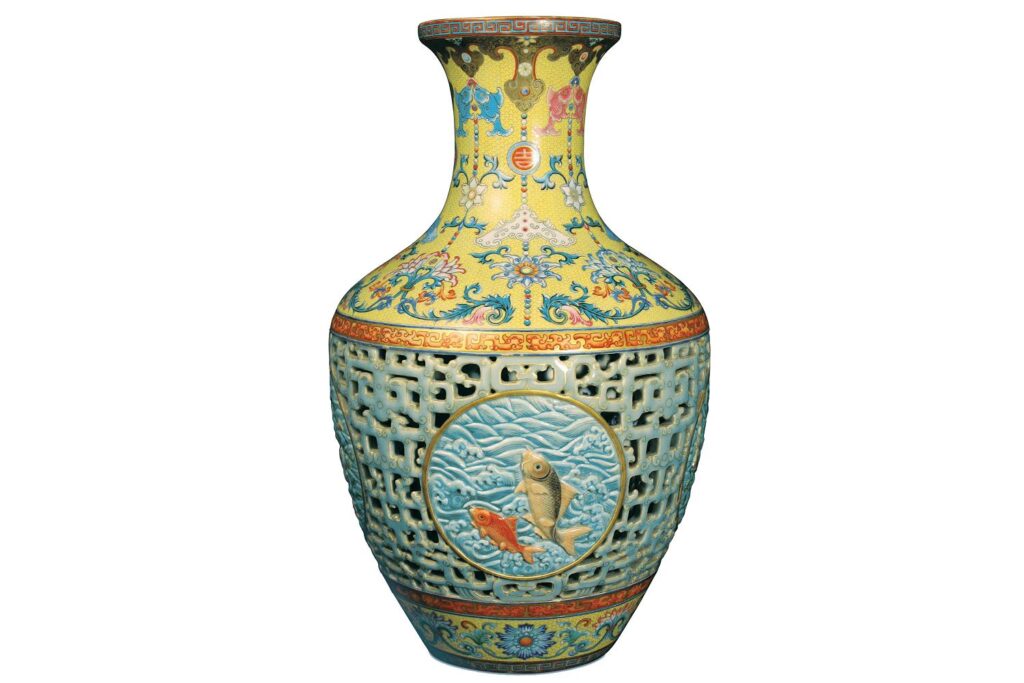
Key Takeaways for Pinner Qing Dynasty Vase
One of the most astonishing discoveries in the world of antiques, the Pinner Qing Dynasty Vase, was found in an attic in the UK. Dating back to the 18th century during the Qing Dynasty, this porcelain vase is a masterpiece of Chinese craftsmanship.
- Sold at an auction for $80.2 million, this is one of the most expensive vases ever sold.
- The intricate design and delicate craftsmanship make it highly desirable among collectors.
Pinner Qing Dynasty Vase: $80.2 Million
The Pinner Qing Dynasty Vase is one of the most valuable and expensive antiques ever sold, fetching a record-breaking $80.2 million at auction. This extraordinary piece of Chinese porcelain dates back to the 18th century during the Qing Dynasty, an era known for its exceptional craftsmanship and intricate ceramic artistry. The vase was unexpectedly discovered in an attic in Pinner, a small town in England, making headlines worldwide due to its astonishing value and historical significance.
Why is the Pinner Qing Dynasty Vase So Valuable?
Several factors contribute to the sky-high price of this rare Qing Dynasty vase. First, its age and provenance add immense historical significance. The vase is believed to have been crafted during the reign of the Qianlong Emperor (1735–1796), a period marked by unparalleled artistic and cultural achievements in China.
Secondly, its exquisite design and craftsmanship set it apart. The vase features intricate hand-painted motifs, including traditional Chinese floral patterns, imperial dragons, and gold embellishments. It also boasts a unique double-walled structure, a technique that required exceptional skill and precision—further increasing its desirability among collectors and art historians.
Another key factor behind its value is its rarity. Only a handful of similar Qing Dynasty vases exist, and very few are in pristine condition. The fact that this vase remained undisturbed for over a century in a private collection before its discovery adds to its allure.
Qing Dynasty Vase: The Auction That Shook the Art World
When the Pinner Qing Dynasty Vase was put up for auction at Bainbridge’s Auction House in 2010, experts initially estimated it to be worth a few million dollars. However, fierce bidding from international collectors and Chinese art investors drove the price up to a staggering $80.2 million, making it one of the most expensive Chinese antiques ever sold.
This sale underscored the growing global demand for Chinese antiques, particularly among wealthy Chinese buyers eager to reclaim their cultural heritage. As a result, Qing Dynasty porcelain pieces have become some of the most sought-after collectibles in the antique market.
Qing Dynasty: To Summarize
The Pinner Qing Dynasty Vase is a testament to the enduring value of Chinese antiques. Its historical significance, rarity, and exceptional craftsmanship make it a priceless artifact. With the increasing demand for authentic Qing Dynasty porcelain, similar antiques could continue to break records at auctions, reaffirming China’s rich artistic legacy on the global stage.
- Sources Include / Discover More: Bainbridge’s Auction House
- Also Read: Most Expensive Shoes in the World
#2
Pink Star Diamond
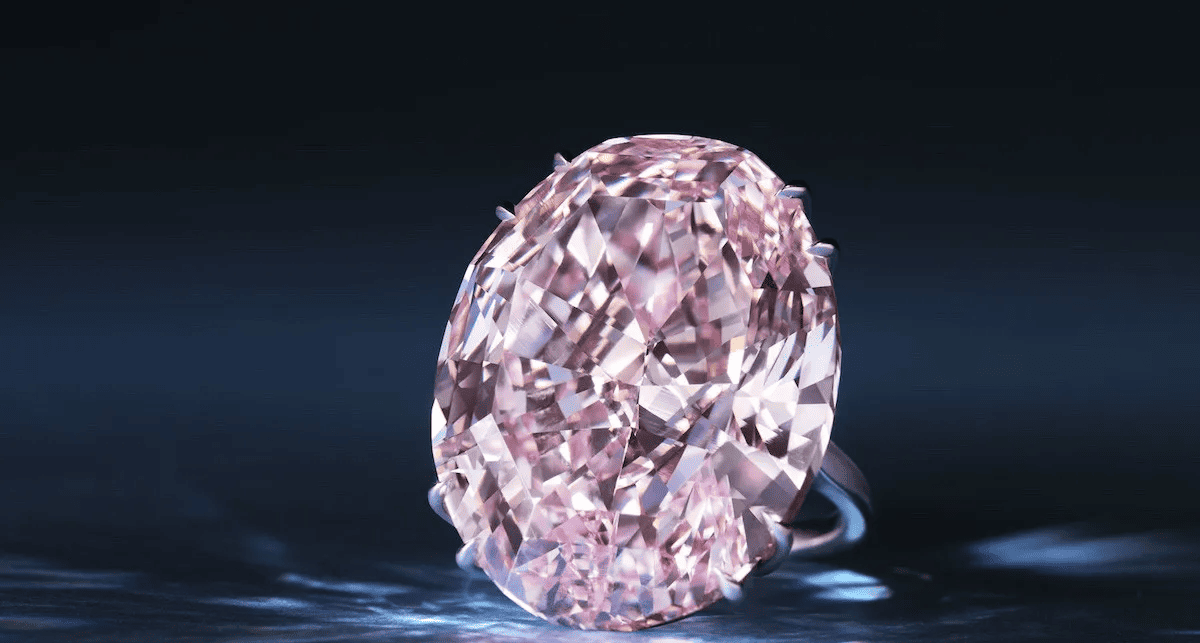
Key Takeaways for Pink Star Diamond
While diamonds aren’t traditional antiques, the Pink Star Diamond is an exception.
- This 59.6-carat pink diamond was sold for $71.2 million.
- It remains one of the most valuable gemstones ever auctioned.
Pink Star Diamond: $71.2 Million
The Pink Star Diamond is one of the most expensive gemstones ever sold at auction, commanding an astonishing $71.2 million. This rare and breathtaking 59.6-carat pink diamond is renowned for its exceptional size, flawless clarity, and unparalleled color saturation. Mined by De Beers in Africa in 1999, it was originally a 132.5-carat rough diamond before being meticulously cut and polished over two years to reveal its stunning final form.
Why is the Pink Star Diamond considered one of the world’s greatest gemstones?
Several factors contribute to the record-breaking price of the Pink Star Diamond, making it one of the most coveted gemstones in the world:
- Unmatched Rarity – The Pink Star Diamond is classified as a Fancy Vivid Pink Diamond, the highest grade for colored diamonds according to the Gemological Institute of America (GIA). Pink diamonds of this size and intensity are exceptionally rare, making them highly sought after by collectors and investors.
- Exceptional Clarity and Cut – The diamond is internally flawless, meaning it has no visible inclusions under magnification, a rarity for pink diamonds. Its oval mixed cut enhances its brilliance, allowing it to reflect light in a dazzling display of color and fire.
- Historical Significance – The Pink Star Diamond is the largest Fancy Vivid Pink Diamond ever graded by the GIA, cementing its status as a truly one-of-a-kind treasure.
The Record-Breaking Auction Sale
In April 2017, the Pink Star Diamond was sold at Sotheby’s Hong Kong Magnificent Jewels and Jadeite auction for $71.2 million, setting a world record for the most expensive diamond ever sold at auction. The winning bid came from Chow Tai Fook Enterprises, a renowned Hong Kong-based jewelry company, further underscoring Asia’s growing influence in the luxury gemstone market.
Interestingly, the Pink Star Diamond had previously been auctioned in 2013 for $83 million, but the sale fell through when the buyer failed to complete the payment. Despite this setback, the diamond remained one of the most coveted gems in the world, eventually securing its place as the most valuable pink diamond ever sold.
Pink Diamonds: Why the Pink Star Diamond Continues to Appreciate in Value
With the rising demand for rare colored diamonds, the Pink Star Diamond is expected to increase in value over time. Pink diamonds, particularly those of high quality and large carat weight, are becoming increasingly scarce due to limited supply from mines, such as the now-closed Argyle Mine in Australia. As wealthy collectors and investors seek tangible assets with long-term appreciation potential, rare diamonds like the Pink Star Diamond remain a top-tier investment.
The Pink Star: To Summarize
The Pink Star Diamond is more than just a gemstone—it is a symbol of luxury, rarity, and craftsmanship. As the most expensive pink diamond in history, it has cemented its place as one of the most sought-after investment pieces in the world. With the growing interest in rare colored diamonds, this dazzling masterpiece will likely continue to set records and captivate gem enthusiasts for generations to come.
- Sources Include / Discover More: The Pink Star Diamond
- Also Read: Most Expensive Wines in the World
#3
Ru Guanyao Brush Washer Bowl
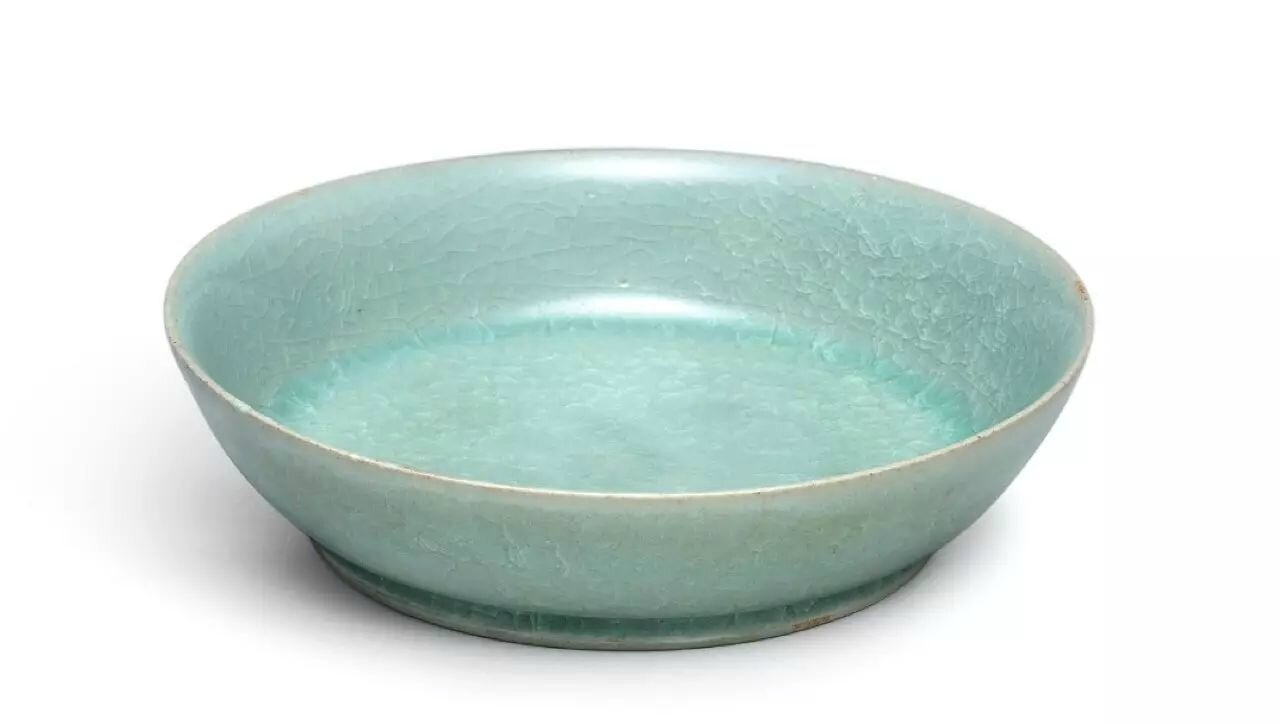
Key Takeaways for Ru Guanyao Brush Washer Bowl
This ceramic bowl, created during the Song Dynasty, is incredibly rare.
- In 2017, it was auctioned for $37.7 million.
- Its smooth glaze and delicate design make it a highly prized artifact.
Ru Guanyao Brush Washer Bowl: $37.7 Million
The Ru Guanyao Brush Washer Bowl is one of the rarest and most valuable pieces of Chinese porcelain, selling for an astonishing $37.7 million at a Sotheby’s auction in 2017. This Northern Song Dynasty artifact, dating back to around 960–1127 AD, is a prime example of Ru ware, one of the most coveted and exquisite types of Chinese ceramics. Its exceptional glaze, craftsmanship, and historical significance make it one of the most expensive antiques ever sold.
Chinese Porcelain: What Makes the Ru Guanyao Brush Washer Bowl So Valuable?
Several factors contribute to the extraordinary value of this Ru ware brush washer bowl, making it a prized treasure among collectors and museums worldwide:
- Unparalleled Rarity – Ru ware is considered the rarest type of Chinese porcelain, with only around 87 known pieces in existence. Most of these are housed in museums, making privately owned Ru ware items incredibly scarce.
- Exceptional Glaze and Craftsmanship – The brush washer bowl is famous for its distinctive sky-blue glaze with a crackled texture, a hallmark of Ru ware ceramics. The delicate ice-crackle pattern forms naturally as the glaze cools, making each piece unique.
- Imperial Connections – Ru ware was exclusively produced for the Northern Song Dynasty imperial court, meaning that every piece was crafted with the highest level of skill and precision. The bowl’s imperial origins add immense value to its historical and cultural significance.
The Record-Breaking Auction Sale
The Ru Guanyao Brush Washer Bowl shattered records when it was auctioned at Sotheby’s Hong Kong in October 2017, selling for $37.7 million. The fierce bidding war lasted just 20 minutes, with wealthy collectors competing for this once-in-a-lifetime artifact. The final buyer remains anonymous, but the sale confirmed the explosive demand for rare Chinese ceramics among elite collectors.
Previously, the most expensive Ru ware sold at auction was a Ru Guanyao tripod vessel, which fetched $26.7 million in 2016. The $37.7 million brush washer bowl surpassed that record, highlighting the increasing global demand for Chinese antiques.
Ru Ware: Why the Value of Ru Ware Continues to Rise
The scarcity of Ru ware ceramics ensures that their value will continue to appreciate over time. With only a handful of pieces available for private ownership, these artifacts represent the pinnacle of Chinese porcelain craftsmanship. Moreover, as Chinese collectors and museums seek to reclaim cultural treasures, prices for authentic Song Dynasty ceramics are expected to rise even further.
Chinese Ceramics: To Summarize
The Ru Guanyao Brush Washer Bowl is not just an antique—it is a masterpiece of Chinese ceramic art. Its rarity, exquisite craftsmanship, and imperial origins make it one of the most sought-after porcelain pieces in history. With the booming interest in Chinese antiques, this extraordinary Ru ware bowl will likely remain one of the most valuable ceramics ever sold, setting new records for generations to come.
- Sources Include / Discover More on Sotheby’s: Chinese Ru-Ware Washer Shatters World Record
- Also Read: Most Expensive Jewelry in the World
#4
Badminton Cabinet
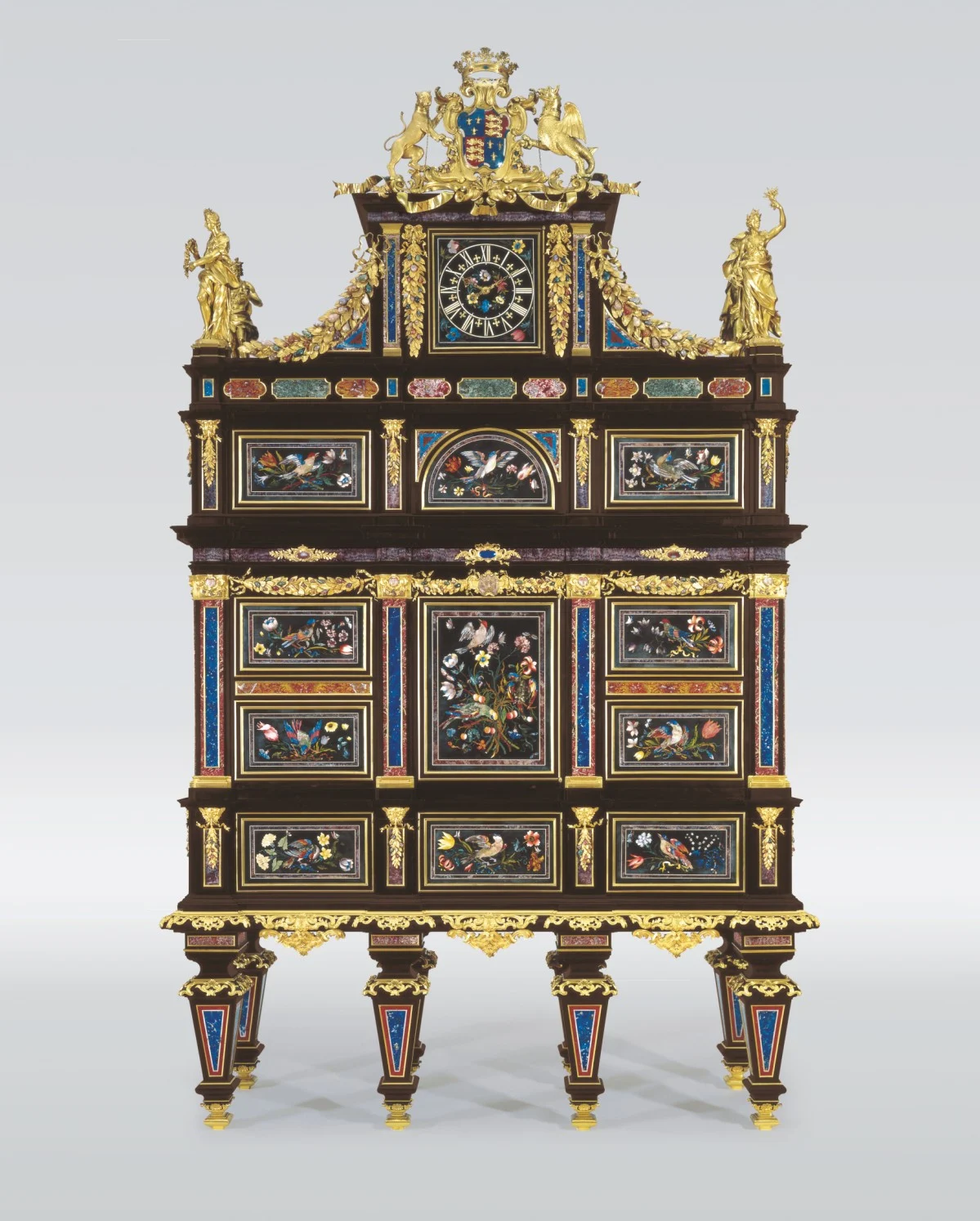
Key Takeaways for Badminton Cabinet
This 18th-century cabinet is a magnificent piece of furniture crafted in Florence, Italy.
- Standing at over 12 feet tall, this intricate cabinet was sold for $36.7 million.
- It was commissioned by the 3rd Duke of Beaufort and is considered one of the finest pieces of furniture ever made.
Badminton Cabinet: $36.7 Million
The Badminton Cabinet is one of the most expensive pieces of furniture ever sold, fetching an incredible $36.7 million at auction. This magnificent piece is a testament to the luxury, craftsmanship, and opulence of 18th-century European furniture design. Commissioned in 1726 by Henry Somerset, the 3rd Duke of Beaufort, the cabinet derives its name from Badminton House, the family’s ancestral estate in Gloucestershire, England. Its extraordinary value lies in its historical significance, intricate design, and masterful craftsmanship.
Exquisite Design and Craftsmanship
What sets the Badminton Cabinet apart is its lavish design and impeccable craftsmanship. The cabinet stands at an imposing 12 feet tall, making it one of the largest and most ornate pieces of furniture ever created. It was designed by Giuseppe Maria Bonzanigo and crafted by a team of Florentine craftsmen, taking over six years to complete.
The cabinet is adorned with semi-precious stones, including amethyst, lapis lazuli, and jasper, set into an intricate geometric design. The combination of gilded bronze, ebony, and marble gives the cabinet a striking appearance that exemplifies the Baroque style of the 18th century. Every inch of the cabinet is meticulously decorated, featuring intricate floral motifs, cherubs, and classical figures that showcase the extraordinary skill of the artisans.
Antique Furniture: Historical Significance and Provenance
The Badminton Cabinet holds immense historical value due to its connection with the noble Somerset family. Commissioned by one of the wealthiest families in England, the cabinet was passed down through generations before being sold at auction. Its long-standing association with Badminton House adds to its provenance and prestige, making it one of the most historically significant pieces of antique furniture ever created.
The cabinet was first auctioned in 1990 for $15.1 million, breaking records as the most expensive piece of furniture ever sold at the time. It was later sold again in 2004 at Christie’s for $36.7 million, reaffirming its place as one of the world’s most valuable antiques.
Why the Badminton Cabinet is So Valuable?
The Badminton Cabinet commands such a high price due to its rarity, craftsmanship, and historical importance. Unlike ordinary antiques, this cabinet represents the pinnacle of Baroque furniture design, crafted using only the finest materials and created by some of the most renowned artisans of the 18th century.
- Unparalleled Craftsmanship – The cabinet is a masterpiece of Italian craftsmanship, featuring intricate inlays of semi-precious stones and delicate gilded details. The level of precision and artistry in its construction makes it one of the most technically impressive pieces of furniture in history.
- Royal and Noble Provenance – The fact that it was commissioned by Henry Somerset, the Duke of Beaufort, adds immense historical prestige. Items with aristocratic and noble connections tend to appreciate in value, particularly when linked to important European families.
- One-of-a-Kind Rarity – Unlike mass-produced antiques, the Badminton Cabinet is a unique, custom-made piece, ensuring that no other like it exists. This level of exclusivity makes it highly desirable among collectors and museums.
- Record-Breaking Sales History – The cabinet has twice set auction records for furniture, proving its lasting appeal and continuous appreciation in value.
Who Owns the Badminton Cabinet Today?
The Badminton Cabinet is currently housed in the Liechtenstein Museum in Vienna, Austria. It was purchased by Prince Hans-Adam II of Liechtenstein, a major patron of the arts, who recognized its cultural and artistic significance. The cabinet is now considered a crown jewel of European decorative arts, admired by art enthusiasts and historians worldwide.
To Summarize
The Badminton Cabinet is more than just furniture—it is a symbol of opulence, artistry, and history. With its exceptional craftsmanship, noble provenance, and luxurious design, it remains one of the most valuable and sought-after antiques ever sold. As appreciation for historical European furniture continues to grow, the Badminton Cabinet will likely hold its place as one of the greatest masterpieces of Baroque design, cementing its legacy for generations to come.
- Sources Include / Discover More on Christie’s: The Badminton Cabinet
- Also Read: Most Expensive Travel Destinations
#5
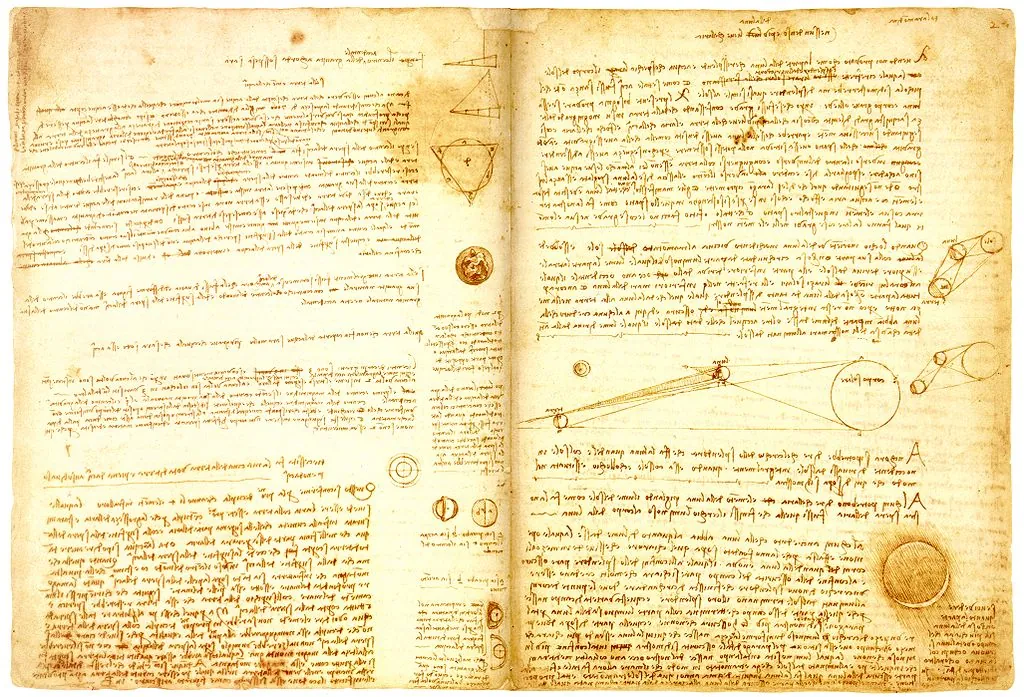
Codex Leicester
Key Takeaways for Codex Leicester
Leonardo da Vinci’s Codex Leicester is one of the most valuable manuscripts ever sold.
- It contains scientific observations and theories written by the Renaissance genius himself.
- Bill Gates purchased this manuscript for $30.8 million in 1994.
- The book offers incredible insights into da Vinci’s thoughts on astronomy, water movement, and fossils.
Codex Leicester: $30.8 Million
The Codex Leicester, an extraordinary scientific manuscript by Leonardo da Vinci, is one of the most expensive books ever sold, fetching $30.8 million at auction in 1994. This remarkable 72-page notebook contains handwritten notes, sketches, and theories on various scientific topics, reflecting da Vinci’s unparalleled genius and curiosity. Purchased by Bill Gates, the Codex Leicester remains one of the most valuable historical documents, offering insight into the mind of one of history’s greatest polymaths.
What Makes the Codex Leicester So Valuable?
Several factors contribute to the enormous value and significance of Leonardo da Vinci’s Codex Leicester:
- Historical and Scientific Importance – Written between 1506 and 1510, this manuscript showcases da Vinci’s revolutionary ideas on astronomy, geology, water movement, and light reflection. His scientific observations were centuries ahead of their time, influencing future generations of scientists and inventors.
- Rare and Authentic Da Vinci Handwriting – The Codex is one of the few surviving manuscripts written entirely in da Vinci’s distinctive mirror-writing style, making it an authentic and rare piece of Renaissance history.
- Unparalleled Intellectual Legacy – Leonardo da Vinci is widely regarded as a genius of the Renaissance, excelling in multiple fields such as art, engineering, anatomy, and physics. The Codex Leicester provides a glimpse into his extraordinary thought process, making it an invaluable artifact.
Key Topics Covered in the Codex Leicester
The Codex Leicester is primarily focused on scientific inquiries, with da Vinci exploring:
- The Nature of Water – He examined water currents, erosion, and the movement of waves, predicting concepts that would later be understood in hydrodynamics.
- Astronomy and the Moon’s Glow – Da Vinci proposed that the Moon’s brightness was due to reflected sunlight, an idea that predated modern astronomy.
- Fossils and the Earth’s History – He theorized that fossils found in mountains were evidence of Earth’s ancient transformations, challenging the religious beliefs of his time.
Leonardo da Vinci’s Codex Leicester: The Record-Breaking Auction Sale
In 1994, the Codex Leicester was auctioned at Christie’s in New York, where Bill Gates acquired it for $30.8 million. This record-breaking sale cemented it as one of the most expensive manuscripts in the world. Since then, Gates has digitized the Codex and occasionally lends it to museums for public exhibitions.
Why the Codex Leicester Book Continues to Appreciate in Value
As interest in Leonardo da Vinci’s legacy continues to grow, the Codex Leicester Book remains an irreplaceable historical artifact. Its combination of scientific brilliance, rarity, and connection to one of the greatest minds in history ensures that its value will only increase over time.
Leonardo da Vinci: To Summarize
The Codex Leicester is more than just a manuscript—it is a scientific masterpiece that offers an unfiltered look into the mind of Leonardo da Vinci. With its historical significance, groundbreaking theories, and unique insights, it remains one of the most valuable and fascinating artifacts ever sold. As da Vinci’s influence endures, the Codex Leicester will continue to be celebrated as one of the most important scientific manuscripts in history.
- Sources Include / Discover More on Christie’s: Leonardo da Vinci’s Codex Hammer
- Also Read: Most Expensive Weddings in the World
#6
Dragon Armchair
Key Takeaways for Dragon Armchair
Designed by the legendary Eileen Gray, this Dragon Armchair broke records at an auction in 2009.
- It fetched a staggering $28.3 million.
- The chair’s unique curved dragon motif and hand-carved details make it a highly prized collector’s item.
Eileen Gray Dragon Armchair: $28.3 Million
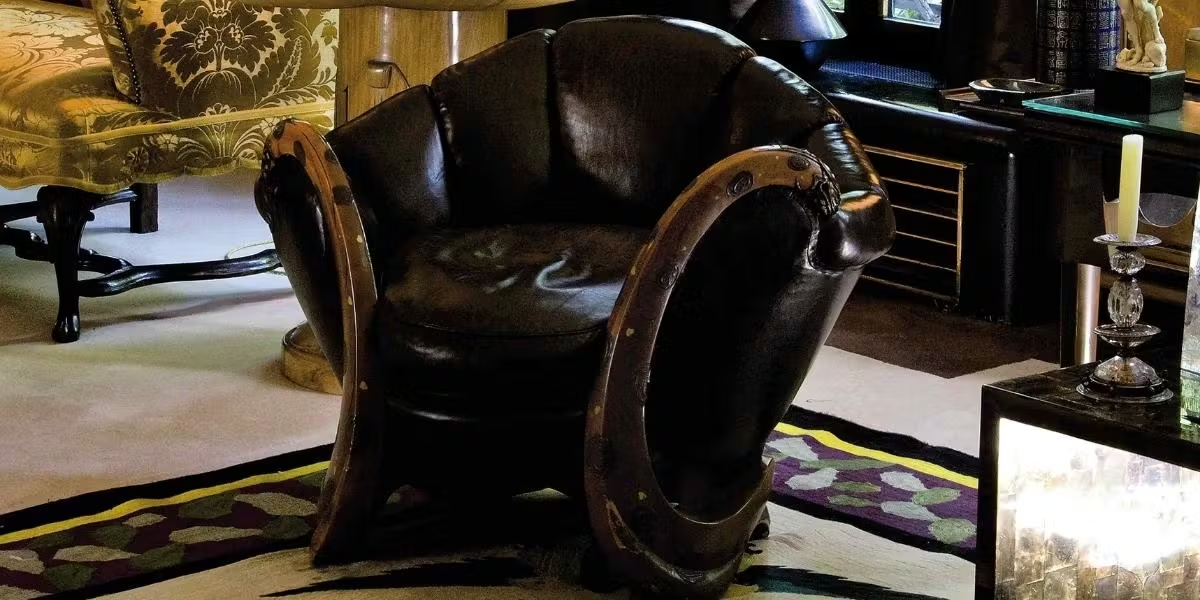
The Dragon Armchair, designed by the iconic Eileen Gray, is one of the most expensive pieces of furniture ever sold, fetching an astonishing $28.3 million at a 2009 auction. This exquisite Art Deco masterpiece, crafted between 1917 and 1919, showcases Gray’s unparalleled vision and craftsmanship. With its sculptural dragon motifs, luxurious materials, and historical significance, the Dragon Armchair remains one of the most valuable and sought-after pieces of 20th-century furniture design.
Art Deco Furniture: Why is the Dragon Armchair So Valuable?
The extraordinary price of the Dragon Armchair can be attributed to several key factors:
- Eileen Gray’s Design Legacy – As one of the most influential modernist designers, Gray’s work is highly collectible. Her rare, handcrafted furniture pieces are considered masterpieces of Art Deco design.
- Exquisite Craftsmanship – The chair features hand-sculpted wooden dragon arms, coated in gold leaf and lacquer, showcasing Gray’s meticulous attention to detail and Asian-inspired artistic influences.
- Historical Significance – Originally owned by French fashion designer Yves Saint Laurent, the chair’s provenance adds immense cultural and artistic value to its legacy.
- Extreme Rarity – Only a handful of Eileen Gray’s custom-designed furniture pieces exist, making them exceptionally scarce and desirable among collectors.
A Closer Look at the Design
The Dragon Armchair stands out due to its bold, sculptural form. The chair’s curved wooden arms are shaped into two intricately carved dragons, embodying a fusion of Eastern and Western artistic influences. The seat and backrest are upholstered in plush leather, providing both luxury and comfort. The chair’s deep brown lacquer finish enhances its rich, antique appeal, making it a striking statement piece in Art Deco furniture history.
The Record-Breaking Auction Sale
In 2009, the Dragon Armchair was auctioned at Christie’s in Paris as part of Yves Saint Laurent and Pierre Bergé’s private collection. After a heated bidding war, the chair sold for $28.3 million, far exceeding its estimated value. This record-breaking sale made it the most expensive chair ever sold at auction, solidifying its place as a prized collectible in the world of high-end furniture.
Antique Furniture: Why the Dragon Armchair Continues to Appreciate in Value
The Dragon Armchair’s value continues to rise due to its rarity, association with Eileen Gray, and Art Deco significance. As the demand for historically significant designer furniture grows, this masterpiece remains a top-tier investment for collectors.
To Summarize
The Dragon Armchair by Eileen Gray is not just a chair—it is a symbol of luxury, artistry, and historical importance. With its intricate craftsmanship, Art Deco elegance, and record-breaking sale, it remains one of the most valuable pieces of furniture ever created.
As appreciation for Eileen Gray’s design genius continues to grow, the Dragon Armchair will remain an iconic and highly coveted masterpiece in the world of fine art and antique furniture.
- Sources Include / Discover More: The World’s Priciest Chair
- Also Read: Most Expensive Health and Wellness Retreats
#7
Olyphant Battle Horn
Key Takeaways for Olyphant Battle Horn
This exquisite 11th-century battle horn was used by medieval knights in Europe.
- Sold for $17 million, this horn is a rare relic from a bygone era.
- Made of ivory and gold, it features incredible engravings and historical significance.
Olyphant Battle Horn: $17 Million
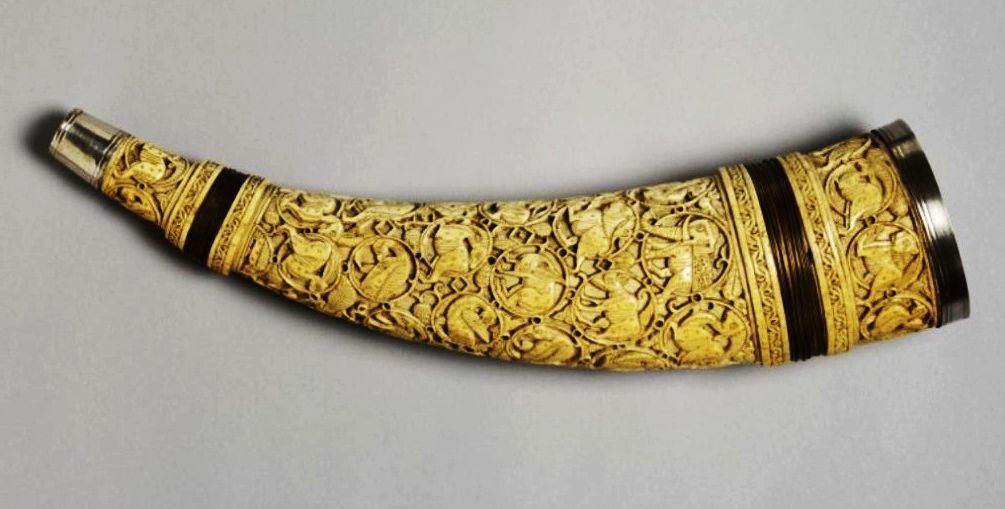
The Olyphant Battle Horn, valued at an astounding $17 million, is one of the most historically significant and valuable antique artifacts ever sold. This exquisitely carved battle horn, made from elephant ivory, dates back to the medieval period and is a rare example of masterful craftsmanship and military history. Used by nobles and warriors, the Olyphant Battle Horn symbolizes power, prestige, and the rich history of European and Middle Eastern warfare.
What Makes the Olyphant Battle Horn So Valuable?
The extraordinary price of the Olyphant Battle Horn is due to several critical factors:
- Historical Significance – Dating back to the 11th or 12th century, this horn is an artifact from the medieval era, reflecting the military traditions of European knights and noble warriors.
- Exquisite Craftsmanship – Carved from rare and highly prized elephant ivory, the horn is adorned with intricate patterns, hunting scenes, and religious symbols, showcasing the exceptional skill of medieval artisans.
- Rarity and Uniqueness – Very few authentic Olyphant horns have survived over the centuries, making this one of the rarest and most sought-after antique relics in existence.
- Connection to Nobility and Warfare – Used in ceremonial events, battles, and royal courts, the Olyphant Battle Horn is a symbol of chivalry, leadership, and military heritage.
The Exquisite Craftsmanship of the Olyphant Battle Horn
The Olyphant Battle Horn is a masterpiece of medieval craftsmanship, featuring intricate carvings that depict hunting scenes, mythical creatures, and religious iconography. The high-relief engravings showcase themes of knightly valor and divine protection, reflecting the importance of faith and warfare in medieval society. The horn’s polished ivory surface enhances the depth and detail of the carvings, making it an extraordinary piece of functional art.
The Olyphant Battle Horn in Medieval History
During the Middle Ages, battle horns were used by noble warriors and knights to signal troops, announce their arrival, or inspire fear on the battlefield. These horns were often carried by elite soldiers, kings, and high-ranking military leaders, symbolizing their status and authority. Some Olyphant horns were even gifted to royalty, further adding to their historical and cultural significance.
The Record-Breaking Sale
The Olyphant Battle Horn was sold at a prestigious auction, where collectors and museums competed fiercely for this rare medieval relic. Its final sale price of $17 million set a new benchmark for historical military artifacts, proving the continued demand for unique and historically significant antiques.
Why the Olyphant Battle Horn Continues to Appreciate in Value
The Olyphant Battle Horn’s value is expected to continue rising, driven by:
- The rarity of medieval artifacts in pristine condition
- The growing interest in medieval history and antique weaponry
- The connection to noble heritage and high-ranking warriors
To Summarize
The Olyphant Battle Horn is a priceless medieval artifact, representing the artistry, history, and warfare of the Middle Ages. With its exquisite craftsmanship, noble provenance, and historical importance, it remains one of the most valuable and sought-after antiques in the world. As collectors and historians continue to recognize its significance, the Olyphant Battle Horn will remain a symbol of medieval grandeur and military heritage, cementing its status as a legendary artifact in the world of antiques.
- Sources Include / Discover More on New York Times: The Medieval Oliphant
- Also Read:: Most Expensive Gym Memberships
#8
Germain Royal Soup Tureen
Key Takeaways for Germain Royal Soup Tureen
This ornate silver soup tureen was crafted for King Louis XV of France.
- Sold for $10 million, it remains one of the most expensive pieces of silverware ever auctioned.
The Germain Royal Soup Tureen: $10 Million
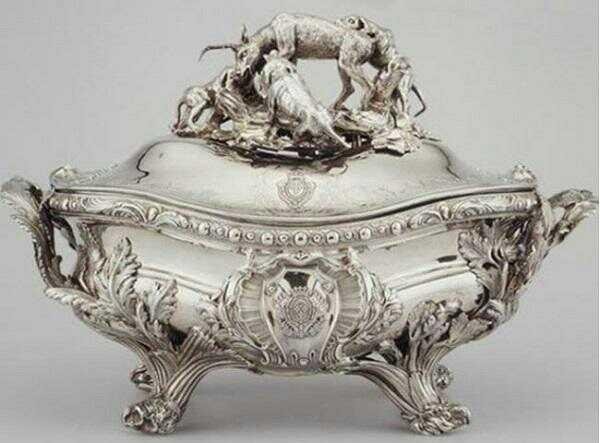
The Germain Royal Soup Tureen, valued at an astonishing $10 million, is one of the most exquisite and valuable pieces of antique silverware ever sold. Crafted in 1733 by Thomas Germain, a renowned French silversmith, this luxurious tureen was designed for King Louis XV of France, making it a masterpiece of 18th-century European craftsmanship. With its opulent design, royal provenance, and exceptional artistry, the Germain Royal Soup Tureen remains one of the most sought-after pieces of antique silverware in the world.
Antique Silverware: Why is the Germain Royal Soup Tureen So Valuable?
Several key factors contribute to the extraordinary value of the Germain Royal Soup Tureen:
- Royal Provenance – Commissioned for King Louis XV, this tureen holds immense historical significance. Items associated with European royalty are always in high demand among collectors.
- Masterful Craftsmanship – Created by Thomas Germain, one of the most celebrated French silversmiths, the tureen exemplifies Rococo artistry, featuring intricate floral motifs, sculpted figures, and ornate handles.
- Rarity and Luxury – This tureen is an exceptionally rare example of French royal silverware, as most silver artifacts from this period were melted down during the French Revolution.
- Historical and Artistic Significance – The tureen represents the height of 18th-century French silversmithing, combining luxury, elegance, and technical brilliance.
A Masterpiece of Rococo Artistry
The Germain Royal Soup Tureen is a stunning example of Rococo design, a style characterized by elaborate ornamentation, asymmetry, and fluid, organic shapes. The tureen features:
- Exquisite floral engravings and sculpted decorations, demonstrating unparalleled silversmithing skill.
- Highly detailed handles and lid, adorned with delicate, sculpted figures of vegetables and seafood, symbolizing its culinary purpose.
- Flawless silver construction, with a polished surface that reflects the grandeur of the French royal court.
The Record-Breaking Auction Sale
The Germain Royal Soup Tureen was sold at a prestigious auction, where elite collectors and museums competed fiercely for this rare royal artifact. Its final sale price of $10 million set a new record for antique silverware, reinforcing its status as one of the most valuable historic dining pieces ever created.
Why the Germain Royal Soup Tureen Continues to Appreciate in Value
The value of the Germain Royal Soup Tureen continues to increase due to:
- Its royal association with King Louis XV, a period of French artistic and cultural excellence.
- The rarity of surviving 18th-century silverware, as most were melted down or lost to history.
- The unmatched craftsmanship of Thomas Germain, whose works are highly prized by collectors and museums.
To Summarize
The Germain Royal Soup Tureen is more than just a dining vessel—it is a symbol of French luxury, artistry, and history. With its stunning Rococo craftsmanship, royal provenance, and exceptional rarity, it remains one of the most valuable and historically significant pieces of antique silverware. As appreciation for French decorative arts and royal artifacts continues to grow, the Germain Royal Soup Tureen will remain a highly coveted masterpiece, securing its place as a true treasure of European history.
- Sources Include / Discover More: The Tureens History
- Also Read: Most Expensive Mortgages in the World
#9
Chippendale's Harrington Commode
Key Takeaways for Chippendale's Harrington Commode
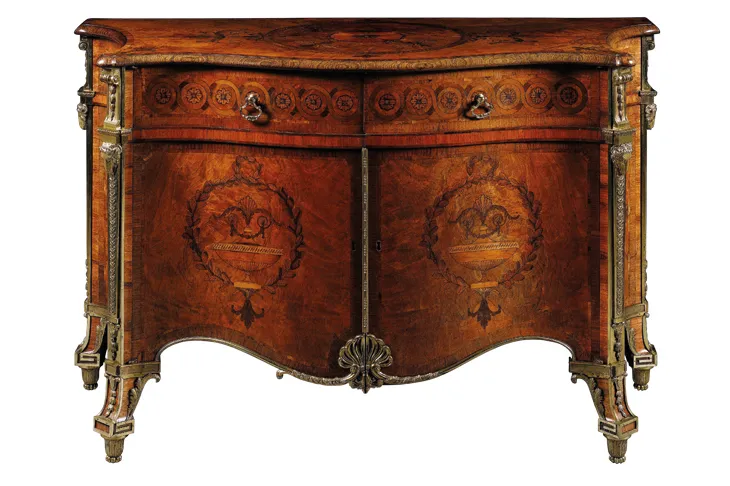
A simple-looking wooden commode, this antique sold for nearly $6 million.
- It was crafted in the 18th century by Thomas Chippendale, a renowned English cabinetmaker.
- The commode is valued for its fine craftsmanship and royal provenance.
Chippendale's Harrington Commode: $5.9 Million
The Harrington Commode, sold for a staggering $5.9 million, is one of the most expensive antique pieces of furniture ever auctioned. This exquisite 18th-century English commode, attributed to Thomas Chippendale, embodies the pinnacle of Georgian craftsmanship and neoclassical design. Its superior craftsmanship, rich history, and association with British aristocracy make it a highly valuable and sought-after antique in the world of fine furniture.
What Makes the Harrington Commode So Valuable?
The remarkable price of the Harrington Commode is due to several key factors:
- Masterpiece of Thomas Chippendale – Recognized as one of the greatest cabinetmakers in history, Chippendale’s works are rare and highly collectible. His designs represent the finest English furniture craftsmanship of the 18th century.
- Exceptional Neoclassical Design – The commode showcases elegant proportions, exquisite marquetry, and intricate gilded details, reflecting the neoclassical style popular among British aristocracy.
- Aristocratic Provenance – Named after the Earl of Harrington, this commode has a royal and noble heritage, significantly adding to its value.
- Impeccable Condition and Rarity – Unlike many antiques that show signs of wear, the Harrington Commode has been preserved in pristine condition, making it a one-of-a-kind investment piece.
A Closer Look at the Design and Craftsmanship of Chippendale
The Harrington Commode is a masterpiece of marquetry and veneering, featuring:
- Exquisite satinwood, rosewood, and mahogany inlays, creating an intricate pattern of floral and classical motifs.
- Delicate ormolu mounts and gilded details, enhancing the luxurious appeal of the piece.
- Elegant curved legs and a serpentine front, characteristic of Chippendale’s refined aesthetic.
- Hand-carved embellishments and brass fittings, showcasing the exceptional skill of 18th-century English furniture makers.
The Record-Breaking Auction Sale
In 2008, the Harrington Commode was auctioned at Sotheby’s London, where it fetched a jaw-dropping $5.9 million, far exceeding its initial valuation. This sale established it as one of the most expensive pieces of English furniture ever sold, highlighting the growing demand for rare antiques of aristocratic origin.
Antique Furniture: Why the Harrington Commode Continues to Appreciate in Value
The Harrington Commode’s value is expected to continue rising due to:
- The prestige of owning a Chippendale masterpiece, as his works are among the most coveted antique furniture pieces.
- The increasing rarity of well-preserved 18th-century aristocratic furniture, making such pieces highly desirable to collectors and museums.
- The enduring appreciation for neoclassical English craftsmanship, ensuring that pieces like the Harrington Commode remain investment-worthy antiques.
To Summarize
The Harrington Commode is far more than a simple storage piece—it is a historical treasure, a masterpiece of English craftsmanship, and an investment in aristocratic heritage. With its exceptional design, noble provenance, and record-breaking auction price, it stands as one of the most valuable and prestigious antique furniture pieces in the world. As the demand for historically significant antiques continues to grow, the Harrington Commode will remain a highly prized and sought-after masterpiece in the world of fine antiques.
- Sources Include / Discover More: The Harrington Commode
- Also Read: Most Expensive Real Estate in the World
#10
The Macallan 1926
Key Takeaways for the Macallan 1926
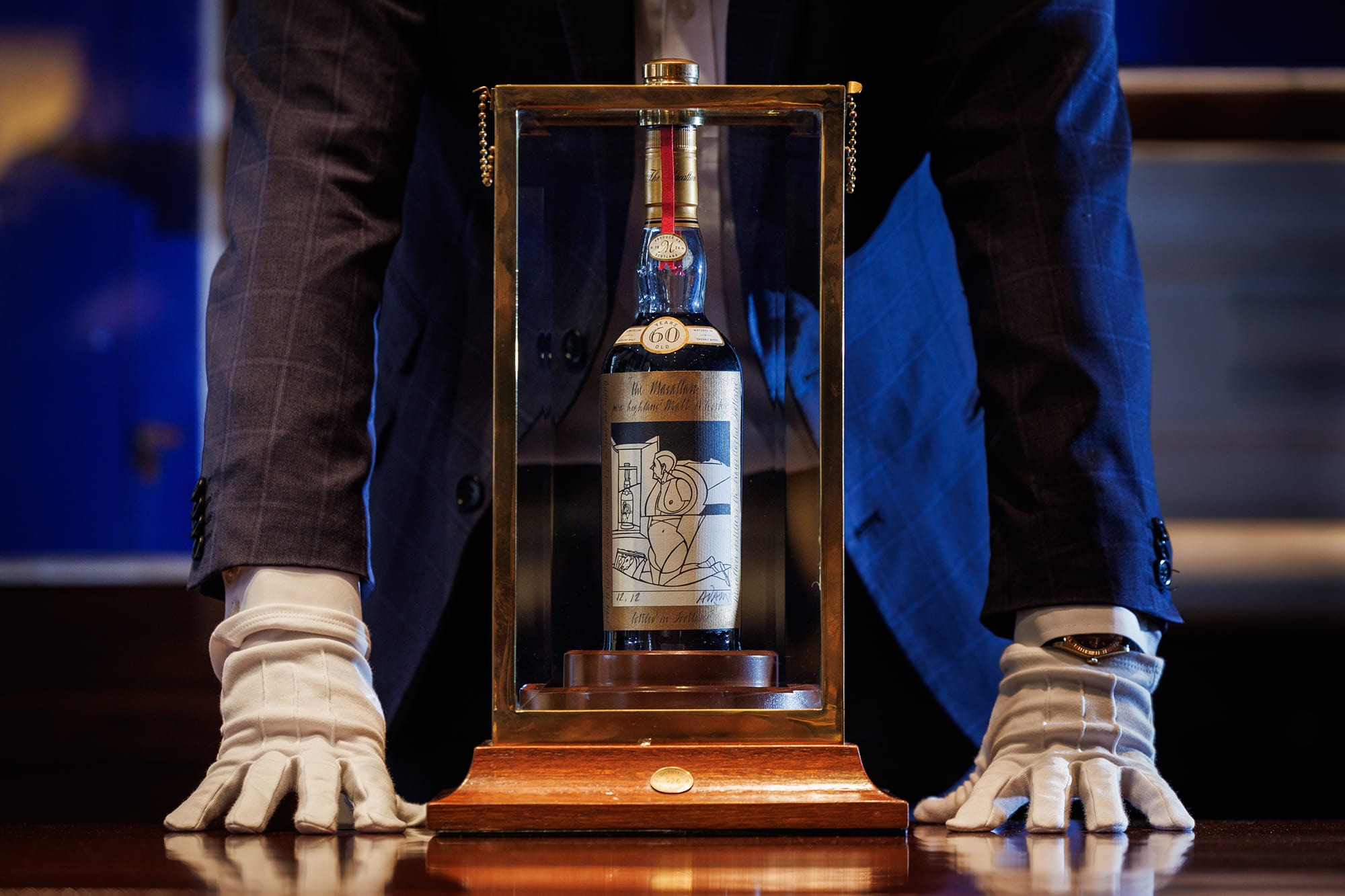
Whiskey lovers, take note! A bottle of Macallan 1926 Scotch was auctioned for $1.9 million.
- It is one of the rarest whiskey bottles in the world.
- Aged for 60 years, it is considered the holy grail of whiskey collecting.
The Macallan 1926: $1.9 Million
The Macallan 1926 Fine & Rare is one of the most expensive and exclusive bottles of whisky ever sold, fetching an astounding $1.9 million at auction. Distilled in 1926 and aged for 60 years, this legendary single malt Scotch whisky is part of The Macallan’s Fine & Rare collection, making it one of the most coveted bottles among whisky collectors and investors. Its exceptional rarity, unparalleled aging process, and elite status in the world of whisky contribute to its record-breaking value.
Why is The Macallan 1926 Fine & Rare So Valuable?
Several factors contribute to the extraordinary value of this highly sought-after bottle of Scotch whisky:
- Extremely Limited Edition – Only 40 bottles of The Macallan 1926 were ever produced, making it one of the rarest whiskies in the world.
- Aged for 60 Years – This whisky was distilled in 1926 and aged in sherry-seasoned oak casks until it was bottled in 1986, allowing it to develop an exceptionally rich and complex flavor profile.
- Fine & Rare Collection – As part of The Macallan’s prestigious Fine & Rare series, this bottle represents the finest craftsmanship and heritage of the distillery.
- Auction Record-Breaker – The Macallan 1926 consistently breaks records at auctions, reinforcing its status as the most valuable whisky in history.
The Exquisite Flavor Profile of The Macallan 1926 Fine & Rare
Whisky connoisseurs consider The Macallan 1926 Fine & Rare a masterpiece of aging and craftsmanship. Its deep mahogany color is a testament to its long maturation in sherry casks, which enhances its rich and complex character. The tasting notes include:
- Intense dried fruit flavors, with hints of raisin, fig, and prune, creating a luxurious sweetness.
- Layers of dark chocolate, espresso, and warming spice, adding depth to its profile.
- A smoky oak finish, balanced with subtle hints of vanilla and nutmeg, leaving a lasting impression on the palate.
1926 Macallan Price: The Macallan 1926 at Record-Breaking Auctions
The Macallan 1926 Fine & Rare has repeatedly set auction records, cementing its status as the most expensive whisky ever sold. In 2019, a bottle was auctioned at Sotheby’s for $1.9 million, making headlines worldwide. The demand for ultra-rare, collectible whisky continues to grow, and bottles from this exclusive batch are expected to appreciate in value over time.
Why The Macallan 1926 Fine & Rare is a Smart Investment
The Macallan 1926 Fine & Rare is not just a whisky—it’s a high-value asset that attracts elite collectors and investors. Reasons why this bottle remains a top-tier investment include:
- Scarcity – With only 40 bottles in existence, demand far exceeds supply.
- Historical Significance – As one of the oldest and most iconic Macallan releases, its prestige will only increase.
- Auction Performance – Consistently setting new price records, proving its long-term value.
Macallan 1926: To Summarize
The Macallan 1926 Fine & Rare is the ultimate symbol of luxury and exclusivity in the whisky world. With its exceptional aging process, unparalleled rarity, and record-breaking auction prices, it remains one of the most valuable and sought-after single malt Scotch whiskies in history. As interest in rare whisky investments continues to grow, The Macallan 1926 Fine & Rare stands as a true masterpiece of craftsmanship and heritage, ensuring its legacy for generations to come.
- Sources Include / Discover More: The Macallan Fine & Rare Collection
- Also Read: Most Expensive Private Jets in the World
Key FAQs on the 10 Most Expensive Antiques in the World
Why is the Pinner Qing Dynasty Vase worth $80.2 million?
The Pinner Qing Dynasty Vase is an exceptionally rare 18th-century Chinese porcelain masterpiece from the Qianlong Emperor’s reign, distinguished by imperial gold detailing, refined enamel work, and flawless symmetry recognized by leading Asian art historians.
Discovered unexpectedly in a London residence, it sold for $80.2 million at auction, according to BBC and Sotheby’s records. Its verified imperial provenance, extreme scarcity, and global museum demand make it one of the most valuable Qing Dynasty antiques ever documented.
What makes the Pink Star Diamond so valuable?
The Pink Star Diamond is a flawless 59.6-carat vivid pink gemstone, officially graded Internally Flawless by the Gemological Institute of America (GIA), placing it among the rarest diamonds ever discovered worldwide.
Sold for $71.2 million at Sotheby’s Hong Kong, it holds the record as the most expensive gemstone ever auctioned. Experts cited by GIA and Christie’s confirm its exceptional color saturation, size, and chemical purity as unmatched in modern diamond valuation history.
Why is the Ru Guanyao Brush Washer Bowl considered priceless in Chinese history?
The Ru Guanyao Brush Washer Bowl dates back over 900 years to China’s Northern Song Dynasty and is one of fewer than 100 known Ru ware ceramics globally, according to Chinese museum registries.
Renowned for its subtle sky-blue glaze and imperial origin, it sold for $37.7 million at Sotheby’s. Art historians and institutions like the Palace Museum regard Ru ware as the pinnacle of Chinese ceramic achievement and a cultural artifact of national significance.
What makes the Badminton Cabinet one of the most expensive pieces of furniture?
The Badminton Cabinet is an 18th-century Florentine masterpiece crafted from ebony, gilt bronze, lapis lazuli, and semi-precious stones for the Duke of Beaufort, requiring over 30 years to complete.
Sold for $36.7 million at Christie’s, it once held the record as the most expensive piece of furniture ever auctioned. Its aristocratic provenance, Baroque grandeur, and museum-level craftsmanship are widely cited by Christie’s and decorative arts scholars.
Why is Leonardo da Vinci’s Codex Leicester so significant?
Leonardo da Vinci’s Codex Leicester is a 72-page scientific manuscript written between 1506 and 1510, containing revolutionary studies on astronomy, geology, and water dynamics by the Renaissance master.
Purchased by Bill Gates for $30.8 million, it remains the most expensive manuscript ever sold. Institutions such as the British Library and Leonardo scholars recognize it as a foundational document in the history of scientific thought.
Why is the Dragon Armchair by Eileen Gray valued so highly?
The Dragon Armchair, designed by Eileen Gray between 1917 and 1919, is a landmark Art Deco furniture piece celebrated for its sculptural form and avant-garde craftsmanship.
Formerly owned by Yves Saint Laurent, it sold for $28.3 million at Christie’s Paris. Design historians and museums such as MoMA cite its rarity, provenance, and influence on modern furniture design as key drivers of its extraordinary valuation.
What makes the Olyphant Battle Horn a rare collectible?
The Olyphant Battle Horn is a medieval ivory instrument historically associated with noble warfare, ceremonial signaling, and knightly culture across Europe.
Valued at $17 million, its rarity, age, and symbolic importance are documented by European medieval artifact collections and auction houses. Scholars emphasize its dual significance as both a functional military object and a surviving example of elite medieval craftsmanship.
Why is the Germain Royal Soup Tureen famous among collectors?
The Germain Royal Soup Tureen was crafted in 1733 by master silversmith Thomas Germain for King Louis XV of France, exemplifying French Rococo court silver at its highest level.
Sold for $10 million, it is one of the few surviving royal silver pieces from pre-Revolutionary France. Institutions like the Victoria and Albert Museum cite its royal provenance and artistry as benchmarks in European decorative arts.
What makes the Harrington Commode such a valuable Chippendale masterpiece?
The Harrington Commode is an 18th-century Georgian furniture masterpiece designed by Thomas Chippendale, widely regarded as England’s most influential cabinetmaker.
Achieving $5.9 million at auction, it represents one of the finest surviving examples of Chippendale craftsmanship. British decorative arts experts and Christie’s records highlight its noble provenance, refined proportions, and historical importance in Georgian furniture design.
Why is The Macallan 1926 Fine & Rare considered the holy grail of whisky?
The Macallan 1926 Fine & Rare is a 60-year-old single malt Scotch whisky distilled in 1926, with fewer than 40 bottles known to exist worldwide, according to The Macallan archives.
Selling for $1.9 million at Sotheby’s, it is considered the holy grail of whisky collecting. Whisky experts and auction houses cite its age, rarity, and legendary status as unmatched in spirits investment history.
How to Invest in Antiques
Investing in antiques can be a rewarding venture, but it requires knowledge, patience, and careful research. Here are some essential tips to help you make smart investments in the antique market:
- Do Your Research – Learn about different types of antiques, their historical significance, and market trends before making a purchase.
- Buy from Reputable Sources – Purchase antiques from trusted auction houses, dealers, or certified online platforms to avoid fakes and forgeries.
- Check for Authenticity – Look for maker’s marks, certificates of authenticity, and provenance records to ensure the piece is genuine.
- Invest in Quality Over Quantity – A well-preserved, high-quality antique is more likely to appreciate in value than a collection of lower-quality items.
- Understand Market Demand – Focus on antiques that have consistent demand, such as rare coins, fine art, vintage jewelry, and historical artifacts.
- Consult an Expert – If you’re unsure about an item’s value, seek advice from appraisers or antique specialists before investing.
- Store and Maintain Properly – Protect antiques from damage, moisture, and sunlight to preserve their condition and maximize their resale value.
By following these steps, you can build a valuable antique collection that not only holds historical charm but also serves as a profitable long-term investment.
Final Thoughts
Antiques are far more than decorative or nostalgic items—they are time capsules of human ingenuity, artistry, and culture. The world’s most expensive antiques, such as the Pinner Qing Dynasty Vase, Leonardo da Vinci’s Codex Leicester, and The Pink Star Diamond, stand as awe-inspiring examples of how history, rarity, and craftsmanship can combine to create truly priceless artifacts.
Each piece showcased in this list represents a different era, civilization, and purpose—from royal furniture that once graced European palaces, to intricate Chinese porcelain made for emperors, to medieval artifacts carved by hand. These masterpieces don’t just hold monetary value; they hold stories of dynasties, legends, and revolutions—offering a tangible connection to our shared global heritage.
From an investment standpoint, high-value antiques are often considered “blue-chip assets.” Their scarcity and irreplaceability make them a stable and appreciating category for collectors, investors, museums, and even celebrities who want to own a unique piece of history. With global demand consistently rising and top auction houses like Sotheby’s and Christie’s seeing record-breaking sales year after year, these antiques are likely to grow even more valuable.
As new generations of collectors emerge, the fascination with rare and valuable antiques is only intensifying. Whether for cultural prestige, historical significance, or long-term wealth preservation, the appeal of owning one of the world’s most expensive antiques continues to stand the test of time.
So, whether you’re a passionate collector, an art historian, or simply a curious reader, these extraordinary artifacts are proof that history lives on—not just in books or museums, but in the private collections and auction floors that continue to shape the world of luxury collectibles.
The 10 Most Expensive Antiques Frequently Asked Questions (FAQs)
Look for maker’s marks, age, rarity, and provenance.
Reputable auction houses like Sotheby’s and Christie’s.
The Codex Leicester by Leonardo da Vinci is one of the rarest.
Yes, rare antiques tend to appreciate in value over time.
Get it appraised by experts and sell through top auction houses.
The Pinner Qing Dynasty Vase is considered the most expensive antique in the world, selling for over $80 million at auction.
About the Author
This article was researched and prepared by the World Millions Editorial Team, specialists in global rankings, premium market analysis, structured comparisons, and high-value sector research across industries.
All content undergoes verification, editorial review, and periodic updates to ensure accuracy, clarity, and alignment with recognized industry standards, reliable institutional sources, and leading global authorities.
- Last Updated: March 27, 2026 by the World Millions Editorial Team
- Original Published Date: March 27, 2026
- View Our: Editorial Team | Sources | Disclaimer | Editorial Standards