The most famous paintings in the world represent the pinnacle of artistic genius, cultural heritage, and timeless creativity. From Renaissance masterpieces to groundbreaking modern art, these iconic works by legendary artists like Leonardo da Vinci, Vincent van Gogh, Pablo Picasso, and Michelangelo have shaped the history of visual art and inspired generations worldwide.
Discover the 10 most famous paintings in the world, ranked by global recognition, artistic influence, historical significance, and museum prominence. From the enigmatic Mona Lisa at the Louvre to Van Gogh’s mesmerizing The Starry Night at MoMA, these extraordinary artworks remain the most celebrated treasures in art history.
On This Page
Toggle- Updated 2026 by the World Millions Editorial Team: View Author Information
The Legacy of Artistic Masterpieces
What Makes a Painting “Famous”?
It’s not always the technique or even the size. Some artworks capture historical moments, while others introduce new styles that redefine what art is. Fame in art often blends innovation, mystery, controversy, and beauty. Add a fascinating backstory or a brush with theft or war, and you’ve got a masterpiece everyone wants to see.
The Influence of Art on Culture and Society
Great paintings do more than hang on walls—they challenge societal norms, preserve the past, and spark global conversations. Whether it’s a religious fresco on a church ceiling or a surreal depiction of melting clocks, art shapes the way we see the world—and how we remember it.
The Role of Painters in History
Renaissance Revolutionaries
The Renaissance wasn’t just a time of science and discovery—it was also a rebirth of art. Leonardo da Vinci and Michelangelo were more than artists; they were visionaries who set the foundation for Western art as we know it.
Modern Innovators in Art
Enter Van Gogh, Picasso, Dalí, and Munch. These men broke rules, introduced modernism, surrealism, and expressionism, and gave voice to human emotion and the subconscious mind. Their legacy is a testament to how powerful and deeply personal art can be.
List of the Top 10 Most Famous Paintings in the World
Discover the timeless masterpieces that define art history — from da Vinci’s genius to Van Gogh’s brilliance, explore the 10 Most Famous Paintings in the World and where to find them.
The 10 Most Famous Paintings in the World represent the pinnacle of human creativity, imagination, and emotion. These legendary artworks have shaped centuries of art history and continue to inspire millions of visitors every year. From Leonardo da Vinci’s mysterious Mona Lisa at the Louvre in Paris to Van Gogh’s swirling Starry Night at MoMA in New York, each masterpiece tells a story of genius, struggle, and timeless beauty.
This curated list brings together globally celebrated paintings that transcend culture and era — including Michelangelo’s The Creation of Adam, Picasso’s politically charged Guernica, and Vermeer’s enchanting Girl with a Pearl Earring.
Whether you’re an art enthusiast, traveler, or history lover, this comprehensive overview highlights the artists, creation years, and current museum locations of the world’s most iconic paintings — masterpieces that continue to captivate hearts, ignite curiosity, and redefine the meaning of artistic excellence.
| No. | Painting | Artist | Year Created | Location |
|---|---|---|---|---|
| 1 | Mona Lisa | Leonardo da Vinci | 1503 | Louvre Museum, Paris |
| 2 | The Starry Night | Vincent van Gogh | 1889 | MoMA, New York City |
| 3 | The Last Supper | Leonardo da Vinci | 1495–1498 | Santa Maria delle Grazie, Milan |
| 4 | Guernica | Pablo Picasso | 1937 | Museo Reina Sofía, Madrid |
| 5 | Girl with a Pearl Earring | Johannes Vermeer | 1665 | Mauritshuis, The Hague |
| 6 | The Persistence of Memory | Salvador Dalí | 1931 | MoMA, New York City |
| 7 | The Creation of Adam | Michelangelo | 1512 | Sistine Chapel, Vatican City |
| 8 | The Scream | Edvard Munch | 1893 | National Gallery, Oslo |
| 9 | The Night Watch | Rembrandt van Rijn | 1642 | Rijksmuseum, Amsterdam |
| 10 | American Gothic | Grant Wood | 1930 | Art Institute of Chicago |
Discover the 10 Most Famous Paintings in the World
Discover the 10 Most Famous Paintings in the World that have shaped art history and continue to inspire millions across cultures and generations. These iconic masterpieces reflect human emotion, creativity, storytelling, and artistic evolution across centuries.
From the enigmatic smile of the Mona Lisa to the swirling skies of The Starry Night and the emotional power of Guernica, each painting carries a legacy that transcends time. Whether you’re an art lover, traveler, or history explorer, this collection highlights the world’s most celebrated artworks and where you can experience their beauty in person.
#1
Mona Lisa
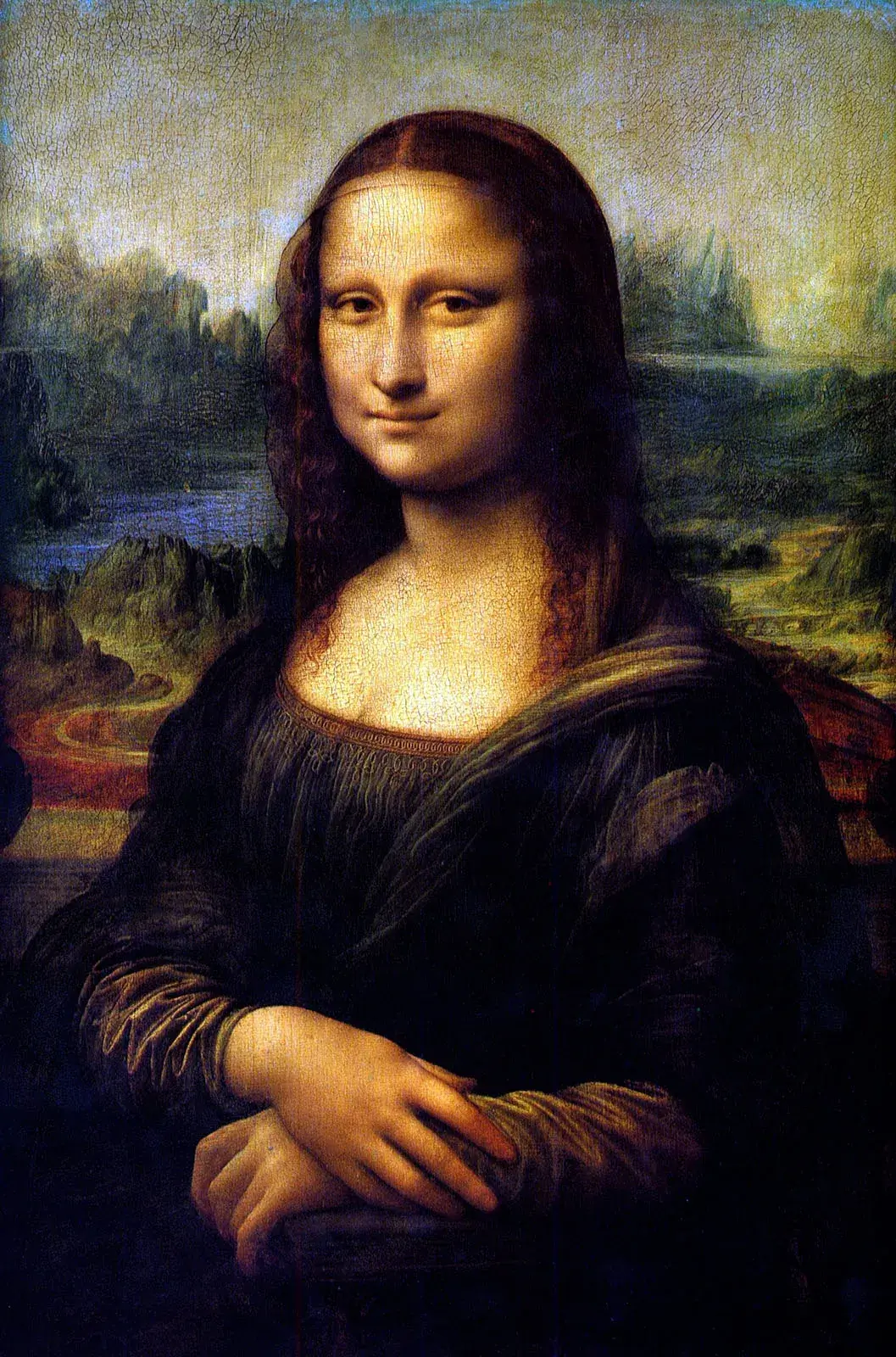
Key Takeaways for Mona Lisa: Leonardo da Vinci
The Smile That Changed Art History
The Mona Lisa is the world’s most famous painting, created by Leonardo da Vinci during the Italian Renaissance. Displayed at the Louvre Museum in Paris, this masterpiece is celebrated for its mysterious smile, lifelike realism, and emotional depth. The painting’s subtle use of sfumato and balanced composition make it a timeless symbol of artistic perfection.
Key Highlights:
- Iconic Renaissance portrait by Leonardo da Vinci.
- Known for the mysterious smile and lifelike gaze.
- Displayed at the Louvre Museum, Paris.
Mona Lisa: The World’s Most Famous Painting
The Mona Lisa, painted by the legendary Italian artist Leonardo da Vinci between 1503 and 1506, stands as one of the most recognizable and celebrated paintings in the world. Housed in the Louvre Museum in Paris, this portrait has captivated millions of visitors with its mysterious expression, subtle details, and masterful technique. Often referred to as the most famous painting of all time, the Mona Lisa continues to draw admiration centuries after its creation.
As a pinnacle of Renaissance portraiture, the painting represents Leonardo’s incredible ability to capture the essence of human emotion and depth. From the subject’s soft smile to the realistic shadows, every detail reflects a mastery of composition and perspective.
Mona Lisa Portrait: The Enigmatic Smile That Fascinates the World
One of the most talked-about features of the Mona Lisa portrait is her smile—a subtle, almost elusive expression that seems to change depending on where you look. This ambiguous smile has sparked endless debate among art historians, psychologists, and the general public. It’s this very mystery that keeps the Mona Lisa eternally intriguing.
Her eyes, too, seem to follow the viewer, creating a sense of personal connection that few other paintings achieve. This psychological engagement is part of what makes the Mona Lisa portrait so deeply compelling.
Mona Lisa Painting: Techniques That Revolutionized Portrait Painting
Leonardo da Vinci employed innovative techniques such as sfumato—a method of blending colors and tones seamlessly—to give the Mona Lisa painting a lifelike quality. The soft transitions around her cheeks, lips, and eyes make her appear almost alive. The background, with its dreamlike landscape, adds to the painting’s otherworldly atmosphere.
Leonardo’s use of oil on poplar wood panel, his detailed anatomical understanding, and his use of light and shadow all combine to create an artwork that feels ahead of its time. This attention to detail has influenced generations of artists and made the painting a standard in art education and appreciation.
Mona Lisa's Cultural Impact and Enduring Legacy
The Mona Lisa’s painting has become a global symbol of art, beauty, and mystery. From being featured in pop culture to becoming the subject of countless books and documentaries, its influence spans far beyond the walls of the Louvre. Every year, millions of visitors travel to Paris just to catch a glimpse of this iconic masterpiece, solidifying its place as a cultural treasure and a timeless emblem of artistic genius.
- Sources Include / Discover More: The Mona Lisa, A Half-Length Portrait Painting by The Italian Artist Leonardo da Vinci
- Also Read: Most Famous Car Brands in the World
#2
The Starry Night
Key Takeaways for The Starry Night: Vincent van Gogh
A Turbulent Vision of the Night Sky
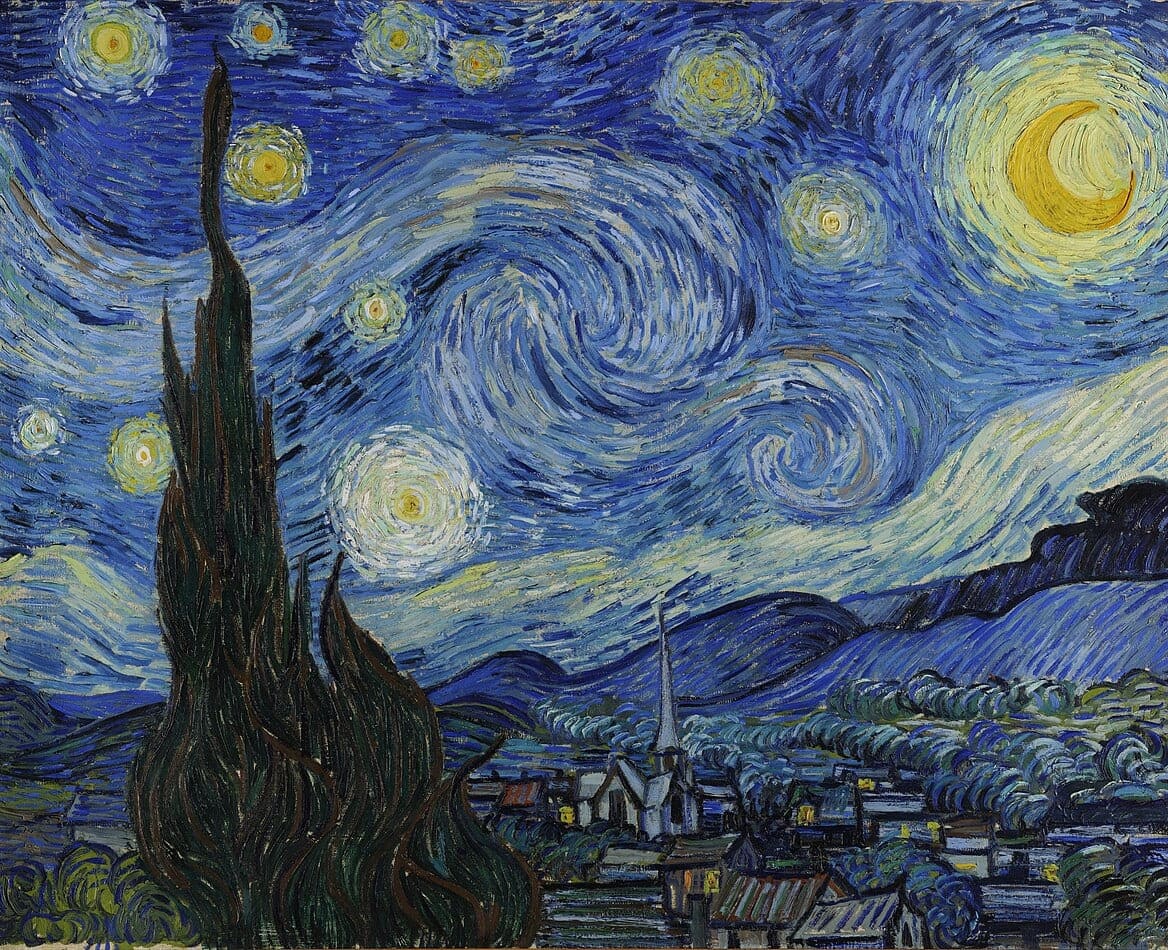
Vincent van Gogh’s The Starry Night is one of the most recognized masterpieces in modern art. Painted in 1889, it captures a swirling night sky over a tranquil village, symbolizing emotional turbulence and beauty. Displayed at MoMA in New York City, it remains an enduring image of creativity and human emotion.
Key Highlights:
- Painted during Van Gogh’s stay in Saint-Rémy-de-Provence.
- Represents the power of imagination and emotion.
- Displayed at the Museum of Modern Art (MoMA), New York.
The Starry Night : A Vivid Vision of the Night Sky
The Starry Night, painted by Vincent van Gogh in June 1889, is one of the most iconic and emotionally powerful paintings ever created. Displayed at the Museum of Modern Art (MoMA) in New York City, this masterpiece captures a swirling, dreamlike night sky above a quiet village, reflecting the emotional intensity and inner turmoil of its creator.
Created during Van Gogh’s stay at the Saint-Paul-de-Mausole asylum in Saint-Rémy-de-Provence, the painting offers a glimpse into the artist’s state of mind. He painted it from memory, rather than direct observation, making it a unique blend of imagination, emotion, and symbolism.
Vincent van Gogh: A Sky Like No Other
What makes The Starry Night unforgettable is its dynamic and expressive depiction of the night sky. The bold brushstrokes and whirling clouds give the stars and moon an almost hypnotic energy. The celestial bodies radiate light with a sense of motion that defies traditional realism, bringing the entire scene to life.
The cypress tree in the foreground, stretching toward the sky, adds a sense of depth and longing, while the rolling hills and quiet village below offer calm in contrast to the sky’s turbulence. This combination creates a visual balance between serenity and chaos, reflecting the duality within Van Gogh’s mind.
The Starry Night Painting: Symbolism and Emotional Impact
The Starry Night painting is rich with symbolism. Many interpret the stars as a symbol of hope, the swirling patterns as a reflection of Van Gogh’s mental state, and the contrast between the sky and earth as a spiritual struggle. Despite the turmoil in his life, Van Gogh captured something deeply peaceful and universally human in this work.
The Starry Night is often seen as a representation of the artist’s inner world—a place where beauty, madness, and creativity meet. It’s this emotional depth that continues to resonate with viewers across generations.
Starry Night's Global Recognition and Artistic Legacy
The Starry Night, Often Called Simply Starry Night, is more than a painting; it’s a cultural icon. From classroom walls to music album covers, it’s been reproduced countless times, symbolizing passion, creativity, and the complexity of the human mind. Its vivid color palette, emotional depth, and unique style have made it a favorite among art lovers worldwide and a cornerstone of post-impressionist art.
- Sources Include / Discover More: The Starry Night, Often Called Simply Starry Night, A Painting by the Dutch Post-Impressionist Painter Vincent van Gogh
- Also Read: Most Famous Street Foods in the World
#3
The Last Supper
Key Takeaways for The Last Supper: Leonardo da Vinci
A Divine Dinner Captured on Wall
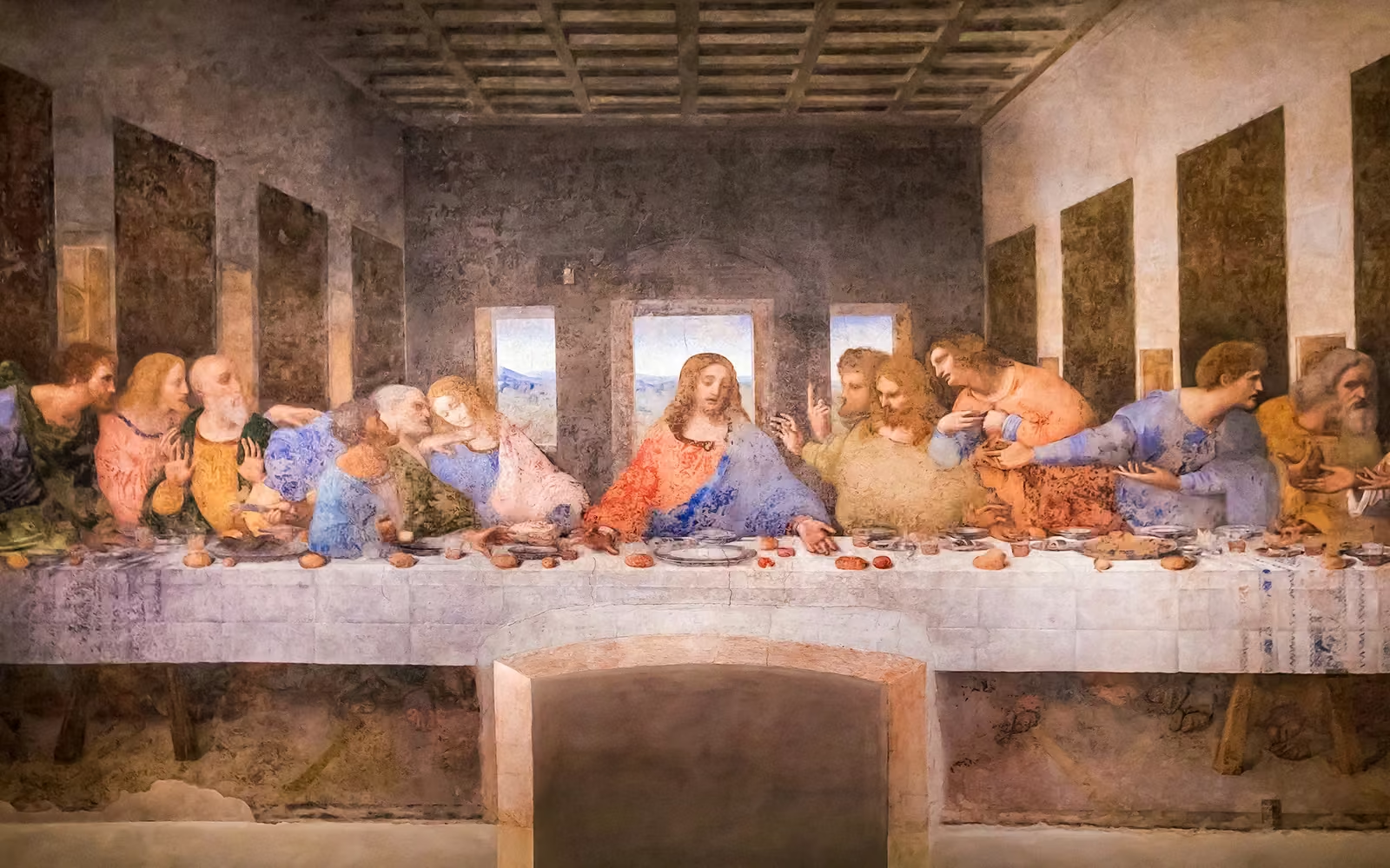
Leonardo da Vinci’s The Last Supper, painted between 1495 and 1498, is one of history’s most profound religious artworks. Located in the Convent of Santa Maria delle Grazie in Milan, it depicts the dramatic moment when Jesus reveals his betrayal. Da Vinci’s mastery of perspective and emotion makes it a defining work of Renaissance art.
Key Highlights:
- Monumental fresco representing the final meal of Christ.
- Masterful use of perspective and human expression.
- Located in Santa Maria delle Grazie, Milan.
The Last Supper: A Timeless Religious Masterpiece
The Last Supper by Leonardo da Vinci is one of the most celebrated and studied artworks in history. Painted between 1495 and 1498 on the wall of the Convent of Santa Maria delle Grazie in Milan, this monumental fresco represents the final meal Jesus shared with his disciples before his crucifixion. It’s a cornerstone of Christian art and a defining moment in Renaissance painting.
Leonardo’s interpretation stands out not just for its religious significance but for its revolutionary artistic techniques. He redefined the visual narrative of this biblical scene by capturing a single moment—the announcement of Jesus’ betrayal—and expressing the emotional reactions of the disciples with stunning realism.
da Vinci's Emotional Realism and Human Expression
What sets da Vinci’s The Last Supper apart is its intense focus on human emotion. Each of the twelve apostles reacts uniquely—some are shocked, others angry or confused. Judas Iscariot, the betrayer, is subtly cast in shadow, his expression tense as he grips a small bag of silver. Leonardo’s ability to convey such psychological depth was groundbreaking for his time and remains deeply compelling today.
The composition guides the viewer’s eye toward the central figure of Christ. His calm demeanor contrasts sharply with the agitation around him, creating a focal point that reinforces the narrative’s spiritual significance. The use of perspective and light enhances this effect, drawing attention to the divine amidst human turmoil.
Leonardo da Vinci: Innovation in Technique and Composition
Unlike traditional frescoes, Leonardo experimented with a tempera-on-stone method, which allowed for finer detail but made the painting more vulnerable to deterioration. Despite centuries of damage and restoration efforts, the masterpiece still holds immense power. Its precise use of geometry, perspective, and light demonstrates Leonardo’s genius not just as an artist but also as a scientist and thinker.
The room’s architecture blends seamlessly with the painted scene, making viewers feel as if they’re sitting at the table. This illusion of space was revolutionary and influenced generations of artists who followed.
Last Supper: Cultural Influence and Enduring Legacy
The Last Supper, Often Called Simply Last Supper, has inspired countless reinterpretations across art, film, and literature. Its image is instantly recognizable and continues to be studied for both its artistic brilliance and religious symbolism. For those visiting Milan, seeing this iconic work in person remains a deeply moving experience—testament to its lasting legacy and universal appeal.
- Sources Include / Discover More: The Last Supper, A Mural Painting by the Italian High Renaissance Artist Leonardo da Vinci
- Also Read: Most Famous Supermodels in the World
#4
Guernica
Key Takeaways for Guernica: Pablo Picasso
A Political Statement in Cubism
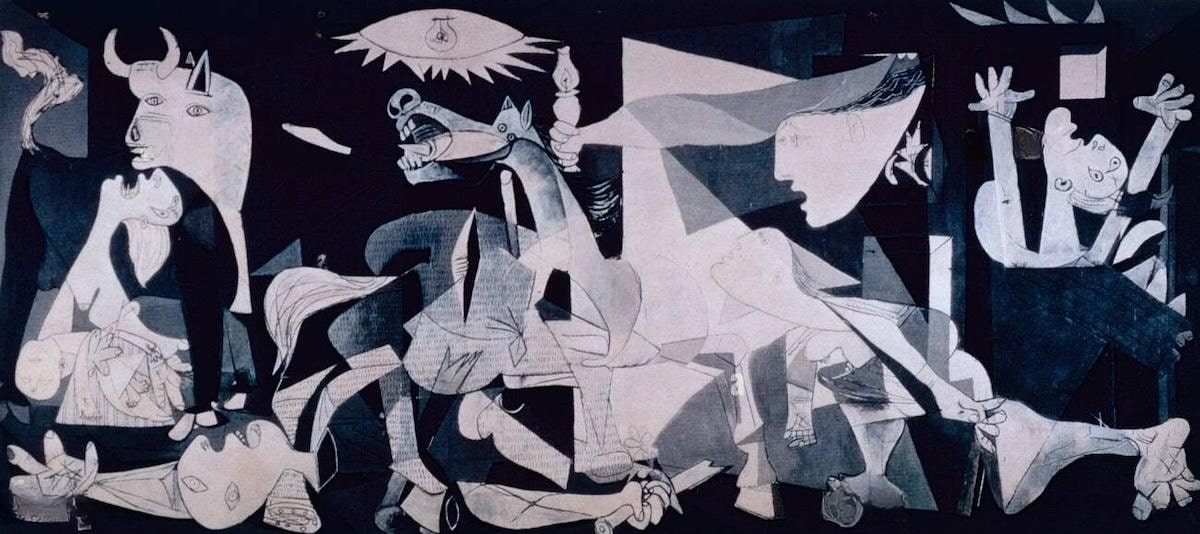
Pablo Picasso’s cubist style Guernica, painted in 1937, is a powerful anti-war statement that depicts the horrors of the Spanish Civil War. Its black-and-white composition symbolizes pain, chaos, and resilience. Displayed at the Museo Reina Sofía in Madrid, it remains one of the most politically significant paintings in modern history.
Key Highlights:
- Created in response to the bombing of Guernica, Spain.
- Powerful symbol of anti-war expression.
- Displayed at Museo Reina Sofía, Madrid.
Guernica: A Powerful Anti-War Statement
Guernica by Pablo Picasso stands as one of the most haunting and powerful anti-war paintings ever created. Completed in 1937, this large black-and-white mural was Picasso’s visceral response to the bombing of the Basque town of Guernica during the Spanish Civil War. Commissioned for the Spanish Pavilion at the 1937 Paris International Exposition, it quickly became a universal symbol of the horrors of war and the suffering it brings to innocent lives.
Picasso, known for his pioneering role in Cubism, abandoned color in Guernica to intensify its emotional impact. The choice of monochrome—reminiscent of newspaper photographs—adds to the stark realism and sense of urgency conveyed through the chaotic scene.
Picasso's Guernica: The Chaotic Imagery and Its Symbolism
Picasso’s Guernica is a collage of agonized figures, fragmented and contorted to express sheer despair. A screaming woman clutching her dead child, a wounded horse, a fallen soldier, and a bull—each element tells a story of pain, resistance, and devastation. These symbolic figures transcend cultural boundaries, making the painting universally relatable.
The composition draws viewers into its emotional chaos. The horse, often interpreted as the people of Guernica, is shown pierced and screaming. The bull, which has many possible interpretations, may symbolize both brutality and endurance. The fractured light bulb at the top adds to the sense of artificial, inescapable violence, as though war exposes every hidden terror under its cold glare.
Picasso's Guernica Painting: Political Relevance and Historical Impact
More than just a painting, Picasso’s Guernica Painting is a political weapon in visual form. Picasso refused to allow the painting to return to Spain until democracy was restored. It remained in New York’s Museum of Modern Art for decades, finally returning to Spain in 1981, years after Franco’s dictatorship had ended.
Today, Guernica is housed in Madrid’s Museo Reina Sofía and continues to draw global attention. It remains a powerful reminder of the cost of conflict and the responsibility of humanity to protect life, peace, and justice.
Guernica by Picasso: Place in Art History
Guernica by Picasso has inspired generations of artists, activists, and thinkers. Its bold style and profound message prove that art is not only for aesthetic pleasure—it can challenge authority, awaken conscience, and demand change. Picasso’s Guernica is not just a painting. It is a cry for peace that still echoes around the world.
- Sources Include / Discover More: Guernica By Pablo Picasso, Regarded by Many Art Critics as the Most Moving and Powerful Anti-War Painting in History
- Also Read: Most Famous Billionaire Kids
#5
Girl with a Pearl Earring
Key Takeaways for Girl with a Pearl Earring: Johannes Vermeer
The Dutch Mona Lisa
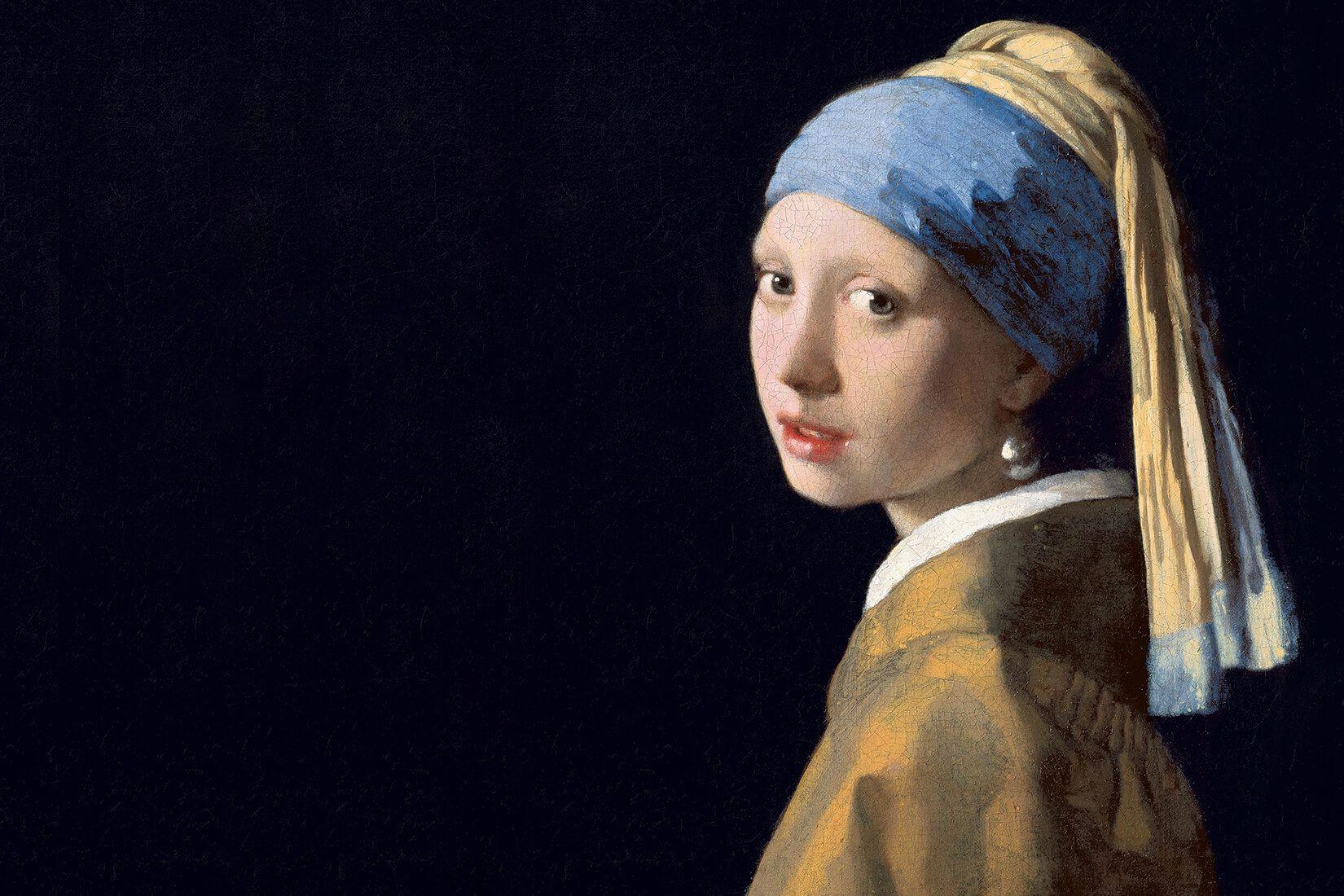
Johannes Vermeer’s Girl with a Pearl Earring (1665) is a stunning example of Dutch Golden Age portraiture. Known as the “Mona Lisa of the North,” it portrays a young woman with a captivating gaze and delicate lighting. The painting’s simplicity and mystery make it one of the most admired portraits in art history.
Key Highlights:
- Dutch Golden Age masterpiece by Vermeer.
- Renowned for its lifelike lighting and expression.
- Displayed at the Mauritshuis Museum, The Hague.
Girl with a Pearl Earring: The Mystery Behind the Masterpiece
Often referred to as the “Mona Lisa of the North,” Girl with a Pearl Earring by Johannes Vermeer is one of the most iconic portraits in Western art. Painted around 1665 during the Dutch Golden Age, this mesmerizing work stands out not only for its striking simplicity but also for the mystery surrounding the identity of the girl. The painting captivates viewers with the subject’s calm, yet intriguing gaze and the soft play of light that gives her an almost lifelike presence.
Unlike traditional portraits of the era, this piece is not a formal commissioned likeness but rather a tronie—a study of a character type, expression, or exotic costume. The girl’s exotic turban and oversized pearl earring hint at a fascination with the East and the opulence of imported goods during the 17th century.
Vermeer's Composition and Visual Impact
Vermeer was a master of light, and in Girl with a Pearl Earring, he showcased this skill with brilliance. The soft illumination highlights the contours of the girl’s face and brings subtle depth to the fabric of her turban and the glimmering pearl. The dark, indistinct background contrasts starkly with her radiant skin and shimmering accessory, making the subject appear to float in space.
One of the most arresting features of the painting is the expression on the girl’s face—both shy and inviting. Her parted lips and the slight turn of her head give the impression that she’s just turned toward the viewer, creating an intimate and timeless moment.
Enduring Popularity and Global Recognition
Housed in the Mauritshuis museum in The Hague, Netherlands, Girl with a Pearl Earring continues to draw admirers from around the world. Its popularity skyrocketed in the 20th and 21st centuries, thanks in part to literature and film adaptations that speculated on the identity and story of the girl.
Despite its small size and understated subject, this painting has achieved global fame. It represents the beauty of subtlety, the power of suggestion, and the timeless appeal of expertly rendered human emotion. Johannes Vermeer, though not widely known during his lifetime, now enjoys recognition as one of the great masters of portraiture, largely due to this enchanting work.
- Sources Include / Discover More: Girl with a Pearl Earring, An Oil Painting by Dutch Golden Age Painter Johannes Vermeer, Dated c. 1665
- Also Read: Most Famous Makeup Brands in the World
#6
The Persistence of Memory
Key Takeaways for The Persistence of Memory: Salvador Dalí
Time Melts into Surrealism
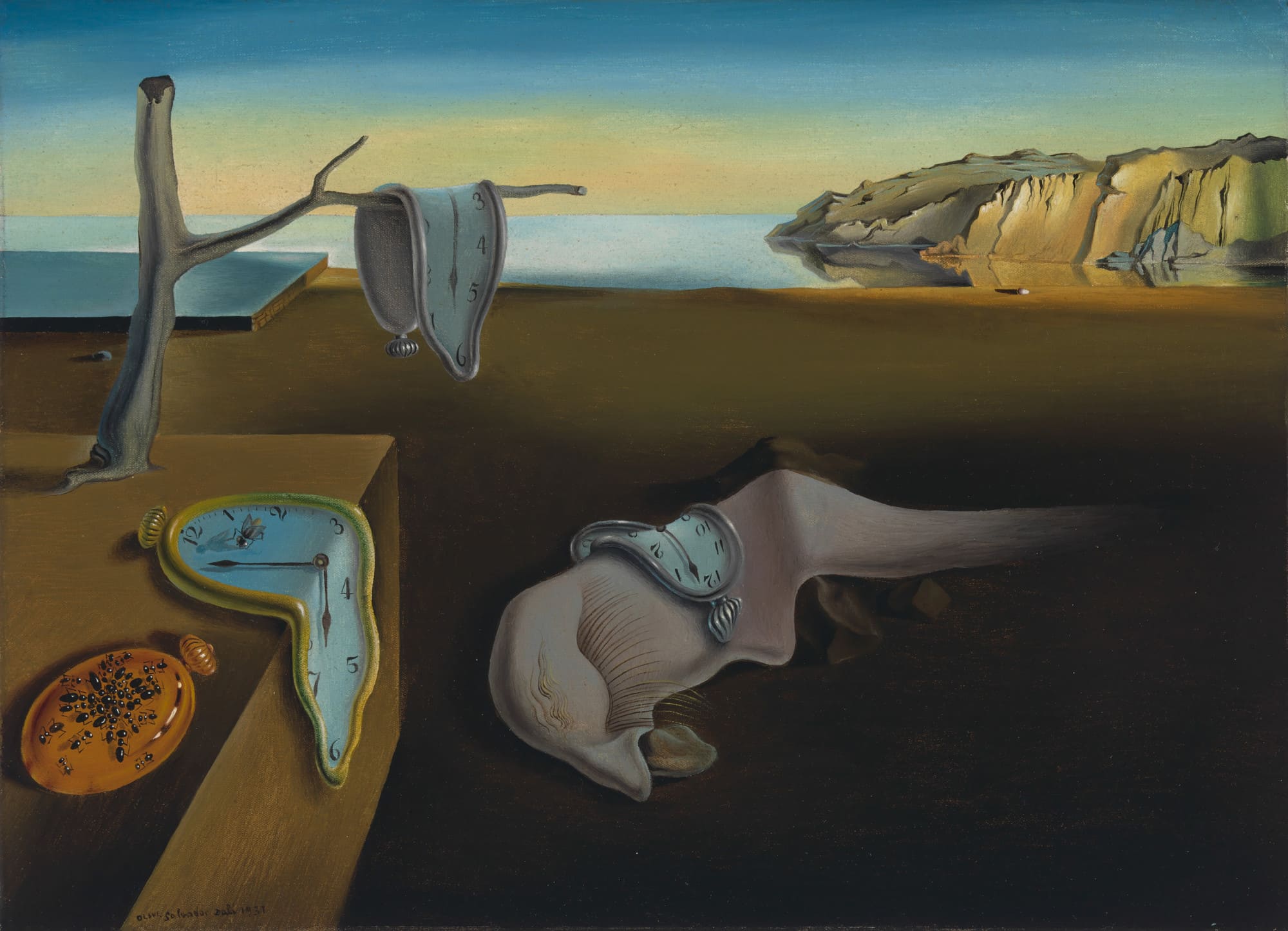
Salvador Dalí’s The Persistence of Memory (1931) is one of the most famous surrealist paintings in the world. Its melting clocks symbolize the fluidity of time and the dreamlike nature of human perception. The painting, housed at MoMA in New York, continues to fascinate viewers with its philosophical depth and visual intrigue.
Key Highlights:
- Surrealist masterpiece exploring time and dreams.
- Features Dalí’s iconic melting clocks.
- Displayed at the Museum of Modern Art (MoMA), New York.
The Persistence of Memory Painting: A Surreal Masterpiece of Time and Dream
The Persistence of Memory, painted by Salvador Dalí in 1931, is undoubtedly one of the most recognizable and intriguing surrealist paintings in the world. This artwork challenges conventional perceptions of time, reality, and the unconscious mind through its bizarre and dreamlike imagery. Dalí’s melting clocks draped over a desolate landscape have become iconic symbols of the surrealism movement, captivating audiences for nearly a century.
Dalí painted this masterpiece while living in Spain during the rise of surrealism, a movement that sought to unlock the power of imagination and dreams. The painting perfectly embodies surrealism’s fascination with the irrational and the unexpected, provoking viewers to question their understanding of time and reality.
Salvador Dalí's Imagery and Symbolism Explained
The painting’s most famous feature is its “soft” or melting clocks, which defy the usual rigid and mechanical concept of time. These clocks appear to be limp and flowing, as if time itself is dissolving or bending under the pressure of the subconscious. This imagery suggests that time is fluid, subjective, and perhaps meaningless in the dream world.
The barren landscape, inspired by Salvador Dalí’s native Catalonia, adds an eerie stillness and sense of isolation. A strange amorphous figure rests in the center, often interpreted as a distorted self-portrait of Dalí, symbolizing the blurred boundaries between reality and dreams. The contrast between hard, natural elements like rocks and the soft clocks emphasizes the painting’s surreal quality.
Dali's The Persistence of Memory: Lasting Impact on Art and Popular Culture
Dali’s The Persistence of Memory is housed at the Museum of Modern Art (MoMA) in New York City and remains one of Dalí’s most celebrated works. Its influence stretches beyond fine art into popular culture, appearing in films, advertisements, and countless references that celebrate its originality and philosophical depth.
This painting continues to inspire artists, psychologists, and philosophers by provoking deep questions about how humans perceive time and reality. Dalí’s work reminds us that beneath the surface of everyday life lies a complex, fluid world shaped by dreams and imagination.
- Sources Include / Discover More: The Persistence of Memory, A 1931 Painting by Artist Salvador Dalí and One of the Most Recognizable Works of Surrealism
- Also Read: Most Famous Anime in the World
#7
The Creation of Adam
Key Takeaways for The Creation of Adam: Michelangelo
Touching the Divine
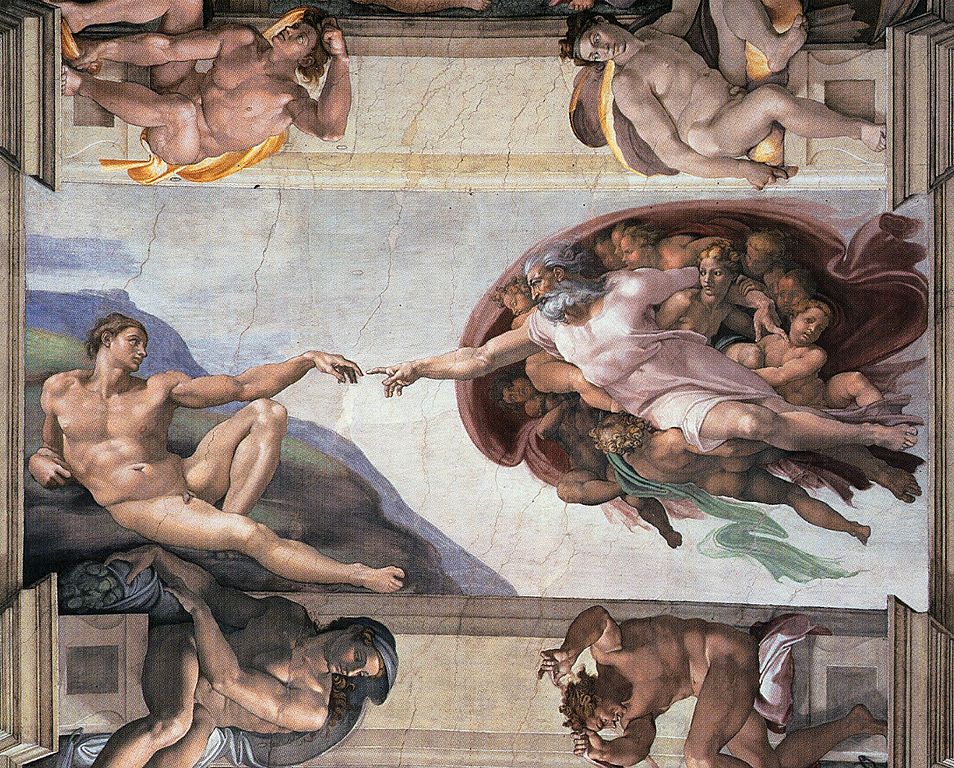
Michelangelo’s The Creation of Adam (1512), located on the Sistine Chapel ceiling in Vatican City, is one of the greatest achievements in Western art. The fresco captures the divine moment when God gives life to Adam, symbolizing human potential and divine connection. It remains a universal image of creativity and faith.
Key Highlights:
- Renaissance fresco from the Sistine Chapel ceiling.
- Depicts the spark of life between God and Adam.
- Symbolizes divine connection and human creation.
Michelangelo Painting The Creation of Adam: A Pinnacle of Renaissance Art
The Creation of Adam, painted by Michelangelo between 1508 and 1512, is arguably one of the most celebrated frescoes in art history. This masterpiece adorns the ceiling of the Sistine Chapel in Vatican City and stands as a symbol of the Renaissance’s artistic and philosophical rebirth. The fresco captures the biblical moment when God breathes life into Adam, the first man, combining divine power with human potential in one striking image.
Michelangelo’s work on the Sistine Chapel ceiling was a monumental project, spanning four years, during which he depicted several scenes from the Book of Genesis. The Creation of Adam is particularly notable for its dynamic composition and profound symbolism, representing humanity’s connection to the divine.
Iconic Imagery and Symbolism
The focal point of the fresco is the near-touching hands of God and Adam, separated by a small gap that creates a powerful tension. This moment symbolizes the spark of life and consciousness being passed from the Creator to man. The detailed anatomy of Adam’s muscular body reflects Michelangelo’s deep study of human form, emphasizing both physical beauty and spiritual significance.
God is depicted surrounded by angels, cloaked in a swirling drapery that some scholars interpret as the shape of a human brain—symbolizing divine intelligence. The fresco’s use of vibrant colors and intricate details enhances the emotional intensity and spiritual grandeur of the scene.
Michelangelo The Creation of Adam: Enduring Legacy and Influence
Located in the heart of the Vatican, The Creation of Adam continues to awe millions of visitors annually and is a cornerstone of Western art. Its influence extends far beyond religious contexts, inspiring countless artists, filmmakers, and creatives worldwide.
Michelangelo’s fresco captures the essence of human creativity and the divine spark believed to reside within each person. It embodies themes of life, potential, and the eternal bond between humanity and the divine—a timeless masterpiece that resonates through centuries.
- Sources Include / Discover More: The Creation of Adam, Also Known as The Creation of Man, a Fresco Painting by Italian Artist Michelangelo
- Also Read: Most Famous Entrepreneurs in the World
#8
The Scream
Key Takeaways for The Scream: Edvard Munch
A Cry Echoing Through Time
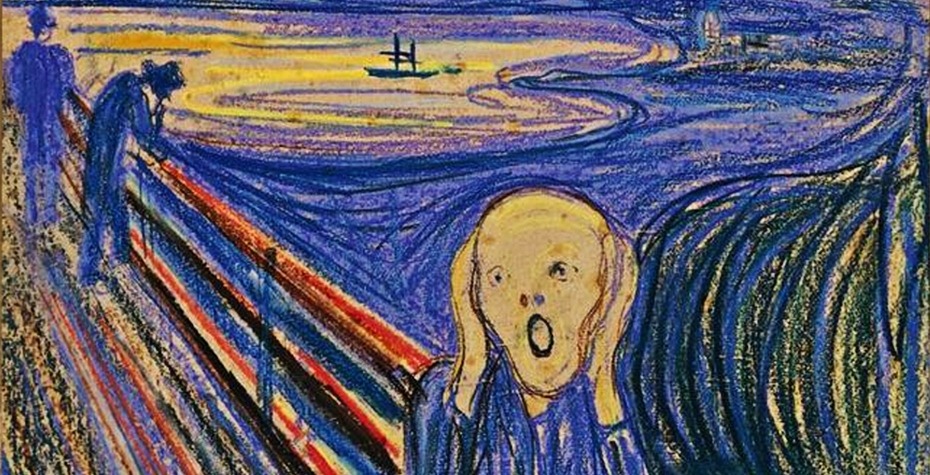
Edvard Munch’s The Scream (1893) is a defining work of Expressionism, capturing the raw intensity of human anxiety and despair. Its distorted figure and swirling red sky express universal emotional suffering. Displayed in Oslo’s National Gallery and Munch Museum, it remains one of the most recognized images in modern art.
Key Highlights:
- Expressionist painting symbolizing human anxiety.
- Features iconic figure under a fiery sky.
- Displayed at the Munch Museum and National Gallery, Oslo.
The Scream: An Icon of Expressionist Art
The Scream, painted by Norwegian artist Edvard Munch in 1893, is one of the most powerful and recognizable images in modern art. This haunting work captures a moment of intense emotional anguish and existential dread, making it a cornerstone of the Expressionist movement. The painting’s vivid colors and swirling lines evoke a sense of anxiety and inner turmoil that resonates deeply with viewers worldwide.
Munch created several versions of The Scream, including paintings, lithographs, and pastels, each exploring the rawness of human emotion. The artwork was inspired by a personal experience Munch described as a “scream passing through nature,” reflecting the universal feelings of fear, despair, and alienation.
Edvard Munch: Visual Elements and Symbolism
The central figure in The Scream is often interpreted as a person overwhelmed by an unseen terror. The figure’s distorted face, wide eyes, and open mouth convey a silent scream that seems to echo across the landscape. The blood-red sky, swirling in dramatic waves, enhances the painting’s sense of chaos and emotional intensity.
The background landscape, inspired by the Oslofjord near Munch’s home, adds a real-world connection to this surreal expression of psychological distress. The use of bold, contrasting colors and exaggerated forms pushes the boundaries of traditional representation, emphasizing emotion over realism.
The Scream by Edvard Munch: Cultural Impact and Legacy
The Scream by Edvard Munch has become a cultural icon, appearing in countless adaptations, parodies, and references across media. It symbolizes the anxiety of the modern human condition and the universal experience of existential fear. The painting is housed primarily in the National Gallery in Oslo, Norway, and the Munch Museum, attracting art lovers and tourists from around the globe.
Its impact on art history is immense, influencing generations of artists who explore themes of emotion, identity, and mental health. Edvard Munch’s The Scream continues to be a powerful reminder of art’s ability to capture the depths of human experience in a single, unforgettable image.
- Sources Include / Discover More: The Scream, An Art Composition Created by Norwegian Artist Edvard Munch in 1893
- Also Read: Most Famous Crypto Wallets in the World
#9
The Night Watch
Key Takeaways for The Night Watch: Rembrandt van Rijn
Light and Shadow in Motion
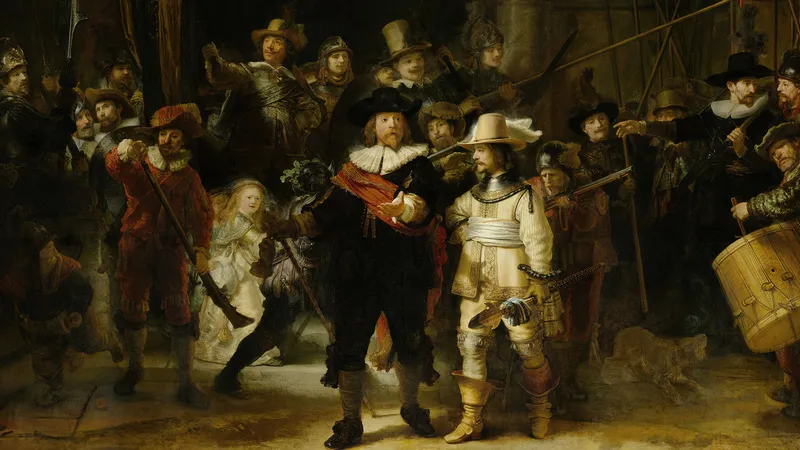
Rembrandt’s The Night Watch (1642) is a masterpiece of Dutch Baroque art, depicting a militia company in dynamic motion. Known for its dramatic use of light and shadow, it revolutionized group portraiture. Displayed at the Rijksmuseum in Amsterdam, it continues to embody the spirit and energy of the Dutch Golden Age.
Key Highlights:
- Baroque masterpiece with vivid realism.
- Innovative group portrait full of motion and depth.
- Displayed at the Rijksmuseum, Amsterdam.
The Night Watch: A Masterpiece of Baroque Art
The Night Watch, painted by Dutch master Rembrandt van Rijn in 1642, is one of the most famous and celebrated works of the Baroque period. Officially titled Militia Company of District II under the Command of Captain Frans Banning Cocq, this large-scale painting captures a vibrant scene of a city guard preparing for action. Known for its dramatic use of light and shadow, The Night Watch showcases Rembrandt’s unparalleled skill in storytelling through art.
This painting is a prime example of group portraiture from the Dutch Golden Age, combining realism with theatricality. Rather than a static lineup, Rembrandt created a dynamic composition full of motion, depth, and emotion, making the subjects come alive on the canvas.
Rembrandt's Composition and Symbolism
One of the painting’s most striking features is its masterful use of chiaroscuro, the contrast between light and dark. Captain Frans Banning Cocq and his lieutenant are bathed in light, drawing viewers’ attention immediately to their commanding presence. The rest of the militia is depicted in various poses of readiness, emphasizing camaraderie and vigilance.
The painting also includes symbolic elements, such as the small girl holding a chicken with claws, which represents the militia’s emblem. This detail adds a layer of meaning and identity to the group. Rembrandt’s innovative approach to portraiture broke away from the traditional, formal poses to create a lively, almost cinematic moment frozen in time.
The Night Watch Painting: Legacy and Cultural Significance Housed in the Rijksmuseum in Amsterdam
The Night Watch painting is housed in the Rijksmuseum in Amsterdam and remains a cornerstone of Dutch cultural heritage. Its influence extends beyond art, often referenced in literature, films, and popular culture. The painting underwent extensive restoration after suffering damage during a 1975 vandalism attack, underscoring its importance and the dedication to preserving it.
Rembrandt’s ability to capture not just the likeness but the spirit and energy of his subjects has cemented The Night Watch as a masterpiece that continues to inspire awe and admiration. It stands as a testament to the richness of 17th-century Dutch art and the power of visual storytelling.
- Sources Include / Discover More: The Night Watch, One of the Most Famous Dutch Golden Age Paintings by Rembrandt van Rijn Completed in 1642
- Also Read: Most Famous Sports Cars in the World
#10
American Gothic
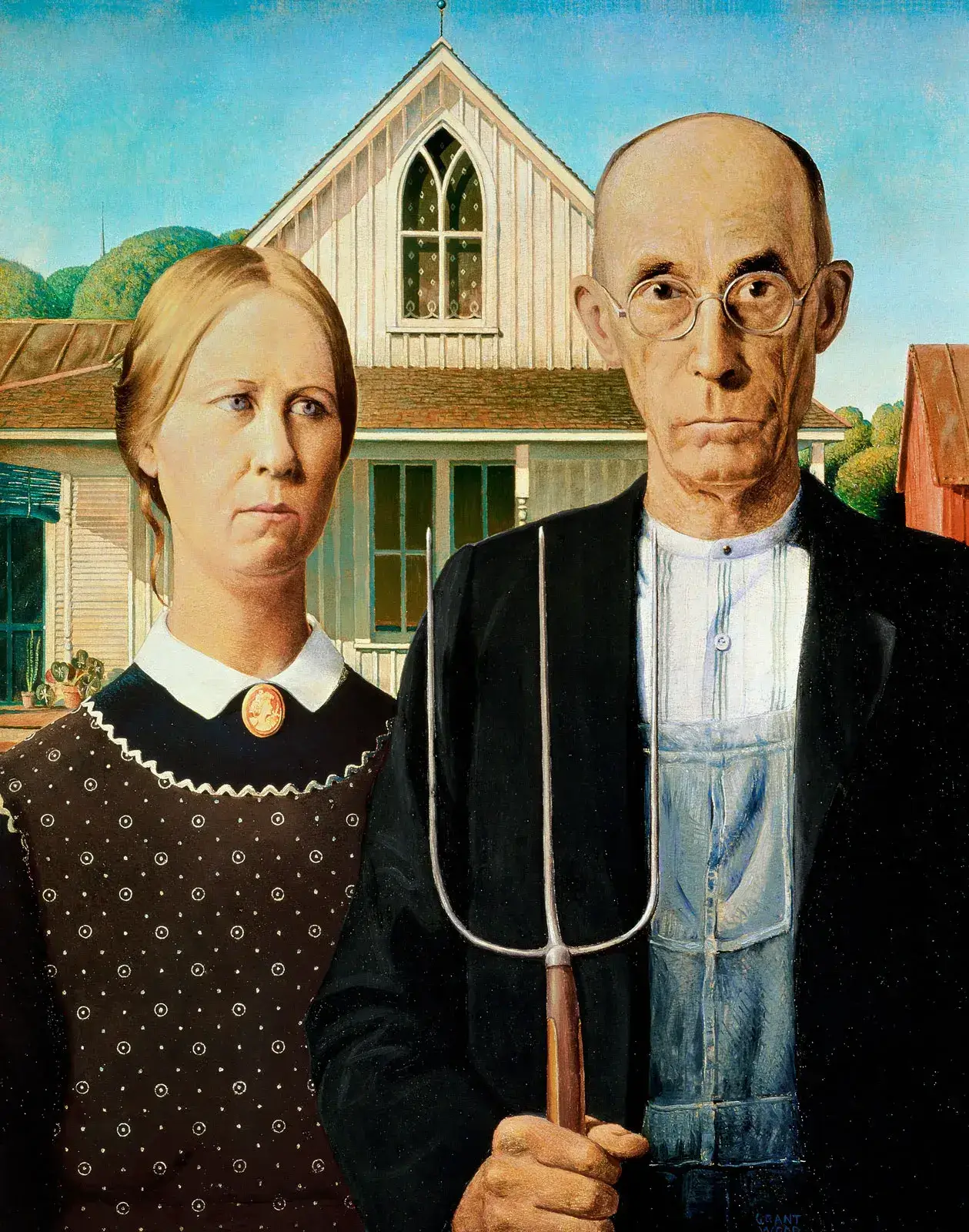
Key Takeaways for American Gothic: Grant Wood
Iconic Glimpse of Rural America
Grant Wood’s American Gothic (1930) is an enduring symbol of American resilience and simplicity. Featuring a farmer and his daughter in front of a Gothic-style house, it reflects the values of rural life during the Great Depression. The painting is a cultural icon housed at the Art Institute of Chicago.
Key Highlights:
- Iconic portrayal of rural American life.
- Symbol of strength during the Great Depression.
- Displayed at the Art Institute of Chicago.
American Gothic : A Symbol of American Regionalism
American Gothic, painted by Grant Wood in 1930, is one of the most iconic and enduring images in American art. This painting perfectly captures the spirit of the rural Midwest during the Great Depression, highlighting themes of hard work, resilience, and traditional values. Wood’s work is a cornerstone of the American Regionalism movement, which focused on realistic portrayals of everyday life outside urban centers.
The painting features a stern-looking farmer holding a pitchfork standing beside a woman, who is often interpreted as his daughter or wife. Set against the backdrop of a modest Gothic-style farmhouse, American Gothic presents a portrait of American steadfastness during challenging times.
Grant Wood: Composition and Symbolism
The composition is simple yet powerful. The farmer’s pitchfork echoes the vertical lines of the Gothic window in the house behind them, creating a visual harmony that reinforces the painting’s themes. The serious expressions of the figures convey a sense of determination and stoicism, reflecting the values of rural American life.
Grant Wood’s use of muted colors and precise detailing gives the painting a timeless quality. The work also contains subtle humor and irony, as the figures’ stiff postures and somber faces have been interpreted in various ways—from a critique of rural conservatism to a celebration of American endurance.
American Gothic Painting: Cultural Impact and Legacy
American Gothic painting quickly became a symbol of American identity, especially during the hardships of the 1930s. It has been widely reproduced, parodied, and referenced in popular culture, making it one of the most recognizable paintings in the United States and around the world.
The original painting is displayed at the Art Institute of Chicago, where it continues to draw large crowds eager to see this emblem of American art history. Grant Wood’s American Gothic remains a powerful reminder of the country’s rural roots and the resilience of its people during times of adversity.
- Sources Include / Discover More: American Gothic, A 1930 Oil Painting on Beaverboard by the American Regionalist Artist Grant Wood
- Also Read: Most Famous Luxury Perfumes in the World
Key FAQs on the 10 Most Famous Paintings in the World
Why is the Mona Lisa considered the most famous painting in the world?
The Mona Lisa by Leonardo da Vinci is considered the most famous painting in the world due to its unmatched recognition, psychological realism, and artistic innovation.
Painted around 1503 during the High Renaissance, the portrait is celebrated for its subtle sfumato technique, lifelike gaze, and enigmatic smile. Art historians and institutions such as the Louvre Museum and Encyclopaedia Britannica cite it as a defining masterpiece of Western art.
Displayed in Paris, it attracts millions of visitors annually and remains the global benchmark for artistic excellence.
What makes The Starry Night by Vincent van Gogh so famous?
The Starry Night by Vincent van Gogh is famous for transforming intense emotion into a powerful visual language.
Painted in 1889 while Van Gogh lived in Saint-Rémy, the swirling sky, bold brushwork, and dramatic color contrast reflect emotional depth and artistic originality. Art scholars and MoMA New York identify it as a cornerstone of Post-Impressionism.
Today, it is one of the most studied and recognizable paintings in modern art history.
What is the meaning behind Leonardo da Vinci’s The Last Supper?
The Last Supper by Leonardo da Vinci represents the moment Jesus announces his betrayal to the apostles.
Painted between 1495 and 1498 in Milan, the work is celebrated for its emotional realism, symbolic gestures, and revolutionary use of perspective. UNESCO and leading art historians regard it as one of the greatest religious artworks ever created.
Its influence extends across Renaissance art, theology, and visual storytelling.
Why is Picasso’s Guernica considered a powerful anti-war painting?
Guernica by Pablo Picasso is considered one of the most powerful anti-war paintings ever created.
Painted in 1937 in response to the bombing of Guernica during the Spanish Civil War, its monochrome figures express chaos, suffering, and civilian tragedy. Museums and historians, including Museo Reina Sofía, identify it as a universal protest against violence.
The painting remains a global symbol of peace and political resistance.
Why is Vermeer’s Girl with a Pearl Earring called the ‘Mona Lisa of the North’?
Girl with a Pearl Earring by Johannes Vermeer is called the ‘Mona Lisa of the North’ due to its mysterious expression and timeless beauty.
Painted around 1665 during the Dutch Golden Age, the portrait is admired for its soft lighting and intimate realism. Art experts and the Mauritshuis Museum cite it as Vermeer’s most iconic work.
Its emotional subtlety continues to captivate global audiences.
What do the melting clocks in Dalí’s The Persistence of Memory symbolize?
The melting clocks in The Persistence of Memory symbolize the fluid and subjective nature of time.
Painted in 1931, Salvador Dalí’s surrealist masterpiece reflects ideas influenced by psychology and dream theory, including concepts discussed by Sigmund Freud. MoMA New York identifies it as a defining image of Surrealism.
The painting challenges traditional reality and reshaped modern symbolic art.
What does Michelangelo’s The Creation of Adam represent?
The Creation of Adam represents the biblical moment when God gives life to humanity.
Painted in 1512 on the Sistine Chapel ceiling, Michelangelo’s fresco is renowned for its anatomical precision and spiritual symbolism. The Vatican and major art historians consider it a pinnacle of Renaissance achievement.
Its imagery has become a universal symbol of creation and divine connection.
Why is Edvard Munch’s The Scream so emotionally powerful?
The Scream is emotionally powerful because it visualizes universal human anxiety.
Painted in 1893 by Edvard Munch, the distorted figure and turbulent sky convey psychological distress in a direct, symbolic form. Art institutions and expressionist scholars regard it as a foundation of modern emotional art.
It remains one of the most recognizable images of existential fear.
What makes Rembrandt’s The Night Watch a revolutionary painting?
The Night Watch is revolutionary for transforming static portraiture into a dramatic narrative scene.
Painted in 1642, Rembrandt used movement, lighting, and depth to portray civic guards in action. The Rijksmuseum and art historians recognize it as a defining work of Dutch Baroque innovation.
It reshaped how group portraits were composed in Western art.
What does Grant Wood’s American Gothic symbolize in American art?
American Gothic symbolizes resilience, discipline, and rural American values.
Painted in 1930 during the Great Depression, Grant Wood’s work reflects national identity through realism and symbolism. The Art Institute of Chicago and American art historians cite it as a defining image of American Regionalism.
Its cultural influence extends across art, media, and social commentary.
Art as a Mirror of Society
Political, Religious, and Cultural Reflections in Paintings
Artworks often reflect the era in which they were created. Religious iconography dominated the Renaissance, while war and trauma fueled the modern era. From The Last Supper to Guernica, these paintings tell more than stories—they record emotions, events, and ideologies of their time.
Why These Paintings Continue to Inspire
Legacy and Pop Culture Influence
From parodies and memes to tattoos and merchandise, these paintings are deeply embedded in our modern culture. They’ve become icons in their own right—not just for art historians, but for everyone.
Museum Tourism and Art Economy
Each of these masterpieces is a magnet, drawing millions of visitors every year. Cities like Paris, New York, and Amsterdam benefit economically and culturally from the fame of these works.
Final Thoughts
Art isn’t just something we hang on walls—it’s a window into the human soul, a mirror reflecting our emotions, dreams, and evolution. The 10 Most Famous Paintings in the World represent far more than artistic achievement; they are living legacies of creativity, culture, and imagination. From Leonardo da Vinci’s Mona Lisa and Michelangelo’s The Creation of Adam to Van Gogh’s The Starry Night and Picasso’s Guernica, each masterpiece tells a story that transcends centuries, continents, and languages.
These timeless works of art capture the very essence of humanity—beauty, sorrow, faith, and genius—all preserved in brushstrokes that changed the course of history. Whether admired in the grand halls of the Louvre, the MoMA, or the Vatican, these paintings continue to inspire generations of artists, thinkers, and dreamers. They remind us that art is not static—it evolves, it speaks, and it connects us across time and culture.
In the end, these masterpieces are more than global treasures; they are eternal symbols of human expression, creativity, and resilience—proof that while civilizations rise and fall, great art remains forever.
The 10 Most Famous Paintings Frequently Asked Questions (FAQs)
The Mona Lisa is believed to be the most valuable painting, insured for over $850 million.
Most are, but some masterpieces are in private collections or historical buildings.
From sfumato and chiaroscuro to surrealism and cubism, groundbreaking techniques contributed to their lasting fame.
It varied. The Last Supper took over 3 years, while Van Gogh painted Starry Night in just a few days.
Absolutely. Lost or misattributed paintings are still being uncovered, and modern artists continue to create timeless works.
The list features Mona Lisa, The Starry Night, The Last Supper, Guernica, Girl with a Pearl Earring, The Persistence of Memory, The Creation of Adam, The Scream, The Night Watch, and American Gothic.
The Mona Lisa by Leonardo da Vinci is displayed at the Louvre Museum in Paris, France, and attracts millions of visitors every year.
The Persistence of Memory by Salvador Dalí is one of the most famous surrealist paintings, known for its melting clocks and dreamlike imagery.
Leonardo da Vinci’s Mona Lisa is the most visited artwork globally, displayed in the Louvre Museum and admired for its mysterious expression.
The Museum of Modern Art (MoMA) in New York houses masterpieces such as The Starry Night by Vincent van Gogh and The Persistence of Memory by Salvador Dalí.
About the Author
This article was researched and prepared by the World Millions Editorial Team, specialists in global rankings, premium market analysis, structured comparisons, and high-value sector research across industries.
All content undergoes verification, editorial review, and periodic updates to ensure accuracy, clarity, and alignment with recognized industry standards, reliable institutional sources, and leading global authorities.
- Last Updated: March 27, 2026 by the World Millions Editorial Team
- Original Published Date: March 27, 2026
- View Our: Editorial Team | Sources | Disclaimer | Editorial Standards