- Home
- »
- World’s Most Famous
- »
- 10 Most Famous Investment Strategies
10 Most Famous
Investment Strategies
The 10 Most Famous Investment Strategies represent the foundation of modern wealth creation, guiding investors through market cycles, economic shifts, and financial innovation. From disciplined value investing and high-growth equity strategies to diversified index investing and income-focused dividend portfolios, these approaches have shaped how individuals and institutions build long-term financial success.
Discover the 10 Most Famous Investment Strategies, ranked by global influence, proven performance, and adoption by legendary investors such as Warren Buffett, John Bogle, and Ray Dalio. These time-tested strategies help investors manage risk, maximize returns, and build sustainable wealth across stocks, funds, and diversified portfolios.
On This Page
Toggle- Updated 2026 by the World Millions Editorial Team: View Author Information
What Makes an Investment Strategy 'Famous'?
Ever wondered why certain investment strategies get global recognition while others fade into the background?
It all comes down to a few key things:
- Proven Track Record: The strategy consistently outperforms others over decades.
- Backed by Financial Legends: Think Warren Buffett, Ray Dalio, or John Bogle.
- Scalability: Works across different markets, economies, and investor types.
- Clarity & Simplicity: A good strategy is often simple to understand—even if complex in execution.
List of the Top 10 Most Famous Investment Strategies in the World
Discover the Proven Investment Strategies Used by Billionaires and Financial Legends to Build Lasting Wealth Worldwide.
In the ever-evolving world of finance, mastering the right investment strategy is the secret to building sustainable wealth and achieving financial independence. From value investing pioneered by Benjamin Graham to growth investing made famous by Philip Fisher, each strategy offers unique advantages for different risk appetites and financial goals. These 10 most famous investment strategies in the world have stood the test of time—helping everyone from everyday investors to Wall Street elites navigate volatility, maximize returns, and minimize risks.
Whether you’re a passive investor drawn to index funds, a dividend investor seeking consistent income, or a quantitative trader leveraging data-driven models, these time-tested approaches form the foundation of global investing success. Each method reflects distinct philosophies—from contrarian investing’s bold defiance of market trends to the ethical focus of ESG investing.
Explore the full list below to understand how these globally recognized investment strategies can strengthen your portfolio, enhance diversification, and align with your long-term wealth-building goals.
| Rank | Strategy Name | Origin/Creator | Description | Best For |
|---|---|---|---|---|
| 1 | Value Investing | Benjamin Graham | Buying undervalued stocks with strong fundamentals | Long-term investors |
| 2 | Growth Investing | Philip Fisher | Investing in high-growth companies | Risk-tolerant, aggressive investors |
| 3 | Index Investing | John Bogle | Buying the entire market via low-cost index funds | Beginners, passive investors |
| 4 | Dividend Investing | Numerous | Focusing on companies that pay consistent dividends | Passive income seekers |
| 5 | Momentum Investing | Richard Driehaus | Buying high-performing stocks and riding the trend | Short to mid-term traders |
| 6 | Dollar-Cost Averaging | Jesse Livermore (Popularized Later) | Investing fixed amounts regularly regardless of price | New investors, volatile markets |
| 7 | Contrarian Investing | Sir John Templeton | Investing against prevailing market sentiment | Bold, independent thinkers |
| 8 | Quantitative Investing | Renaissance Technologies | Using math models and algorithms to guide decisions | Tech-savvy, data-driven investors |
| 9 | ESG Investing | Institutional Origin | Investing in companies based on ethical practices | Socially conscious investors |
| 10 | Asset Allocation Strategy | Harry Markowitz | Distributing investments across multiple asset classes | All types, risk managers |
Discover the 10 Most Famous Investment Strategies
Discover the world’s most influential investing methods with these 10 Most Famous Investment Strategies that have shaped how individuals, hedge funds, retirees, and billionaires grow wealth. From Value Investing and Growth Investing to Index Funds, Dividend Income, and Quantitative Trading, each strategy offers its own advantage depending on risk tolerance, time horizon, and financial goals.
These globally recognized strategies help investors manage market volatility, diversify portfolios, and build long-term financial independence. Whether you’re a beginner looking for a stable starting point or an experienced investor refining your edge, understanding these strategies gives you the clarity and confidence to invest smarter—not harder.
#1
Value Investing

Key Takeaways for Value Investing
Origin and Principles
Created by Benjamin Graham, value investing is the philosophy of buying undervalued stocks and holding them until the market recognizes their true worth.
Warren Buffett’s Mastery
Buffett took this method mainstream by turning Berkshire Hathaway into a behemoth, using value investing to grab great companies at good prices.
Pros and Cons
Pros:
- Long-term wealth creation
- Focus on fundamentals
Cons:
- Requires patience
- May underperform in bull markets
Value Investing: The Art of Buying Undervalued Stocks
Value investing is one of the oldest and most respected investment strategies in the world. Popularized by Benjamin Graham—widely known as the father of value investing—and later practiced famously by Warren Buffett, this strategy focuses on buying stocks that appear to be undervalued by the market but possess strong fundamentals. The core idea is to purchase shares for less than their intrinsic value and hold them until the market realizes their true worth.
Price-to-Earnings Ratio & Price-to-Book Ratio: Understanding the Value Investing Philosophy
At its core, value investing involves in-depth analysis of a company’s financials, including its earnings, debt levels, assets, cash flow, and long-term growth potential. Investors using this method typically rely on key valuation metrics like the Price-to-Earnings (P/E) ratio, Price-to-Book (P/B) ratio, and free cash flow. When a stock trades below its intrinsic value—calculated through financial analysis—it is considered a bargain.
This investing approach promotes a long-term perspective, often requiring patience as it can take months or even years for the market to correct the undervaluation. However, the rewards are often substantial, as the gap between the market price and real value eventually narrows, leading to capital appreciation and sometimes dividend income.
Risk Mitigation: Why Value Investing Works
Markets aren’t always efficient. Stocks can be undervalued due to negative news cycles, market overreactions, or temporary setbacks. Value investors capitalize on this inefficiency by buying when others are fearful, thus aligning with the famous Buffett quote: “Be fearful when others are greedy, and greedy when others are fearful.”
Another reason for the enduring success of value investing is its focus on risk mitigation. Since you’re buying assets for less than what they’re worth, the downside risk is lower, especially when backed by solid financials.
Long-Term Investing: Is Value Investing Right for You?
Value investing is best suited for long-term investors who are patient, disciplined, and willing to do deep research. It’s also a great strategy for those who prefer a relatively conservative approach to building wealth in the stock market. Whether you’re an individual investor or managing a retirement portfolio, value investing offers a timeless path to consistent returns—especially in volatile or bearish markets.
- Sources Include / Discover More: Value investing, An Investment Paradigm That Involves Buying Securities That Appear Underpriced
- Also Read: Most Famous Traders in the World
#2
Growth Investing

Key Takeaways for Growth Investing
What is Growth Investing?
Growth investing focuses on companies that are expanding rapidly—think Tesla, Amazon, or Google during their early days.
When to Use It
Ideal for bullish markets and long-term portfolios looking for capital appreciation.
Benefits and Risks
Benefits:
- Huge upside potential
Risks:
- Higher volatility
- Expensive valuations
Growth Investing: Fueling Wealth Through High-Potential Companies
Growth investing is a popular investment strategy focused on capital appreciation. Unlike value investing, which targets undervalued stocks, growth investors seek companies with strong potential to expand their revenue, earnings, or market share at a rate significantly faster than the overall market. This approach emphasizes future potential rather than current intrinsic value.
Earnings per Share & Return on Equity: What Defines a Growth Stock?
A typical growth stock belongs to a company that reinvests its profits to accelerate expansion rather than pay dividends. These companies are often in innovative or rapidly expanding industries like technology, biotechnology, renewable energy, or e-commerce. Their appeal lies in their ability to disrupt traditional markets and generate exponential returns.
Common characteristics of growth stocks include above-average revenue growth, increasing earnings per share, high return on equity (ROE), and a competitive edge or proprietary product. Because of this potential, such stocks often trade at higher Price-to-Earnings (P/E) ratios—reflecting investor confidence in future earnings growth.
Capital Gains: Benefits of Growth Investing
The primary advantage of growth investing is the opportunity for massive capital gains. Companies like Amazon, Tesla, and Apple rewarded early investors with returns that outpaced most traditional investments. Growth investors focus on identifying these types of high-potential companies before they become mainstream.
Another benefit is portfolio performance during bull markets. Growth stocks tend to outperform in optimistic market conditions, as investors are willing to pay a premium for future success.
Financial Growth: Risks and Ideal Investor Profile
Growth investing isn’t without risks. High valuations can mean greater volatility, and if a company fails to meet growth expectations, stock prices can plummet. Additionally, during market downturns, growth stocks often underperform compared to more stable, dividend-paying companies.
This strategy suits investors who are risk-tolerant, have a long-term horizon, and stay informed about market trends and company performance. Young professionals, tech-savvy individuals, and aggressive portfolio managers often favor growth investing as a way to compound wealth quickly.
If you’re aiming to ride the wave of innovation and don’t mind short-term volatility in exchange for long-term potential, growth investing could be your path to exceptional financial growth.
- Sources Include / Discover More: Growth Investing, A Strategy That Focuses on Investing in Companies That Exhibit Signs of Above-Average Growth
- Also Read: Most Famous Michelin Star Restaurants
#3
Index Investing

Key Takeaways for Index Investing
The Passive Approach
Index investing is all about simplicity—buy and hold the entire market via low-cost index funds like the S&P 500.
Vanguard’s Role
John Bogle, founder of Vanguard, revolutionized investing with this cost-efficient strategy.
Why Beginners Love It
- Low fees
- Market-matching returns
- Minimal effort
Index Investing: The Easiest Way to Match Market Performance
Index investing is one of the most beginner-friendly and widely adopted strategies in the world. Popularized by John Bogle, founder of Vanguard, this approach involves buying a diversified mix of stocks that mimic a market index—like the S&P 500, NASDAQ, or Dow Jones Industrial Average. The goal is to match, not beat, the market’s performance over the long term.
What Is an Index Fund?
An index fund is a type of mutual fund or exchange-traded fund (ETF) that aims to replicate the returns of a specific market index. For example, if you invest in an S&P 500 index fund, your portfolio will include the same 500 large-cap U.S. companies weighted similarly to the actual index. These funds are passively managed, meaning there’s no team of analysts constantly buying or selling stocks.
Because of their passive nature, index funds have much lower fees compared to actively managed funds, making them highly cost-effective. This low-fee structure is a key reason why index investing consistently outperforms active management over the long term.
Diversification & Compounding: Why Index Investing Works
Index investing benefits from two powerful financial principles: diversification and compounding. By owning a broad selection of companies across various sectors, investors reduce their exposure to individual stock risk. Even if some companies underperform, others are likely to balance out the loss.
Additionally, index investing encourages long-term holding, minimizing emotional decision-making during market fluctuations. This “buy and hold” approach aligns with the natural upward trend of the stock market over time, making it a solid strategy for retirement accounts and wealth building.
Passive Income: Who Should Choose Index Investing?
Index investing is ideal for beginner investors, busy professionals, and passive income seekers who prefer a hands-off approach. It’s also a favorite for those seeking consistent returns without the stress of stock picking. Whether you’re saving for retirement, a home, or your child’s education, index investing provides a reliable and low-maintenance path to financial growth.
If you’re looking for simple, low-cost, and proven investing success, index investing is one of the smartest ways to participate in the global financial markets.
- Sources Include / Discover More: Index investing, A Passive Investment Technique That Attempts to Generate Returns Similar to a Broad Market Index
- Also Read: Most Famous Celebrity Homes
#4
Dividend Investing

Key Takeaways for Dividend Investing
Generating Passive Income
Focuses on companies that regularly return profits to shareholders as dividends.
Dividend Aristocrats
These are firms that have increased dividends for 25+ consecutive years.
Long-Term Wealth Creation
Great for retirees or anyone seeking steady income.
Dividend Investing: Earning Passive Income from the Stock Market
Dividend investing is a tried-and-true strategy that focuses on buying shares of companies that regularly pay dividends—cash payments made to shareholders from a company’s profits. These payments offer investors a steady income stream in addition to potential capital gains, making dividend investing especially attractive for those seeking passive income and long-term wealth accumulation.
Dividend Aristocrats: How Dividend Investing Works
When you invest in dividend-paying stocks, you’re essentially partnering with companies that share their earnings with shareholders. Dividends are typically paid quarterly, though some companies may distribute them monthly or annually. The more shares you own, the more dividend income you receive.
Investors often use metrics like dividend yield, dividend payout ratio, and dividend growth rate to assess the quality and reliability of a stock’s dividend payments. High-yield dividend stocks can generate strong income, but sustainable growth and consistent payout history are key factors to consider.
Some of the most reliable dividend-paying companies are known as Dividend Aristocrats—companies that have increased their dividend payouts annually for 25+ consecutive years. These firms are often large, stable, and financially sound, operating in sectors like consumer goods, utilities, healthcare, and finance.
Cash Flow & Dividend Reinvestment Plan: Benefits of Dividend Investing
One of the biggest advantages of dividend investing is its ability to provide steady cash flow—even during market downturns. This income can be reinvested through dividend reinvestment plans (DRIPs), also known as dividend reinvestment programs, to compound returns or used to cover living expenses in retirement.
It also encourages a long-term investing mindset. Rather than speculating on short-term price swings, dividend investors focus on building a portfolio of income-generating assets that grow over time.
Who Should Consider Dividend Investing?
This strategy is perfect for income-focused investors, retirees, and those seeking low-volatility stocks. It appeals to anyone who values consistent earnings with reduced risk and appreciates the psychological comfort of receiving payouts regardless of market conditions.
Whether you’re aiming for financial independence, early retirement, or just want extra monthly income, dividend investing offers a powerful and dependable route to growing wealth steadily.
- Sources Include / Discover More: Dividend Investing, A Strategy Centered on Purchasing Stocks That Pay Regular Dividends
- Also Read: Most Famous Chefs in the World
#5
Momentum Investing

Key Takeaways for Momentum Investing
Riding the Trends
Momentum investors buy stocks with upward price trends and sell them when they slow down.
Behavioral Finance and Momentum
Psychology plays a big role—fear and greed can fuel trends.
Tools Used
Technical analysis, moving averages, and volume trends.
Momentum Investing: Riding the Wave of Market Winners
Momentum investing is a high-energy strategy that capitalizes on market trends. Instead of looking for undervalued stocks or long-term fundamentals, momentum investors focus on stocks that are already performing well and aim to ride the wave even higher. The basic belief is: “stocks that have gone up will continue to go up—at least in the short term.”
Relative Strength Index & Moving Average Convergence Divergence: The Core Principle of Momentum Investing
Momentum investing relies on the idea that strong-performing stocks tend to keep outperforming for a certain period. Traders use technical indicators like Relative Strength Index (RSI), Moving Averages (MA), and MACD (Moving Average Convergence Divergence) to identify bullish trends and enter positions with the intention of exiting at the peak.
This strategy is rooted in psychology and market behavior. It leverages herd mentality, where investors follow others into hot stocks, pushing prices higher. It’s not about long-term value—momentum investors chase price movement and trading volume instead.
Key Benefits of Momentum Investing
The biggest benefit? Fast gains. Momentum investing thrives in bull markets, where stock prices are surging, and market optimism is high. It allows traders to generate quick returns by taking advantage of short- to mid-term price trends.
Another advantage is flexibility. Momentum strategies can be applied across stocks, ETFs, forex, and even crypto markets. With the help of trend-following tools and trading algorithms, it has become even more accessible to retail investors.
Who Should Use Momentum Investing?
Momentum investing is best suited for active traders, risk-tolerant investors, and those comfortable using technical analysis. It requires a hands-on approach and quick decision-making. This strategy is ideal for people who thrive on market movement and are ready to monitor positions frequently.
If you enjoy fast-paced trading, trust charts over fundamentals, and don’t mind short-term volatility, momentum investing could be your path to aggressive portfolio growth.
- Sources Include / Discover More: Momentum Investing, An Investment Strategy Which Focuses on Buying Stocks That are Outperforming
- Also Read: Most Famous Paintings in the World
#6
Dollar-Cost Averaging (DCA)
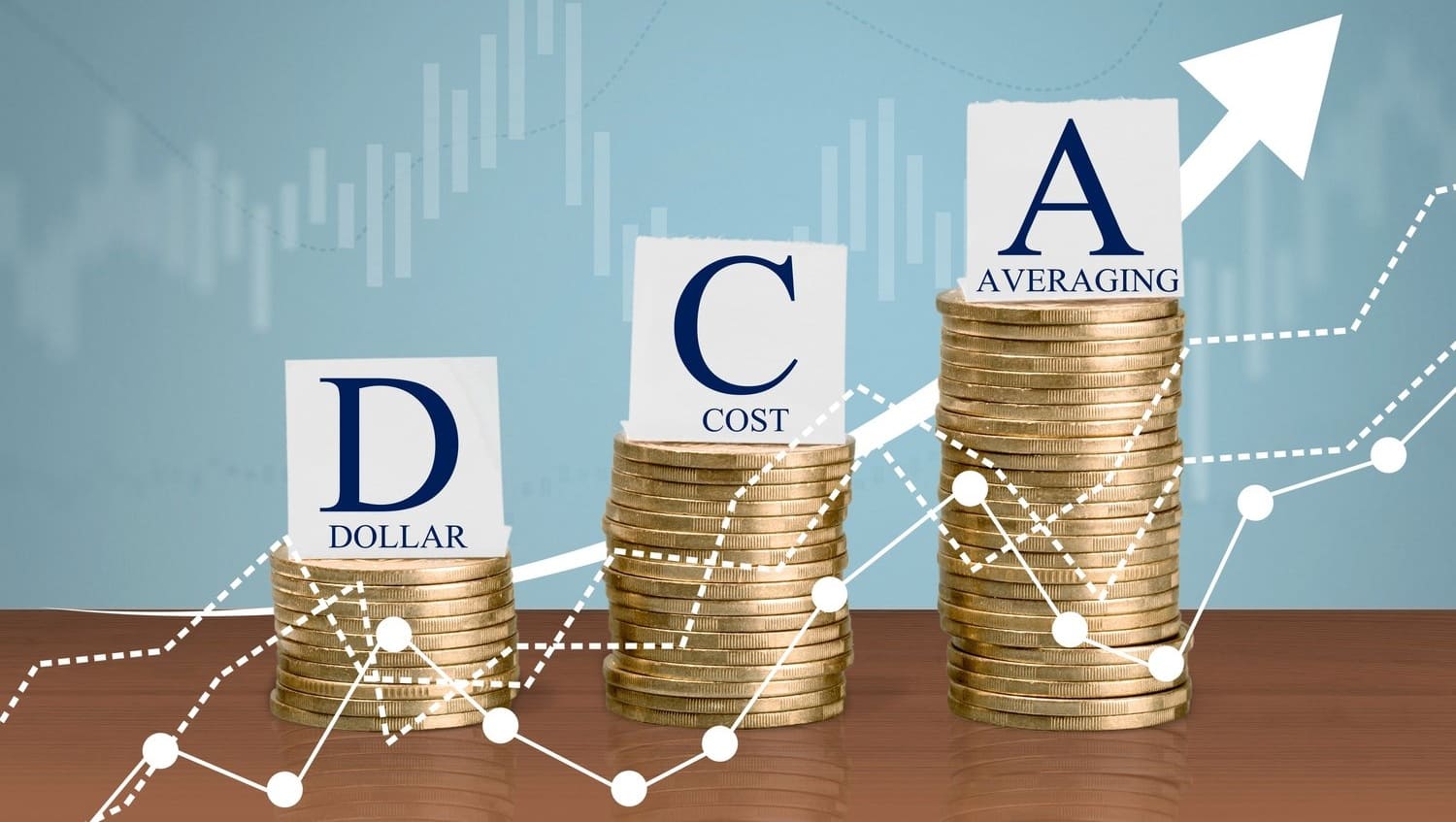
Key Takeaways for Dollar-Cost Averaging (DCA)
How DCA Works
You invest a fixed amount regularly—say monthly—regardless of the market price.
Shielding Against Volatility
Smooths out the impact of market dips and spikes over time.
Real-Life Applications
Popular with salaried investors contributing to mutual funds or 401(k)s.
Dollar-Cost Averaging: The Smart Way to Invest in Volatile Markets
Dollar-Cost Averaging (DCA) is a simple yet highly effective investment strategy where you invest a fixed amount of money at regular intervals, regardless of market conditions. Instead of trying to time the market, DCA helps smooth out the impact of volatility by automatically buying more shares when prices are low and fewer when prices are high.
DCA Investing: How Dollar-Cost Averaging Works
Let’s say you invest $500 on the first of every month into a particular stock or index fund. When prices are low, your $500 buys more shares. When prices are high, it buys fewer. Over time, this averages out your purchase price and reduces the risk of making a large investment at the wrong time.
This strategy is especially useful during market downturns or uncertain economic conditions, where sudden dips can rattle even seasoned investors. By spreading out your investments, DCA helps you stay disciplined and consistent without being swayed by short-term emotions.
Risk Reduction: Benefits of Dollar-Cost Averaging
One of the biggest advantages of DCA is risk reduction. Since you’re not investing a lump sum all at once, you avoid the risk of entering the market at its peak. It also eliminates the need to predict market highs and lows—something even experts struggle to do.
Another benefit is building good investing habits. DCA encourages regular saving and fosters a long-term mindset. It’s an ideal strategy for people who want to automate their investments, stay consistent, and let compound growth do the heavy lifting.
For example, many 401(k) and SIP (Systematic Investment Plan) accounts are built on this very principle—set it and forget it.
Who Should Consider Dollar-Cost Averaging?
Dollar-Cost Averaging is perfect for new investors, those with smaller capital, and anyone uncomfortable with market timing. It’s also great for people investing during periods of uncertainty, like recessions or post-crash recoveries.
If you’re looking for a stress-free way to grow your wealth, DCA offers a disciplined, hands-off approach that works wonders over the long run.
- Sources Include / Discover More: Dollar-cost averaging, Investing Your Money in Equal Portions, at Regular Intervals, Regardless of the Share Price
- Also Read: Most Famous Handbag Brands in the World
#7
Contrarian Investing

Key Takeaways for Contrarian Investing
Betting Against the Crowd
Contrarians go against public sentiment—buying when others are selling, and vice versa.
Famous Contrarians
Sir John Templeton made his fortune this way, famously buying during depressions.
Market Psychology
Requires a strong mind and tons of research.
Contrarian Investing: Profiting by Going Against the Crowd
Contrarian investing is a bold and unconventional strategy built on a simple yet powerful idea: the best time to buy is when others are fearful, and the best time to sell is when others are greedy. Instead of following market trends, contrarian investors intentionally go against prevailing sentiment—buying undervalued assets when they’re out of favor and selling them when they become popular.
The Psychology Behind Contrarian Investing
Contrarian investors believe that markets often overreact to news, economic events, or company performance—leading to mispriced assets. This herd behavior can create excellent buying opportunities. When most investors panic and sell off stocks, contrarians see value. Conversely, when a stock or sector becomes overly hyped, they become cautious.
Legendary investors like Sir John Templeton and Warren Buffett have famously followed this approach, often snapping up assets when others were fleeing the market. The 2008 financial crisis and the 2020 pandemic crash created opportunities where contrarians found hidden gems.
Benefits of Contrarian Investing
The biggest benefit of contrarian investing is the potential for massive long-term gains. By buying when prices are depressed and sentiment is low, contrarians can capitalize on undervalued assets before the rest of the market catches on.
This strategy also encourages independent thinking and a deeper understanding of market fundamentals. It reduces the risk of falling into speculative bubbles or hype-driven trends, helping investors avoid overpriced assets and emotional trading.
Market Psychology: Challenges and Ideal Investor Type
Contrarian investing isn’t easy. It requires strong conviction, patience, and a thick skin. Going against the grain means enduring criticism, short-term losses, or extended periods of stagnation before gains materialize. It’s not for the faint-hearted or those looking for instant gratification.
This strategy is best suited for experienced investors, value-focused thinkers, and those willing to do extensive research. If you’re a patient investor who sees opportunity where others see risk, contrarian investing may align perfectly with your mindset.
By trusting your analysis instead of market noise, contrarian investing lets you buy low, wait, and reap the rewards when the crowd finally catches up.
- Sources Include / Discover More: Contrarian Investing, Involves Buying What Most are Selling or Avoiding, and Selling or Avoiding What Most Investors are Buying
- Also Read: Most Famous YouTubers in the World
#8
Quantitative Investing

Key Takeaways for Quantitative Investing
Algorithmic Models
Uses computers to crunch numbers and identify patterns.
Hedge Funds & Quants
Firms like Renaissance Technologies and Two Sigma dominate here.
Data-Driven Decisions
No gut feelings—just formulas and math.
Quantitative Investing: Letting Data and Algorithms Lead the Way
Quantitative investing, or “quant investing,” is a modern strategy that uses mathematical models, algorithms, and big data to make investment decisions. Rather than relying on gut feelings or emotional responses, quant investors let numbers and statistics guide their portfolios.
This data-driven approach is widely used by hedge funds, institutional investors, and tech-savvy individuals who leverage technology to identify patterns, minimize risk, and maximize returns.
Algorithmic Trading: How Quantitative Investing Works
At the core of quantitative investing or algorithmic trading, is algorithmic analysis. Investors use software to scan through enormous amounts of market data—like price history, trading volume, earnings reports, interest rates, and more. These inputs are run through complex models to determine the optimal trades to make.
Quant strategies can include trend-following models, mean-reversion systems, or statistical arbitrage. Some even incorporate machine learning to improve decision-making over time. These strategies can execute trades in milliseconds, making them ideal for high-frequency trading (HFT) and fast-moving markets.
One of the most successful quant-driven firms is Renaissance Technologies, which is renowned for generating astronomical returns through its Medallion Fund—a secretive and elite quant fund known for its precision and performance.
Objectivity: Benefits of Quantitative Investing
The biggest advantage of quant investing is objectivity. By removing human emotion from the equation, investors avoid common psychological pitfalls like fear, greed, and herd behavior. This results in systematic, repeatable decisions based purely on data.
Quant investing also enables rapid diversification and can test strategies through backtesting before risking real capital. With the right model, it can outperform traditional investment methods by spotting trends humans may miss.
Who Should Consider Quant Investing?
Quant investing is best suited for data scientists, engineers, coders, or financial professionals with a solid understanding of programming, statistics, and finance. It’s ideal for those comfortable with using platforms like Python, R, or MATLAB to build and optimize models.
If you’re someone who prefers logic over luck and wants to turn the power of numbers into real financial gains, quantitative investing is a futuristic, algorithm-powered path to smart investing.
- Sources Include / Discover More: Quantitative investing, Uses Mathematical Models and Algorithms to Determine Investment Opportunities
- Also Read: Most Famous Reality TV Stars
#9
ESG Investing (Environmental, Social, Governance)

Key Takeaways for ESG Investing (Environmental, Social, Governance)
Investing with a Conscience
Considers sustainability and ethical impact alongside financial return.
Growing Popularity
Especially among millennials and institutional investors.
Balancing Ethics and Profits
Sometimes sacrifices short-term gains for long-term social impact.
ESG Investing: Aligning Wealth with Values
ESG investing—short for Environmental, Social, and Governance investing—is a strategy that combines financial returns with ethical impact. It’s an approach where investors choose companies based not just on profitability, but also on how responsibly they operate. ESG investing has gained massive momentum in recent years as more people want to support businesses that reflect their personal values.
What Does ESG Stand For?
- Environmental (E): Focuses on how a company impacts the planet. This includes carbon emissions, renewable energy use, pollution control, and resource management.
- Social (S): Considers how a business treats employees, customers, suppliers, and communities. Issues like labor rights, diversity, and human rights fall under this category.
- Governance (G): Examines how a company is run. Transparency, board diversity, executive pay, and anti-corruption practices are key governance indicators.
By evaluating companies on these ESG criteria, investors can support responsible corporate behavior while aiming for solid financial performance.
Socially Responsible Investing: Why ESG Investing Matters
ESG investing, or socially responsible investing, is not just about doing good—it’s also about managing long-term risks. Companies that score poorly on ESG factors are often exposed to regulatory fines, lawsuits, or reputational damage. On the other hand, companies with strong ESG practices often show resilience, sustainability, and innovation—traits that can enhance shareholder value.
Research shows that ESG-focused portfolios can perform just as well, if not better, than traditional portfolios, especially over the long term. Investors can gain exposure through ESG mutual funds, ETFs, or by screening individual stocks for ESG scores.
Ethical Investing: Who Should Consider ESG Investing?
This strategy is ideal for socially conscious investors, millennials, impact investors, and institutions like universities or pensions that want to align their investments with ethical standards.
If you’re someone who wants to grow your wealth while making a positive impact, ESG investing offers a meaningful way to support the causes you believe in—without sacrificing returns.
Whether you care about climate change, gender equality, or good corporate governance, ESG investing turns your capital into a force for positive global change.
- Sources Include / Discover More: ESG investing, A Way of Investing in Companies Based on Their Commitment to One or more ESG Factors
- Also Read: Most Famous Football Clubs in the World
#10
Asset Allocation Strategy
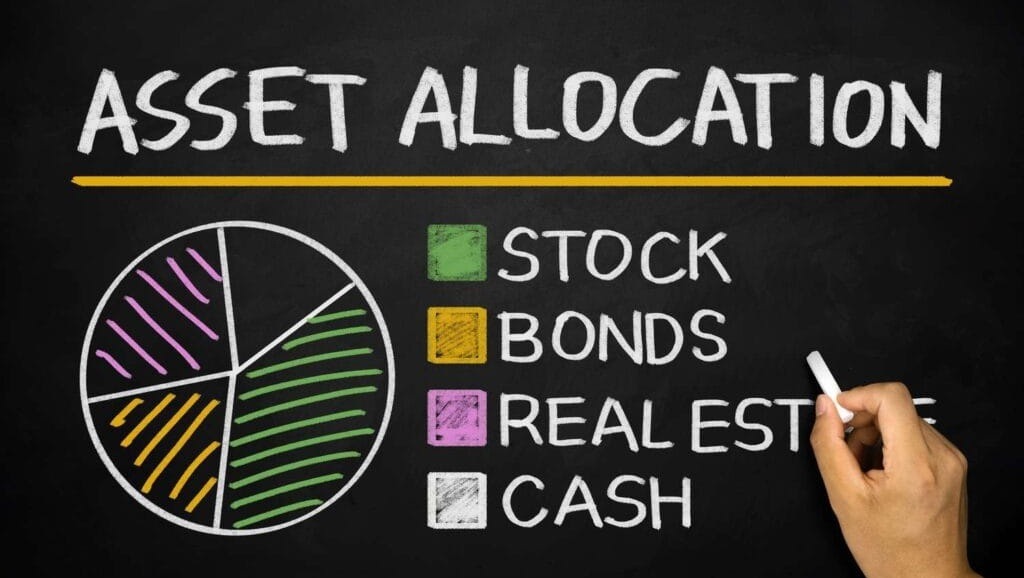
Key Takeaways for Asset Allocation Strategy
Diversification as a Shield
Spreads investments across stocks, bonds, real estate, and more.
Strategic vs Tactical Allocation
- Strategic: Fixed allocation
- Tactical: Adjust based on market conditions
Portfolio Rebalancing
Keeps your investment mix in line with your goals and risk tolerance.
Asset Allocation Strategy: Balancing Risk and Reward
Asset allocation strategy is one of the most fundamental investment approaches used to build a well-diversified portfolio. It’s all about dividing your investments across various asset classes—like stocks, bonds, real estate, and cash—to balance risk and reward based on your financial goals, risk tolerance, and investment timeline.
This strategy, pioneered by Nobel Laureate Harry Markowitz, is rooted in Modern Portfolio Theory (MPT), which emphasizes that a diversified portfolio can achieve better risk-adjusted returns than any single asset.
Diversification: How Asset Allocation Works
The idea is simple: don’t put all your eggs in one basket. Different asset classes react differently to market conditions. For example, when stocks are down, bonds or gold might perform well. By spreading your money across multiple categories, you reduce the impact of a poor-performing asset.
There are three primary asset allocation models:
- Conservative (low risk): Higher allocation to bonds and cash, less to stocks.
- Moderate (balanced risk): Evenly split between stocks and bonds, with a bit of real estate or alternatives.
- Aggressive (high risk): Larger percentage in stocks, minimal bonds or cash.
You can further refine allocation based on sectors, geographies, and market capitalization to maximize diversification.
Why Asset Allocation Matters
According to research, over 90% of a portfolio’s long-term performance is driven by asset allocation, not stock picking or market timing. Proper allocation helps investors weather market volatility, protect capital during downturns, and grow wealth steadily over time.
It also allows for customization. Whether you’re saving for retirement, a house, or your child’s education, asset allocation can be tailored to fit your goals and evolve with your life stage.
Who Should Use This Strategy?
Asset allocation is ideal for all types of investors—from beginners to seasoned pros. Whether you’re a conservative retiree or a young professional seeking growth, this strategy offers a clear framework for managing your money wisely.
If you’re looking for a proven, disciplined, and adaptable investment approach, the asset allocation strategy is your go-to. It’s not flashy, but it’s incredibly effective.
- Sources Include / Discover More: Asset Allocation Strategy, Involves Dividing an Investment Portfolio Among Different Asset Categories
- Also Read: Most Famous Athletes in the World
Key FAQs on the 10 Most Famous Investment Strategies
Why is Value Investing one of the most famous and successful investment strategies?
Value Investing is one of the most successful investment strategies because it focuses on purchasing fundamentally strong companies trading below intrinsic value, often measured using price-to-earnings and price-to-book ratios.
Pioneered by Benjamin Graham and popularized by Warren Buffett, this approach emphasizes margin of safety and long-term holding, historically outperforming markets according to studies by Investopedia and academic finance research.
Source: Investopedia, CFA Institute
What makes Growth Investing a top choice for aggressive investors worldwide?
Growth Investing attracts aggressive investors by targeting companies with rapid revenue and earnings expansion, particularly in technology, biotech, and innovation-driven sectors.
Developed by Philip Fisher and later refined by Peter Lynch, this strategy prioritizes future performance over current valuation and has delivered significant capital appreciation during economic expansion phases.
Source: Investopedia, Morningstar
Why is Index Investing recommended for beginners and long-term investors?
Index Investing is recommended because it offers instant diversification by tracking entire markets like the S&P 500 or NASDAQ through low-cost index funds and ETFs.
Introduced by John Bogle, this passive strategy consistently outperforms most active managers over long periods, according to Vanguard and academic market efficiency studies.
Source: Vanguard, Investopedia
How does Dividend Investing help investors build steady income streams?
Dividend Investing builds passive income by focusing on companies that distribute consistent cash payouts, such as dividend aristocrats with decades-long payment histories.
By reinvesting dividends through DRIPs, investors benefit from compound growth, making this strategy ideal for retirees and income-focused portfolios during volatile markets.
Source: Investopedia, Morningstar
What is Momentum Investing, and why is it effective during bullish markets?
Momentum Investing works by buying assets with strong recent performance and selling when momentum fades, capturing trend-driven price acceleration.
Popularized by Richard Driehaus, this strategy uses technical indicators like RSI and moving averages and performs best during sustained bullish market cycles.
Source: Investopedia, CFA Institute
Why is Dollar-Cost Averaging one of the safest investment approaches?
Dollar-Cost Averaging reduces investment risk by spreading purchases over time, minimizing the impact of market volatility and emotional decision-making.
By investing fixed amounts regularly, investors benefit from lower average costs and disciplined wealth accumulation, making it ideal for beginners and long-term savers.
Source: Investopedia, SEC Investor Education
What makes Contrarian Investing a powerful approach for bold investors?
Contrarian Investing succeeds by exploiting market overreactions, buying assets during fear-driven selloffs and selling during excessive optimism.
Popularized by Sir John Templeton, this strategy relies on behavioral finance principles and has historically delivered strong recoveries after market downturns.
Source: Investopedia, CFA Institute
How does Quantitative Investing use data and algorithms to outperform the market?
Quantitative Investing applies mathematical models, algorithms, and big data to identify statistically profitable patterns with precision.
Used by firms like Renaissance Technologies, this approach removes emotional bias and scales efficiently, making it dominant in hedge funds and institutional investing.
Source: Investopedia, Harvard Business Review
Why is ESG Investing the future of responsible and profitable investing?
ESG Investing integrates environmental, social, and governance metrics into investment decisions, aligning profitability with sustainability.
Studies by MSCI and BlackRock show ESG-focused portfolios often demonstrate resilience, lower risk, and competitive long-term returns.
Source: MSCI, BlackRock
How does Asset Allocation help investors manage risk and achieve steady returns?
Asset Allocation manages risk by diversifying investments across stocks, bonds, and alternative assets based on risk tolerance and goals.
Developed from Harry Markowitz’s Modern Portfolio Theory, it remains the foundation of institutional and retail portfolio construction worldwide.
Source: Investopedia, Nobel Prize Foundation
Factors to Consider When Choosing an Investment Strategy
- Risk Tolerance: Conservative or aggressive?
- Time Horizon: Short-term or decades?
- Financial Goals: Retirement, income, wealth-building?
There’s no one-size-fits-all. Match the strategy with you.
Common Mistakes to Avoid in Investing
- Chasing Hype: If everyone’s talking about it, you’re probably late.
- Ignoring Fees: Small percentages add up over time.
- Overtrading: It’s not a casino—chill.
- Lack of Patience: Wealth takes time, not miracles.
Final Thoughts
Choosing the right investment strategy is like selecting your financial GPS—it guides every decision on your journey to wealth creation. While markets may fluctuate and economic cycles shift, having a disciplined, well-defined strategy keeps you on course. From value investing for stability to growth investing for innovation-driven profits, each of the 10 most famous investment strategies in the world offers a proven roadmap to success.
Whether you prefer index investing for low-cost diversification, dividend investing for steady passive income, or ESG investing for ethical, sustainable returns, your approach should align with your risk tolerance and financial goals. Even techniques like dollar-cost averaging or asset allocation strategies empower you to manage volatility while building long-term wealth.
The secret to success isn’t timing the market—it’s time in the market. Pick the strategy that resonates with your financial personality, stay consistent, and let compound growth do the heavy lifting. With patience, discipline, and the right strategy, you’ll not only weather every downturn but also thrive in the ever-changing world of investing.
Your financial future starts with a single decision—choose wisely, stay invested, and think long-term.
The 10 Most Famous Investment Strategies Frequently Asked Questions (FAQs)
Index investing and asset allocation are often seen as safest due to diversification and long-term performance.
Absolutely. Many investors blend strategies like dividend investing and dollar-cost averaging for optimal results.
Yes. While tech dominates headlines, fundamentals always matter in the long run.
Annually is a good rule of thumb. But check anytime your goals or life situation changes.
Index investing or dollar-cost averaging are great starting points—low risk, easy to follow, and proven.
The 10 most famous investment strategies are: Value Investing, Growth Investing, Index Investing, Dividend Investing, Momentum Investing, Dollar-Cost Averaging, Contrarian Investing, Quantitative Investing, ESG Investing, and the Asset Allocation Strategy.
Growth Investing focuses on stocks with potential for high capital appreciation, while Dividend Investing targets companies that regularly pay dividends to generate passive income.
About the Author
This article was researched and prepared by the World Millions Editorial Team, specialists in global rankings, premium market analysis, structured comparisons, and high-value sector research across industries.
All content undergoes verification, editorial review, and periodic updates to ensure accuracy, clarity, and alignment with recognized industry standards, reliable institutional sources, and leading global authorities.
- Last Updated: March 27, 2026 by the World Millions Editorial Team
- Original Published Date: March 27, 2026
- View Our: Editorial Team | Sources | Disclaimer | Editorial Standards